
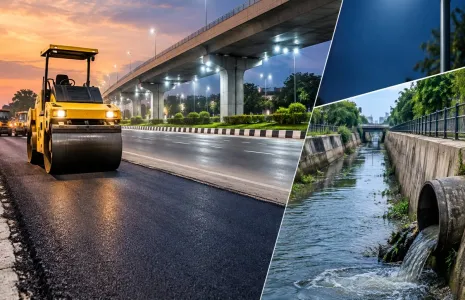

Delhi-Mumbai Expressway Set for 2025 Completion
ROADS & HIGHWAYS

Delhi-Mumbai Expressway Set for 2025 Completion

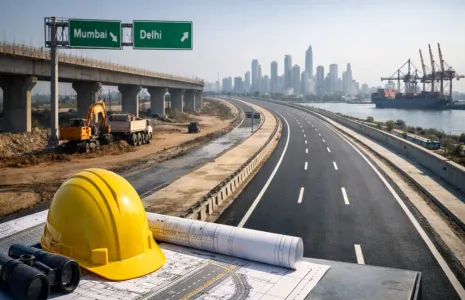
Union Minister Nitin Gadkari has confirmed that the highly anticipated Delhi-Mumbai Expressway is on track to be completed by October 2025. This major infrastructure project is poised to significantly enhance connectivity between the national capital and Mumbai, facilitating faster and more efficient travel.

The expressway, a crucial component of India?s road infrastructure development, is expected to drastically reduce travel time between Delhi and Mumbai, which currently stands at approximately 24 hours. The new route will cut this journey to around 12 hours, revolutionizing road travel and boosting economic activities between these two key cities.

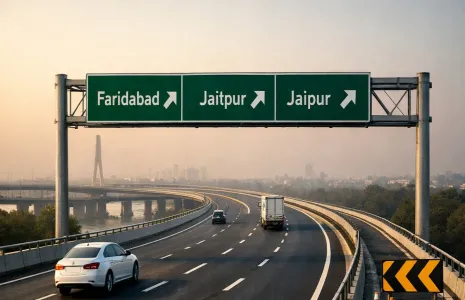
Spanning approximately 1,386 kilometers, the Delhi-Mumbai Expressway will pass through several states, including Delhi, Haryana, Rajasthan, Gujarat, and Maharashtra. The project is designed to support high-speed traffic, with multiple lanes and modern road safety features, ensuring a smooth and secure travel experience.

The expressway is anticipated to bring numerous benefits, including improved logistics and transportation efficiency, reduced fuel consumption, and lower vehicular emissions. The development will also stimulate regional economic growth, creating job opportunities and encouraging investment in the areas surrounding the expressway.

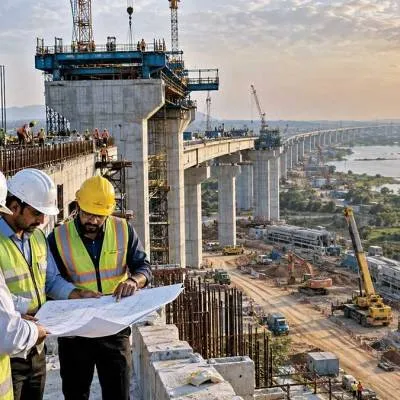
Ongoing construction work is progressing as scheduled, with various phases of the project nearing completion. The ambitious project represents a significant investment in India's infrastructure and is expected to be a game-changer in the country?s transportation network.

Union Minister Nitin Gadkari has confirmed that the highly anticipated Delhi-Mumbai Expressway is on track to be completed by October 2025. This major infrastructure project is poised to significantly enhance connectivity between the national capital and Mumbai, facilitating faster and more efficient travel. The expressway, a crucial component of India?s road infrastructure development, is expected to drastically reduce travel time between Delhi and Mumbai, which currently stands at approximately 24 hours. The new route will cut this journey to around 12 hours, revolutionizing road travel and boosting economic activities between these two key cities. Spanning approximately 1,386 kilometers, the Delhi-Mumbai Expressway will pass through several states, including Delhi, Haryana, Rajasthan, Gujarat, and Maharashtra. The project is designed to support high-speed traffic, with multiple lanes and modern road safety features, ensuring a smooth and secure travel experience. The expressway is anticipated to bring numerous benefits, including improved logistics and transportation efficiency, reduced fuel consumption, and lower vehicular emissions. The development will also stimulate regional economic growth, creating job opportunities and encouraging investment in the areas surrounding the expressway. Ongoing construction work is progressing as scheduled, with various phases of the project nearing completion. The ambitious project represents a significant investment in India's infrastructure and is expected to be a game-changer in the country?s transportation network.

Related Stories

Gold Stories
Next Story
Infrastructure Energy

Asian Energy Services Q1 FY27 PAT Rises 129 Per Cent

Asian Energy Services Limited reported a 129 per cent year-on-year rise in net profit to Rs 128 million for Q1 FY27, compared with the corresponding quarter last year.Revenue increased 135 per cent year-on-year to Rs 2.71 billion, supported by continued momentum across its services business, disciplined execution and contributions from domestic and international operations. EBITDA grew 81 per cent year-on-year during the quarter.As of June 30, 2026, the company’s standalone order book stood at Rs 17.54 billion, with around 60 per cent coming from oil and gas services and 40 per cent from min..

Next Story
Infrastructure Urban

BioBTX to Build First Commercial-Scale Circular Chemicals Plant

Dutch circular chemistry technology developer BioBTX is building what it says will be the world’s first commercial-scale plant to convert mixed plastic waste into high-quality aromatic chemicals using its proprietary Integrated Catalytic Cracking Process (ICCP) technology.The facility will be built at Chemical Park Delfzijl on the northern coast of the Netherlands and is expected to create 35 jobs. Covestro, which has been a shareholder and strategic partner of BioBTX since 2024, holds a mid-single-digit million-euro investment in the company.BioBTX’s ICCP technology uses catalytic pyrolys..

Next Story
Real Estate

Awfis Q1 FY27 PAT Jumps 140% as Revenue Rises 27%

Awfis Space Solutions reported a 140 per cent year-on-year rise in consolidated profit after tax (PAT) to Rs 240 million for Q1 FY27, compared with Rs 100 million in the corresponding quarter last year.Revenue from operations increased 27 per cent to Rs 4.25 billion from Rs 3.35 billion, while EBITDA rose 28 per cent to Rs 1.62 billion. EBITDA margin improved to 38.2 per cent from 37.8 per cent. Profit before tax increased 135 per cent to Rs 240 million.The company's co-working business recorded 27 per cent year-on-year growth, supported by demand from enterprises, Global Capability Centres (G..

Advertisement

Subscribe to Our Newsletter

Get daily newsletters around different themes from Construction world.

STAY CONNECTED

Advertisement