Detailed Project Report For Six-laning Of Salem Chengapalli Stretch
ROADS & HIGHWAYS

Detailed Project Report For Six-laning Of Salem Chengapalli Stretch

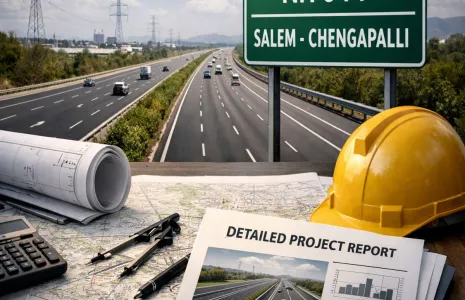
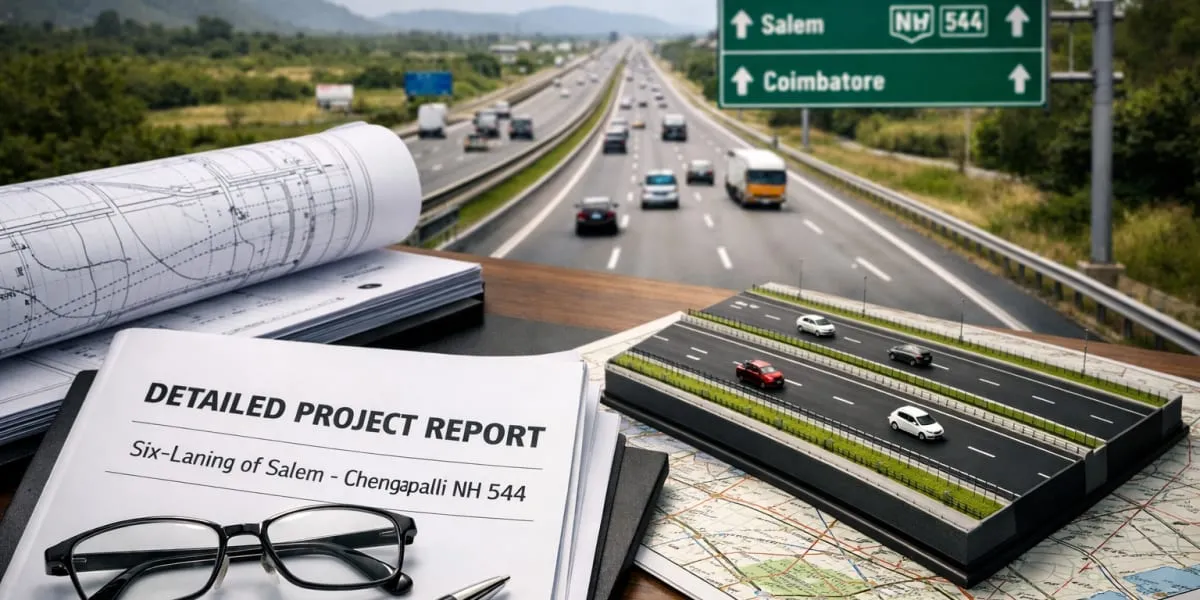
Transport authorities have prepared a detailed project report for the six-laning of the Salem-Chengapalli stretch of National Highway 544 (NH 544) in Tamil Nadu. The report examines the technical feasibility, alignment options and preliminary environmental considerations for upgrading the corridor to accommodate growing traffic volumes. The study aims to address current congestion and improve connectivity between industrial and urban centres. The technical study includes traffic projections and pavement design considerations to ensure durability and future capacity.\n\nThe report outlines possible measures for road safety enhancement, including improved signage, dedicated service lanes and safer junction designs to reduce accidents and delays. It assesses the requirements for land acquisition, utility relocation and environmental mitigation measures that will be required during construction. The study proposes staged implementation to minimise disruption to commuters and freight movement. Environmental assessments will examine drainage, ecology and noise impacts and recommend mitigation where necessary.\n\nOfficials have indicated that coordination between state agencies, local bodies and central transport planners will be critical to finalise the alignment and secure necessary clearances. The report also considers the potential for economic benefits through reduced travel time, lower vehicle operating costs and improved freight efficiency for businesses in the region. Stakeholder consultations are expected to inform revisions to the project design. The project design will consider cost-effective solutions and alignment trade-offs to balance engineering and social needs.\n\nFollowing completion of the project report, the next steps will include detailed design, tendering and mobilisation of resources subject to approvals and funding arrangements. Authorities expect the upgrade to support long term regional mobility and to integrate with broader highway improvement programmes in the state. Monitoring and phased delivery are intended to ensure that construction targets and safety objectives are met. Timelines will depend on statutory approvals and availability of funds, and authorities will publish updates as plans progress.

Transport authorities have prepared a detailed project report for the six-laning of the Salem-Chengapalli stretch of National Highway 544 (NH 544) in Tamil Nadu. The report examines the technical feasibility, alignment options and preliminary environmental considerations for upgrading the corridor to accommodate growing traffic volumes. The study aims to address current congestion and improve connectivity between industrial and urban centres. The technical study includes traffic projections and pavement design considerations to ensure durability and future capacity.\n\nThe report outlines possible measures for road safety enhancement, including improved signage, dedicated service lanes and safer junction designs to reduce accidents and delays. It assesses the requirements for land acquisition, utility relocation and environmental mitigation measures that will be required during construction. The study proposes staged implementation to minimise disruption to commuters and freight movement. Environmental assessments will examine drainage, ecology and noise impacts and recommend mitigation where necessary.\n\nOfficials have indicated that coordination between state agencies, local bodies and central transport planners will be critical to finalise the alignment and secure necessary clearances. The report also considers the potential for economic benefits through reduced travel time, lower vehicle operating costs and improved freight efficiency for businesses in the region. Stakeholder consultations are expected to inform revisions to the project design. The project design will consider cost-effective solutions and alignment trade-offs to balance engineering and social needs.\n\nFollowing completion of the project report, the next steps will include detailed design, tendering and mobilisation of resources subject to approvals and funding arrangements. Authorities expect the upgrade to support long term regional mobility and to integrate with broader highway improvement programmes in the state. Monitoring and phased delivery are intended to ensure that construction targets and safety objectives are met. Timelines will depend on statutory approvals and availability of funds, and authorities will publish updates as plans progress.

Next Story
Infrastructure Transport

Tunnelling Begins for Thane, Borivali twin tunnel project

Tunnelling work has commenced for the 11.84-km Thane–Borivali Twin Tunnel, set to be India’s longest urban road tunnel, marking a key milestone in Mumbai’s infrastructure development.As per a post shared by Mumbai Metropolitan Region Development Authority on social media platform X, the tunnel boring machine (TBM) ‘Nayak’—the country’s largest single-shield hard rock TBM for an urban tunnel—was launched by Devendra Fadnavis on Tuesday. The event was attended by Eknath Shinde and Sunetra Pawar, among other dignitaries. A second TBM, ‘Arjuna’, is expected to be launched so..

Next Story
Infrastructure Transport

Large Format Store Planned At M G Road Metro Station

M G Road station in Bengaluru is set to host the city’s first large-format commercial and experience space, with planning led by Bangalore Metro Rail Corporation Limited. BMRCL has invited proposals to develop and operate a central business district destination at the Purple?Pink Line interchange. The plan positions the station as a commercial hub designed to serve a broad commuter base across the city. The proposal is part of a broader effort to activate transit nodes commercially. Tender documents set a minimum monthly rental of Rs 0.944 million (mn), inclusive of GST, for the large-format..

Next Story
Infrastructure Energy

Government Cancels Auction Of Eleven Critical Mineral Blocks

The government has cancelled the auction of 11 critical and strategic mineral blocks after receiving a poor investor response and failing to attract a sufficient number of qualified bidders. The decision represents a setback to plans to ramp up domestic exploration and production of critical minerals amid global supply chain disruptions and rising demand for materials used in clean energy and advanced technologies. The mines ministry issued an annulment notice setting out the reasons for the cancellations. The annulment notice indicated that the auction process for five mineral blocks was canc..

Advertisement

Subscribe to Our Newsletter

Get daily newsletters around different themes from Construction world.

STAY CONNECTED

Advertisement

Advertisement

Advertisement