DPR For Six-laning Salem-Chengapalli Section Of NH 544
ROADS & HIGHWAYS

DPR For Six-laning Salem-Chengapalli Section Of NH 544

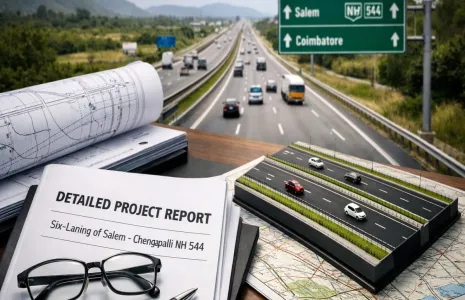
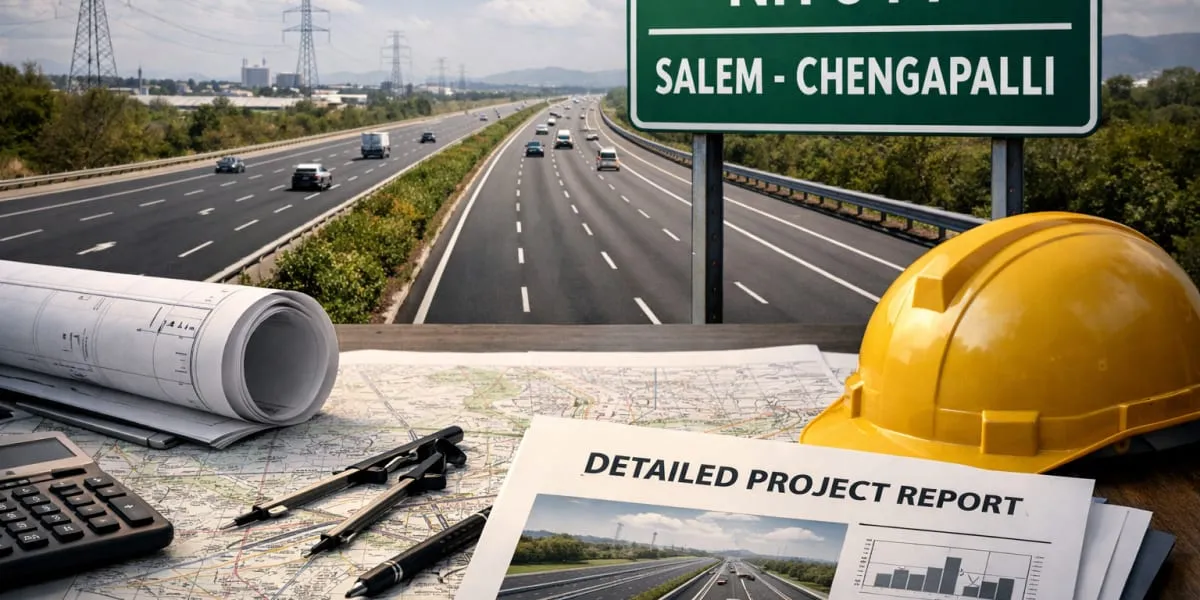
Authorities are preparing a detailed project report for the six-laning of the Salem-Chengapalli stretch of National Highway 544 (NH 544). The initiative is intended to assess technical, environmental and financial aspects required to widen the corridor and to support upgraded infrastructure along the route, recognising its role in linking regional industrial clusters and market towns. The study will consider current and projected traffic volumes and the scope for future expansion and service roads to cater for local traffic.

The report will encompass topographical surveys, traffic studies, pavement design, drainage plans and estimates for land acquisition and compensation, and will identify alignment options and bypasses where necessary. It will also include preliminary environmental assessment and social impact analysis to inform required clearances and mitigation measures, and will outline utility shifting requirements and preliminary costings to enable funding deliberations. Early engagement with local bodies and landowners will be important to refine alignments and compensation frameworks.

Improved carriageway capacity on NH 544 is expected to reduce travel time and congestion and to enhance freight movement between industrial and agricultural centres in the region. Better connectivity is likely to support local commerce, logistics and access to services, and to encourage investment in surrounding urban and peri-urban areas, while construction activity may provide employment opportunities and require measures to manage safety for road users and workers. Design proposals will incorporate maintenance planning and resilience measures to address extreme weather and drainage challenges.

Following completion of the detailed project report, authorities will seek statutory clearances, funding approvals and stakeholder consultations before moving to design finalisation and tendering. The DPR will form the basis for decisions on project phasing, delivery models and for prioritising land acquisition and environmental management, and periodic updates will be provided as the process advances and as implementation milestones are reached. Firm timelines will be set after approval of funding and final clearances, and project delivery will be aligned with logistical and environmental constraints.

Authorities are preparing a detailed project report for the six-laning of the Salem-Chengapalli stretch of National Highway 544 (NH 544). The initiative is intended to assess technical, environmental and financial aspects required to widen the corridor and to support upgraded infrastructure along the route, recognising its role in linking regional industrial clusters and market towns. The study will consider current and projected traffic volumes and the scope for future expansion and service roads to cater for local traffic. The report will encompass topographical surveys, traffic studies, pavement design, drainage plans and estimates for land acquisition and compensation, and will identify alignment options and bypasses where necessary. It will also include preliminary environmental assessment and social impact analysis to inform required clearances and mitigation measures, and will outline utility shifting requirements and preliminary costings to enable funding deliberations. Early engagement with local bodies and landowners will be important to refine alignments and compensation frameworks. Improved carriageway capacity on NH 544 is expected to reduce travel time and congestion and to enhance freight movement between industrial and agricultural centres in the region. Better connectivity is likely to support local commerce, logistics and access to services, and to encourage investment in surrounding urban and peri-urban areas, while construction activity may provide employment opportunities and require measures to manage safety for road users and workers. Design proposals will incorporate maintenance planning and resilience measures to address extreme weather and drainage challenges. Following completion of the detailed project report, authorities will seek statutory clearances, funding approvals and stakeholder consultations before moving to design finalisation and tendering. The DPR will form the basis for decisions on project phasing, delivery models and for prioritising land acquisition and environmental management, and periodic updates will be provided as the process advances and as implementation milestones are reached. Firm timelines will be set after approval of funding and final clearances, and project delivery will be aligned with logistical and environmental constraints.

Next Story
Infrastructure Transport

Tunnelling Begins for Thane, Borivali twin tunnel project

Tunnelling work has commenced for the 11.84-km Thane–Borivali Twin Tunnel, set to be India’s longest urban road tunnel, marking a key milestone in Mumbai’s infrastructure development.As per a post shared by Mumbai Metropolitan Region Development Authority on social media platform X, the tunnel boring machine (TBM) ‘Nayak’—the country’s largest single-shield hard rock TBM for an urban tunnel—was launched by Devendra Fadnavis on Tuesday. The event was attended by Eknath Shinde and Sunetra Pawar, among other dignitaries. A second TBM, ‘Arjuna’, is expected to be launched so..

Next Story
Infrastructure Transport

Large Format Store Planned At M G Road Metro Station

M G Road station in Bengaluru is set to host the city’s first large-format commercial and experience space, with planning led by Bangalore Metro Rail Corporation Limited. BMRCL has invited proposals to develop and operate a central business district destination at the Purple?Pink Line interchange. The plan positions the station as a commercial hub designed to serve a broad commuter base across the city. The proposal is part of a broader effort to activate transit nodes commercially. Tender documents set a minimum monthly rental of Rs 0.944 million (mn), inclusive of GST, for the large-format..

Next Story
Infrastructure Energy

Government Cancels Auction Of Eleven Critical Mineral Blocks

The government has cancelled the auction of 11 critical and strategic mineral blocks after receiving a poor investor response and failing to attract a sufficient number of qualified bidders. The decision represents a setback to plans to ramp up domestic exploration and production of critical minerals amid global supply chain disruptions and rising demand for materials used in clean energy and advanced technologies. The mines ministry issued an annulment notice setting out the reasons for the cancellations. The annulment notice indicated that the auction process for five mineral blocks was canc..

Advertisement

Subscribe to Our Newsletter

Get daily newsletters around different themes from Construction world.

STAY CONNECTED

Advertisement

Advertisement

Advertisement