
Dwarka Expressway to implement free flow tolling
ROADS & HIGHWAYS

Dwarka Expressway to implement free flow tolling

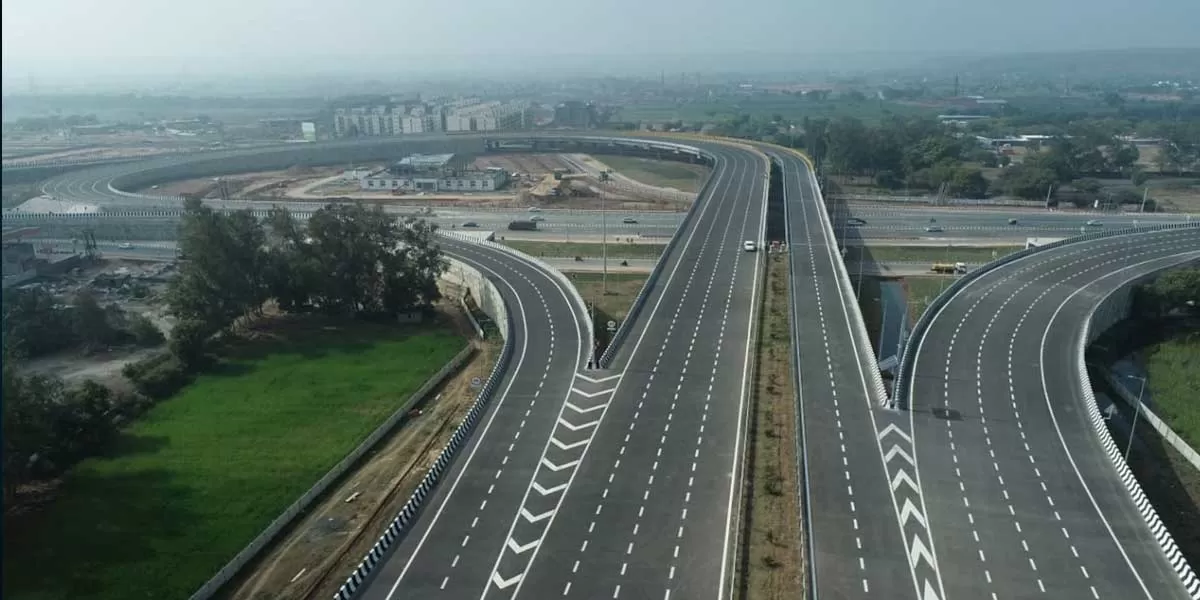
The Dwarka Expressway is set to become India's first highway to introduce a “Free Flow Tolling” system, eliminating the need for physical toll plazas or barriers. This innovative system will utilise advanced FASTag readers and high-powered cameras mounted on overhead gantries to automatically deduct tolls from vehicles traveling at speeds of up to 100 kilometers per hour.

According to a report, the National Highways Authority of India (NHAI) is preparing to roll out this system on the 28-km urban expressway, which aims to enhance compliance tracking and lay the groundwork for future satellite-based tolling.

Multi-lane free-flow tolling, already implemented in various countries, simplifies toll collection and helps reduce traffic congestion. Currently, while the Delhi-Meerut Expressway employs gantry-based tolling, it still features a physical toll plaza in Meerut for fee payment. In contrast, the Dwarka Expressway will have no such plazas. The NHAI is also considering passive methods to recover unpaid tolls, with gantries expected to be installed at the Delhi-Gurgaon border.

This gantry-based tolling approach—also known as satellite or GNSS-based tolling—utilises virtual toll booths to monitor vehicles and automatically deduct tolls from user accounts.

The toll rate for the Dwarka Expressway has not yet been finalised. However, the NHAI has requested updates to the Vahan system, India’s vehicle registration database, to assist in recovering unpaid tolls. The proposal includes displaying outstanding toll amounts on the Vahan portal, along with vehicle images as evidence.

Vehicle owners will be unable to transfer their registration or obtain a No Objection Certificate (NOC) or fitness certificate until their dues are settled. They will have the option to either pay the toll or contest the charges within seven days of receiving the notice. (FE & report- TOI)

The Dwarka Expressway is set to become India's first highway to introduce a “Free Flow Tolling” system, eliminating the need for physical toll plazas or barriers. This innovative system will utilise advanced FASTag readers and high-powered cameras mounted on overhead gantries to automatically deduct tolls from vehicles traveling at speeds of up to 100 kilometers per hour. According to a report, the National Highways Authority of India (NHAI) is preparing to roll out this system on the 28-km urban expressway, which aims to enhance compliance tracking and lay the groundwork for future satellite-based tolling. Multi-lane free-flow tolling, already implemented in various countries, simplifies toll collection and helps reduce traffic congestion. Currently, while the Delhi-Meerut Expressway employs gantry-based tolling, it still features a physical toll plaza in Meerut for fee payment. In contrast, the Dwarka Expressway will have no such plazas. The NHAI is also considering passive methods to recover unpaid tolls, with gantries expected to be installed at the Delhi-Gurgaon border. This gantry-based tolling approach—also known as satellite or GNSS-based tolling—utilises virtual toll booths to monitor vehicles and automatically deduct tolls from user accounts. The toll rate for the Dwarka Expressway has not yet been finalised. However, the NHAI has requested updates to the Vahan system, India’s vehicle registration database, to assist in recovering unpaid tolls. The proposal includes displaying outstanding toll amounts on the Vahan portal, along with vehicle images as evidence. Vehicle owners will be unable to transfer their registration or obtain a No Objection Certificate (NOC) or fitness certificate until their dues are settled. They will have the option to either pay the toll or contest the charges within seven days of receiving the notice. (FE & report- TOI)

Next Story
Infrastructure Transport

MMRDA advances 250 m on Orange Gate–Marine Drive tunnel

The Mumbai Metropolitan Region Development Authority (MMRDA) has completed 250 m of underground tunnelling for the Orange Gate–Marine Drive Urban Road Tunnel using India’s largest slurry shield tunnel boring machine (TBM) deployed for an urban road project.The project involves twin tunnels extending over 7 km beneath critical transport corridors, including Central Railway, Western Railway and Metro Line 3. The work requires high-precision engineering to navigate densely developed urban infrastructure.Once completed, the tunnel is expected to reduce travel time between Orange Gate and Marin..

Next Story
Infrastructure Urban

Hindustan Zinc Pays Rs 188.46 Billion in FY26

Hindustan Zinc contributed Rs 188.46 billion to the public exchequer in FY 2025-26, according to its 9th Tax Transparency Report. The contribution, equivalent to 46 per cent of the company’s revenue, included direct and indirect taxes, government royalties, dividends to the Government of India, withholding taxes and other statutory levies.The company’s five-year cumulative contribution to the exchequer stood at Rs 915.72 billion. In FY26, Hindustan Zinc reported revenue of Rs 408.44 billion, EBITDA of Rs 221.62 billion and profit after tax of Rs 138.32 billion. It also achieved its highest..

Next Story
Infrastructure Urban

World of Concrete India 2026 Opens in Mumbai

Informa Markets in India will host the 12th edition of World of Concrete India 2026 from 3–5 June 2026 at the Bombay Exhibition Centre, Mumbai. The specialised B2B exhibition will bring together manufacturers, suppliers, contractors, developers, architects, consultants, infrastructure companies, project leaders and government stakeholders.The event is expected to feature over 350 brands and more than 18,000 trade professionals. It will cover concrete and cement, dry mortar, precast technologies, formwork, construction chemicals, industrial and commercial flooring, scaffolding, safety solutio..

Advertisement

Subscribe to Our Newsletter

Get daily newsletters around different themes from Construction world.

STAY CONNECTED

Advertisement

Advertisement

Advertisement

-->