+
Fadnavis Unveils Major Infra And Transport Push In Maharashtra
ROADS & HIGHWAYS

Fadnavis Unveils Major Infra And Transport Push In Maharashtra

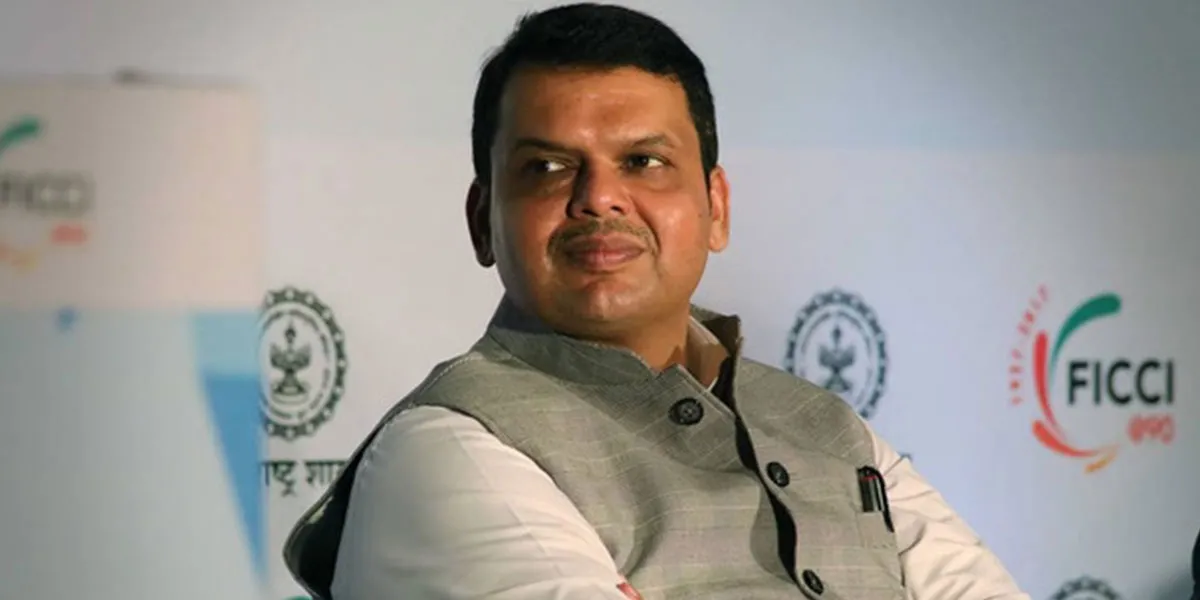
Maharashtra Chief Minister Devendra Fadnavis has outlined an ambitious agenda spanning infrastructure, transport and governance, as he replied to the concluding debate on the final day of the winter session of the state legislature. He said the government is focused on accelerating development, strengthening law enforcement and improving overall quality of life.

A key announcement was the proposed Jankalyan Expressway, a 450 km access-controlled corridor linking Mumbai and Hyderabad via Kalyan and Latur. Estimated to cost around Rs 360 billion, the project is expected to reduce the current Mumbai–Hyderabad distance by nearly 180 km and cut travel time between Mumbai and Latur to about four-and-a-half hours. The expressway will pass through Thane, Pune, Ahilyanagar, Beed and Latur districts, significantly improving regional connectivity.

Urban transport expansion also featured prominently. Fadnavis said Mumbai’s Metro network, which currently spans 91 km and carries around 0.95 million passengers daily, will be expanded to 132 km within the next two years. He added that at least 50 km of new Metro lines are planned to be commissioned every year. Pune and Nagpur already have 33 km and 40 km of operational Metro corridors, respectively.

The Chief Minister also highlighted a series of major road, tunnel and coastal infrastructure projects across the Mumbai Metropolitan Region. These include a parallel expressway to the Mumbai–Pune corridor, the Orange Gate–Marine Drive tunnel, coastal road extensions from Versova to Uttan and Virar, the Thane–Borivli and Goregaon–Mulund tunnels, the Panvel coastal road near the upcoming Navi Mumbai airport, an Atal Setu interchange, the Pune ring road and several long-pending missing-link projects.

Beyond transport, Fadnavis announced the development of ‘Navin Nagpur’, a new central business district spread across 1,710 hectares. Modelled on Mumbai’s Bandra-Kurla Complex and Pune’s Hinjewadi, the project is expected to generate more than 500,000 jobs. He also revealed plans for a modern aviation training centre in Amravati, to be developed with support from Air India, featuring 34 trainer aircraft and 14 Piper aircraft.

Maharashtra Chief Minister Devendra Fadnavis has outlined an ambitious agenda spanning infrastructure, transport and governance, as he replied to the concluding debate on the final day of the winter session of the state legislature. He said the government is focused on accelerating development, strengthening law enforcement and improving overall quality of life. A key announcement was the proposed Jankalyan Expressway, a 450 km access-controlled corridor linking Mumbai and Hyderabad via Kalyan and Latur. Estimated to cost around Rs 360 billion, the project is expected to reduce the current Mumbai–Hyderabad distance by nearly 180 km and cut travel time between Mumbai and Latur to about four-and-a-half hours. The expressway will pass through Thane, Pune, Ahilyanagar, Beed and Latur districts, significantly improving regional connectivity. Urban transport expansion also featured prominently. Fadnavis said Mumbai’s Metro network, which currently spans 91 km and carries around 0.95 million passengers daily, will be expanded to 132 km within the next two years. He added that at least 50 km of new Metro lines are planned to be commissioned every year. Pune and Nagpur already have 33 km and 40 km of operational Metro corridors, respectively. The Chief Minister also highlighted a series of major road, tunnel and coastal infrastructure projects across the Mumbai Metropolitan Region. These include a parallel expressway to the Mumbai–Pune corridor, the Orange Gate–Marine Drive tunnel, coastal road extensions from Versova to Uttan and Virar, the Thane–Borivli and Goregaon–Mulund tunnels, the Panvel coastal road near the upcoming Navi Mumbai airport, an Atal Setu interchange, the Pune ring road and several long-pending missing-link projects. Beyond transport, Fadnavis announced the development of ‘Navin Nagpur’, a new central business district spread across 1,710 hectares. Modelled on Mumbai’s Bandra-Kurla Complex and Pune’s Hinjewadi, the project is expected to generate more than 500,000 jobs. He also revealed plans for a modern aviation training centre in Amravati, to be developed with support from Air India, featuring 34 trainer aircraft and 14 Piper aircraft.

Next Story
Infrastructure Transport

Second Mountain Tunnel Breakthrough in Palghar Advances High Speed Rail

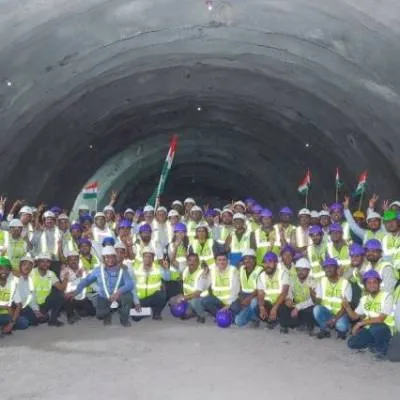
The Mumbai-Ahmedabad high speed rail (MAHSR) project reached a milestone with the breakthrough of a mountain tunnel in Palghar, Maharashtra. Mountain tunnel MT-six measures 454 metres long and 14.4 metres wide and will accommodate up and down tracks. The breakthrough follows MT-five near Saphale on second January 2026 and the MT-six excavation was completed from both ends using the New Austrian Tunnelling Method. The ministry reported that the tunnelling was completed within 12 months. The New Austrian Tunnelling Method is favoured for its flexibility in complex geology and irregular tunnel s..

Next Story
Infrastructure Transport

Modi Government Pushes Atmanirbhar Container Drive With BCSL MoU

The Union Government advanced a plan to create an integrated, domestically anchored container ecosystem with the signing of a Memorandum of Understanding to establish the Bharat Container Shipping Line (BCSL). The MoU was signed by key agencies including the Shipping Corporation of India and Container Corporation of India alongside major port authorities and Sagarmala Finance Corporation Limited under the Ministry of Ports, Shipping and Waterways, in the presence of senior ministers. The initiative aligns with the Container Manufacturing Assistance Scheme announced in the Union Budget 2026–2..

Next Story
Infrastructure Urban

Ministry Reports Gains In Mobility For Marginalised Communities

The Ministry of Social Justice and Empowerment is implementing skill development, education and rehabilitation schemes to promote socio-economic mobility and sustainable livelihoods for marginalised and disadvantaged communities across the country. Programmes target Scheduled Castes, Other Backward Classes, Economically Weaker Sections, De-notified Tribes and Safai Karamcharis through specialised implementing corporations and empanelled training institutes. Pradhan Mantri Dakshata Aur Kushalta Sampann Hitgrahi Yojana, or PM-DAKSH, provided skill training and placement support through the Nati..

Advertisement

Subscribe to Our Newsletter

Get daily newsletters around different themes from Construction world.

STAY CONNECTED

Advertisement

Advertisement

Advertisement

Open In App