

CII-IGBC Announces National Leadership Transition
Appointments

CII-IGBC Announces National Leadership Transition

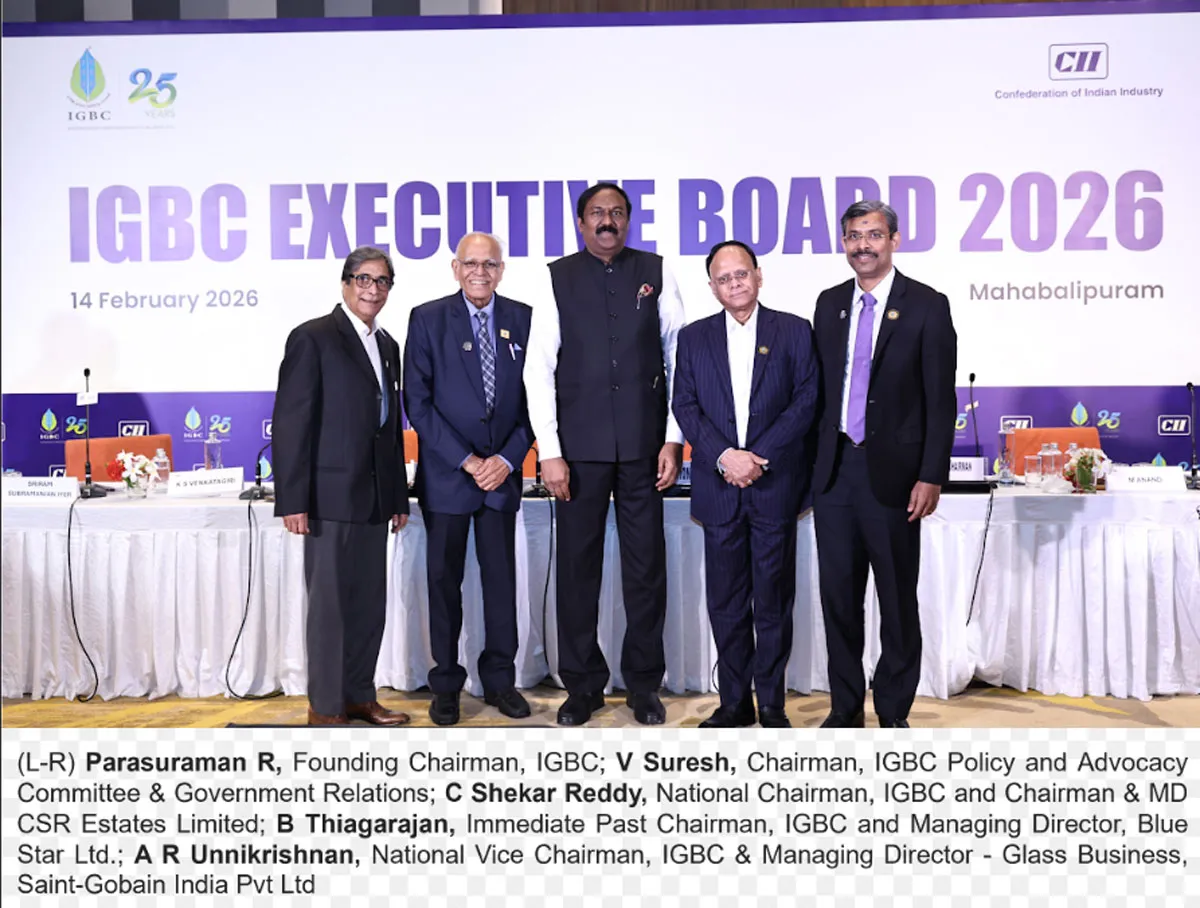
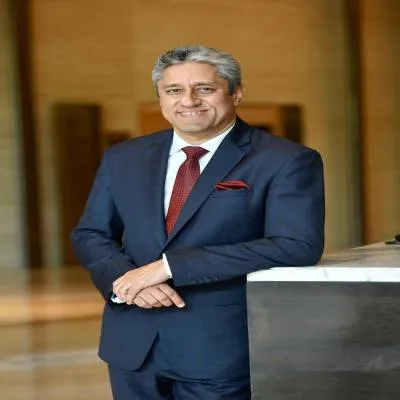
Confederation of Indian Industry Indian Green Building Council (CII-IGBC) has announced leadership changes effective 1 April 2026. C. Shekar Reddy, Chairman and Managing Director of CSR Estates Ltd and current National Vice-Chairman, will assume office as National Chairman, succeeding B. Thiagarajan, Managing Director of Blue Star Ltd, whose two-year tenure concludes. A. R. Unnikrishnan, Managing Director – Glass Business, Saint-Gobain India Pvt Ltd, will take over as National Vice-Chairman.
Since its inception in 2001, IGBC has registered over 18,850 projects, representing more than 15.52 billion sq ft of green building footprint across sectors. It has developed 33 Green and Net Zero Rating Systems and represents India in the World Green Building Council.
“India’s growth trajectory presents a historic opportunity to shape a built environment that is not only economically vibrant but also environmentally resilient. Sustainability can no longer remain a niche consideration — it must become integral to how we design, construct, and operate our buildings, factories, and infrastructure. Over the coming years, IGBC will intensify its efforts to drive measurable environmental outcomes, strengthen industry capacity, and support India’s long-term climate commitments,” said C. Shekar Reddy. “My focus will be on accelerating green retrofits for existing structures, empowering MSMEs with affordable certifications, leveraging AI-driven tools for further accelerating holistic designs and enhancing health and wellbeing, and mainstreaming green buildings in the near future. The next phase of the green building movement will focus on scale, performance, and impact. IGBC will continue working closely with policymakers, developers, manufacturers, and urban local bodies to accelerate the transition towards low-carbon, resource-efficient development across India.”
“The built environment represents one of the most powerful levers for climate action. Sustainable construction materials, circular economy practices, and energy-efficient technologies will be central to this transformation. IGBC is a unique platform to bring together industry and innovation, enabling scalable solutions that enhance both environmental and economic performance,” said A. R. Unnikrishnan. “As India continues to expand its infrastructure and manufacturing base, integrating sustainability into core design and construction practices will be essential. I look forward to contributing to IGBC’s efforts in strengthening industry adoption, advancing knowledge-sharing, and supporting the creation of future-ready, climate-resilient assets.”
Reflecting on his tenure, B. Thiagarajan said, “Leading IGBC during a period of significant transformation in India’s sustainability journey has been both an honour and a privilege. The Council has continued to expand its influence across sectors, helping stakeholders integrate environmental responsibility with business performance. I extend my best wishes to Mr. C. Shekar Reddy and Mr. A. R. Unnikrishnan. Their leadership will undoubtedly guide IGBC into its next phase of growth and impact.”
The transition reinforces IGBC’s role in advancing low-carbon, climate-resilient development aligned with India’s Net Zero objectives.

Confederation of Indian Industry Indian Green Building Council (CII-IGBC) has announced leadership changes effective 1 April 2026. C. Shekar Reddy, Chairman and Managing Director of CSR Estates Ltd and current National Vice-Chairman, will assume office as National Chairman, succeeding B. Thiagarajan, Managing Director of Blue Star Ltd, whose two-year tenure concludes. A. R. Unnikrishnan, Managing Director – Glass Business, Saint-Gobain India Pvt Ltd, will take over as National Vice-Chairman.Since its inception in 2001, IGBC has registered over 18,850 projects, representing more than 15.52 billion sq ft of green building footprint across sectors. It has developed 33 Green and Net Zero Rating Systems and represents India in the World Green Building Council.“India’s growth trajectory presents a historic opportunity to shape a built environment that is not only economically vibrant but also environmentally resilient. Sustainability can no longer remain a niche consideration — it must become integral to how we design, construct, and operate our buildings, factories, and infrastructure. Over the coming years, IGBC will intensify its efforts to drive measurable environmental outcomes, strengthen industry capacity, and support India’s long-term climate commitments,” said C. Shekar Reddy. “My focus will be on accelerating green retrofits for existing structures, empowering MSMEs with affordable certifications, leveraging AI-driven tools for further accelerating holistic designs and enhancing health and wellbeing, and mainstreaming green buildings in the near future. The next phase of the green building movement will focus on scale, performance, and impact. IGBC will continue working closely with policymakers, developers, manufacturers, and urban local bodies to accelerate the transition towards low-carbon, resource-efficient development across India.”“The built environment represents one of the most powerful levers for climate action. Sustainable construction materials, circular economy practices, and energy-efficient technologies will be central to this transformation. IGBC is a unique platform to bring together industry and innovation, enabling scalable solutions that enhance both environmental and economic performance,” said A. R. Unnikrishnan. “As India continues to expand its infrastructure and manufacturing base, integrating sustainability into core design and construction practices will be essential. I look forward to contributing to IGBC’s efforts in strengthening industry adoption, advancing knowledge-sharing, and supporting the creation of future-ready, climate-resilient assets.”Reflecting on his tenure, B. Thiagarajan said, “Leading IGBC during a period of significant transformation in India’s sustainability journey has been both an honour and a privilege. The Council has continued to expand its influence across sectors, helping stakeholders integrate environmental responsibility with business performance. I extend my best wishes to Mr. C. Shekar Reddy and Mr. A. R. Unnikrishnan. Their leadership will undoubtedly guide IGBC into its next phase of growth and impact.”The transition reinforces IGBC’s role in advancing low-carbon, climate-resilient development aligned with India’s Net Zero objectives.

Next Story
Real Estate

AI: The New Recruit

From getting ideas to evaluating designs, presenting concepts to clients and tracking projects, artificial intelligence (AI) is helping architects work better and faster.“AI allows architects to spend more time doing what only they can do: think critically, synthesise complexity and design with intent,” says Dikshu C Kukreja, Managing Principal, CP Kukreja Architects. “Every minute reclaimed from repetitive processes can be invested in creativity, contextual understanding, interdisciplinary collaboration and innovation – the qualities that define meaningful architecture.”To read the ..

Next Story
Real Estate

Redevelopment 2.0

In 2017, Mumbai identified 160,000 ageing buildings due for structural audit. Close to half of these were in the Western Suburbs. Redeveloping the oldest and structurally weakest of these would help unlock new housing, much needed given the city’s growing population density and constant developed area of 437.7 sq km. At 30,600 people per sq km in 2024, Mumbai’s density was almost thrice that of Gurugram, and 60 per cent higher than Bengaluru’s.Essentially, Mumbai’s realty market has demand. It has capital. It has realty development potential.Fast forward to 2026. Mumbai has 1,094 regis..

Next Story
Technology

Cost intelligence will become a strategic contributor to project success

As India's construction industry accelerates its digital transformation, integrated platforms, AI and connected data are becoming essential to improving cost certainty, project efficiency and sustainability. Ravi Kumar, Sales Director – India, RIB Software India, shares how digital workflows are reshaping project planning, commercial management and decision-making across the construction value chain.India's construction sector is embracing digital technologies at an unprecedented pace. From your perspective, what are the biggest shifts driving this transformation and how is RIB Software enab..

Advertisement

Subscribe to Our Newsletter

Get daily newsletters around different themes from Construction world.

STAY CONNECTED

Advertisement

Advertisement

Advertisement