Gadkari Reviews Highway Projects In Telangana J K And Ladakh
ROADS & HIGHWAYS

Gadkari Reviews Highway Projects In Telangana J K And Ladakh

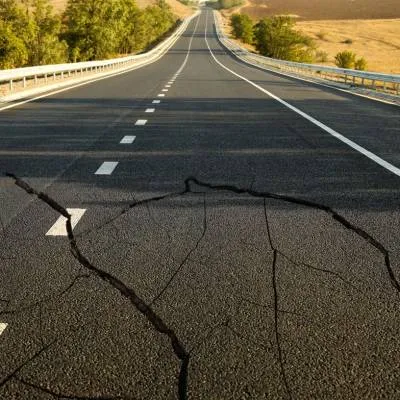
The transport minister reviewed the status of highway projects under construction and the condition of existing roads across Telangana J K and Ladakh.

Discussions examined measures to maintain infrastructure after completion and assessed whether works were progressing according to planned timelines while adhering to prescribed quality standards.

The review emphasised the need for agencies to uphold supervision at every stage so that project delivery meets specifications and avoids defects that could increase lifecycle costs.

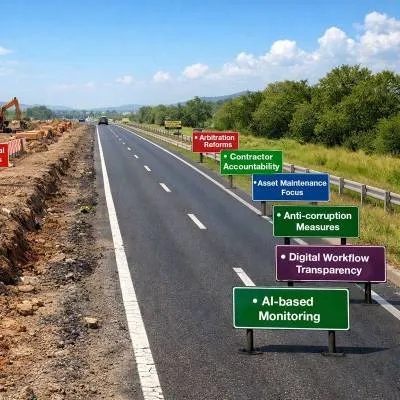
The minister instructed officials to strengthen monitoring systems and improve coordination so construction can be completed within planned timelines without compromising on quality.

Greater accountability was sought from contractors, consultants and departmental stakeholders and regular site supervision was made mandatory to detect and address bottlenecks early.

The ministry indicated that adoption of advanced construction technologies and modern engineering practices will improve durability, riding comfort and reduce the frequency of costly repairs.

A substantial portion of the review concentrated on monsoon preparedness given the seasonal risk of heavy rainfall disrupting traffic and construction activities in several regions.

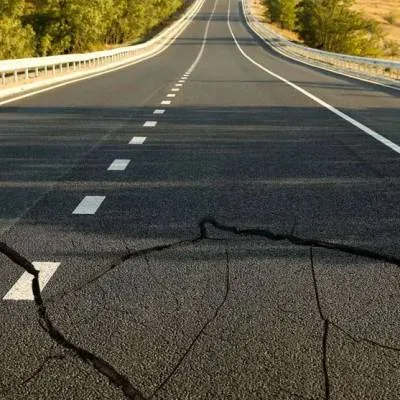
Officials were directed to implement preventive measures across project stretches, reinforce drainage systems to avoid waterlogging and protect pavements from premature deterioration.

Particular emphasis was placed on slope stabilisation and protection works in hilly areas of Jammu and Kashmir and Ladakh to guard against landslides and erosion during the monsoon.

The review concluded with a reassertion of the Government's commitment to develop a modern and reliable National Highway network with a strong focus on timely completion and quality assurance.

Continuous monitoring, improved maintenance and the wider use of technology were presented as central measures to enhance safety, resilience and commuter convenience across urban and remote corridors.

Officials were asked to prioritise rapid response mechanisms to restore traffic quickly after incidents and to ensure that highway infrastructure supports economic activity and regional connectivity.

The transport minister reviewed the status of highway projects under construction and the condition of existing roads across Telangana J K and Ladakh. Discussions examined measures to maintain infrastructure after completion and assessed whether works were progressing according to planned timelines while adhering to prescribed quality standards. The review emphasised the need for agencies to uphold supervision at every stage so that project delivery meets specifications and avoids defects that could increase lifecycle costs. The minister instructed officials to strengthen monitoring systems and improve coordination so construction can be completed within planned timelines without compromising on quality. Greater accountability was sought from contractors, consultants and departmental stakeholders and regular site supervision was made mandatory to detect and address bottlenecks early. The ministry indicated that adoption of advanced construction technologies and modern engineering practices will improve durability, riding comfort and reduce the frequency of costly repairs. A substantial portion of the review concentrated on monsoon preparedness given the seasonal risk of heavy rainfall disrupting traffic and construction activities in several regions. Officials were directed to implement preventive measures across project stretches, reinforce drainage systems to avoid waterlogging and protect pavements from premature deterioration. Particular emphasis was placed on slope stabilisation and protection works in hilly areas of Jammu and Kashmir and Ladakh to guard against landslides and erosion during the monsoon. The review concluded with a reassertion of the Government's commitment to develop a modern and reliable National Highway network with a strong focus on timely completion and quality assurance. Continuous monitoring, improved maintenance and the wider use of technology were presented as central measures to enhance safety, resilience and commuter convenience across urban and remote corridors. Officials were asked to prioritise rapid response mechanisms to restore traffic quickly after incidents and to ensure that highway infrastructure supports economic activity and regional connectivity.

Related Stories

Gold Stories

Next Story
Infrastructure Urban

KONE Opens India's First Digital Experience Centre in Pune

KONE, a global elevator and escalator manufacturer, has inaugurated its first Digital Experience Centre (DEC) in India, located in Pune. The facility aims to showcase how artificial intelligence (AI), connectivity and data-driven technologies can enhance customer experiences and improve building operations.The centre was inaugurated by Jussi Herlin, Executive Vice Chair, KONE Corporation; Philippe Delorme, President and CEO, KONE; and Nandan Nilekani, Co-founder and Chairman of the Board, Infosys.Designed as an interactive customer environment, the facility demonstrates digital solutions cover..

Next Story
Infrastructure Urban

CII GreenCo Launches Circularity Guidelines for Indian Industry

The Confederation of Indian Industry (CII) GreenCo Council has launched the CII GreenCo Circularity Guidelines – Pilot Version at the 17th CII GreenCo Waste & Resource Management Summit 2026 in Chennai. The initiative aims to strengthen resource efficiency, waste reduction and circular economy practices across Indian manufacturing and process industries.The guidelines introduce a structured framework with circularity indices covering raw materials, consumables, packaging and other resource inputs. These indicators will help industries assess existing practices, identify opportunities to ..

Next Story
Infrastructure Energy

Global Electronics Association Launches IPC-1783-CO2E Standard

The Global Electronics Association has introduced IPC-1783-CO2E, a new international standard aimed at improving consistency, transparency and comparability in product carbon footprint reporting across the electronics manufacturing industry.The standard, titled International Standard for Data Collection and Reporting of CO2 Equivalent (CO2e) Emissions for the Electronics Manufacturing Supply Chain, provides industry-specific guidance for collecting, estimating and reporting carbon emissions data.With increasing regulatory requirements and customer expectations, electronics manufacturers face c..

Advertisement

Subscribe to Our Newsletter

Get daily newsletters around different themes from Construction world.

STAY CONNECTED

Advertisement

SPECIAL OFFER
QR Code