+
NHAI Orders Audits and Inspections for Newly Inaugurated Highways
ROADS & HIGHWAYS

NHAI Orders Audits and Inspections for Newly Inaugurated Highways

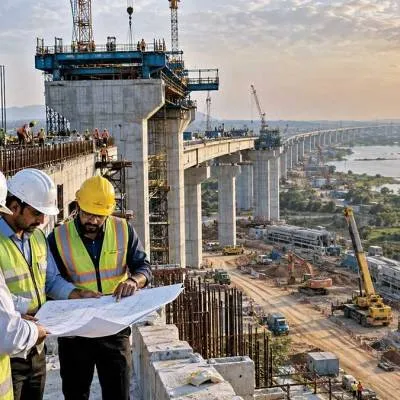
The National Highways Authority of India (NHAI) has issued new quality, safety and event-management guidelines for newly inaugurated national highway projects after a review of existing protocols and lessons from recent inauguration events by the Prime Minister, tightening checks following defects on the Delhi–Dehradun Expressway. The guidelines introduce provisions for independent audits of major projects and require more intensive inspections after roads open to traffic. The NHAI said the addendum supersedes an earlier addendum issued in October 2025.

Greenfield expressways, high-speed corridors, specialised projects and projects with a total capital cost of more than Rs 25 billion (Rs 25 bn) may undergo independent audit by a reputed third-party entity or premier institutions such as the Indian Institute of Technology and National Institute of Technology, with audits to examine anticipated traffic impact, drainage and related issues. The authority has directed joint inspections of newly opened stretches by the contractor or concessionaire project manager and the supervision consultant team leader. These inspections are to be weekly for the first three months and fortnightly for the next three months, covering pavement and riding quality, drainage, safety installations and embankment slopes.

Route patrol vehicles will routinely traverse the full length of highways after opening, and defects or anticipated deterioration are to be geo-tagged and immediately reported to the project director, contractor or concessionaire and supervision consultant for rectification. The procedures establish regular monitoring and rapid rectification mechanisms intended to limit early-life deterioration. The guidelines follow the emergence of potholes, cracks and a cave-in on the Delhi–Dehradun Expressway after intense rain.

For large prime ministerial events the circular sets out arrangements noting attendance can range from 25,000 to 0.1 million (0.1 mn) people and calls for venue capacity, parking, connectivity, security, crowd management and contingency measures for adverse weather. It recommends that the number of officials at a function be preferably restricted to 500 and that event preparations should be completed at least 24 hours before the programme. The authority also directed media teams to monitor print and digital reports and, in coordination with offices, prepare ready responses or counter narratives to address reports considered factually incorrect or politically motivated.

The National Highways Authority of India (NHAI) has issued new quality, safety and event-management guidelines for newly inaugurated national highway projects after a review of existing protocols and lessons from recent inauguration events by the Prime Minister, tightening checks following defects on the Delhi–Dehradun Expressway. The guidelines introduce provisions for independent audits of major projects and require more intensive inspections after roads open to traffic. The NHAI said the addendum supersedes an earlier addendum issued in October 2025. Greenfield expressways, high-speed corridors, specialised projects and projects with a total capital cost of more than Rs 25 billion (Rs 25 bn) may undergo independent audit by a reputed third-party entity or premier institutions such as the Indian Institute of Technology and National Institute of Technology, with audits to examine anticipated traffic impact, drainage and related issues. The authority has directed joint inspections of newly opened stretches by the contractor or concessionaire project manager and the supervision consultant team leader. These inspections are to be weekly for the first three months and fortnightly for the next three months, covering pavement and riding quality, drainage, safety installations and embankment slopes. Route patrol vehicles will routinely traverse the full length of highways after opening, and defects or anticipated deterioration are to be geo-tagged and immediately reported to the project director, contractor or concessionaire and supervision consultant for rectification. The procedures establish regular monitoring and rapid rectification mechanisms intended to limit early-life deterioration. The guidelines follow the emergence of potholes, cracks and a cave-in on the Delhi–Dehradun Expressway after intense rain. For large prime ministerial events the circular sets out arrangements noting attendance can range from 25,000 to 0.1 million (0.1 mn) people and calls for venue capacity, parking, connectivity, security, crowd management and contingency measures for adverse weather. It recommends that the number of officials at a function be preferably restricted to 500 and that event preparations should be completed at least 24 hours before the programme. The authority also directed media teams to monitor print and digital reports and, in coordination with offices, prepare ready responses or counter narratives to address reports considered factually incorrect or politically motivated.

Related Stories

Gold Stories
Next Story
Infrastructure Transport

MMRDA Targets Completion of Projects by December 2028

The Mumbai Metropolitan Region Development Authority (MMRDA) is targeting the completion of all its ongoing infrastructure projects by December 2028, a year ahead of its December 2029 deadline, Metropolitan Commissioner Dr Sanjay Mukherjee has said.Speaking at the sixth edition of the Real Estate & Infrastructure Investors' Summit (REIIS) 2026 in Mumbai, Mukherjee said the authority was developing an integrated network of roads, tunnels, sea links and Metro corridors under its broader vision of “Mumbai in 59 Minutes”.The objective is to improve east-west and north-south connectivity an..

Next Story
Building Material

High-Performance Façades Gain Ground in Indian Buildings

High-performance façades are gaining greater importance in Indian architecture as developers and architects increasingly focus on energy efficiency, thermal comfort and building performance, according to Shankar Fenestrations & Glasses.The company said modern façade systems are increasingly being considered as part of a building's overall performance strategy rather than being used primarily as aesthetic elements.High-performance glass, curtain wall systems and structural glazing can contribute to thermal regulation, solar control, daylight management and indoor comfort. Their growing ad..

Next Story
Technology

SPML Infra's 104.4 kWh BESS Battery Pack Clears Global Tests

SPML Infra has announced that its proprietary 104.4 kWh Battery Energy Storage System (BESS) battery pack has completed key international safety, performance and transportation testing and certification requirements, marking a step towards its commercial deployment.Developed under the company's own intellectual property, the battery pack has completed requirements under UL9540A, IEC 62619, IEC 63056, IEC 60730, IEC 61000-6-2, IEC 61000-6-4 and UN38.3 standards.The testing covers areas including thermal runaway safety, battery performance, system functional safety, electromagnetic compatibility..

Advertisement

Subscribe to Our Newsletter

Get daily newsletters around different themes from Construction world.

STAY CONNECTED

Advertisement

SPECIAL OFFER
QR Code