
+
Gwalior To Get State's First Elevated Road
ROADS & HIGHWAYS

Gwalior To Get State's First Elevated Road

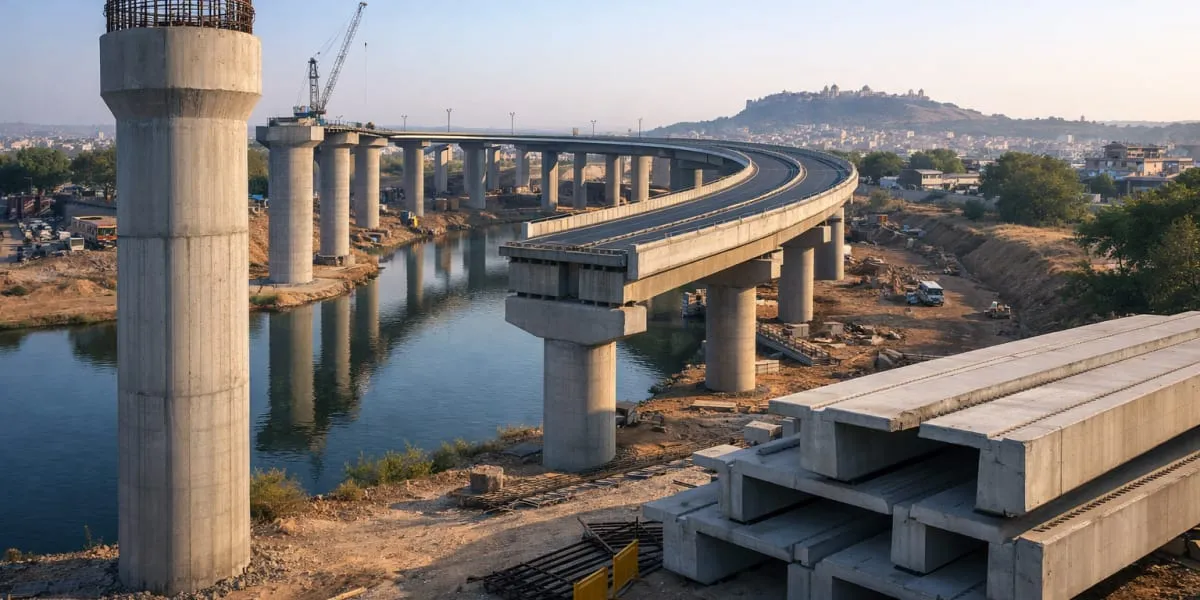
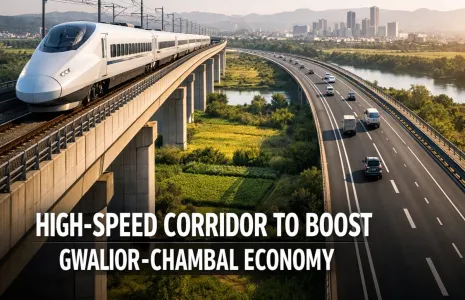
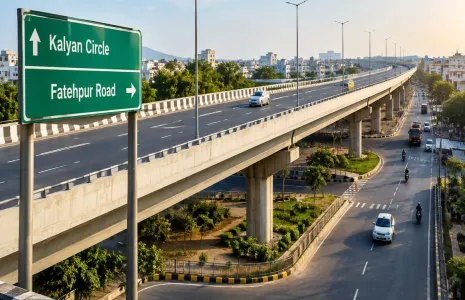
The 13.85 kilometre (km) elevated road over the Swarn Rekha river in Gwalior is under construction and is expected to be completed by 2027. The project is being developed with 293 pillars, 14 loops and 108 girders and is intended to mirror aspects of Delhi's Ring Road while remaining unique as the first elevated corridor in the state built over a river. The work is being carried out by Shri Manglam Buildcon India Private Limited under a central-state funding model.

About 90 per cent of funding is being provided by the central government and the state government is contributing the remainder, with the overall cost estimated at Rs 10 billion (bn). The two-phase design includes carriageways wider than originally planned, with two carriageways of nine metres each separated by a 1.5 metre divider, and a second-phase elevated stretch of 7.420 km. The first phase covers a 6.5 km stretch from Jalalpur Tiraaha to the Lakshmibai memorial.

60 per cent of construction has been completed so far, but delays have prompted requests for multiple extensions and the contractor has sought more time citing monsoon related disruption. The original contract provided a 30 month timeline from June 2022 and the completion date has been revised repeatedly, with the company seeking final delivery by June 2026 for the outstanding work. Once both phases are finished by 2027 the city will gain its first elevated road.

The elevated corridor will link key routes allowing vehicles to bypass the city centre and is expected to reduce traffic in Gwalior, Lashkar and Phoolbagh by nearly 50 per cent. It will feature 14 loops and connectivity points including Jiwajiganj, Phoolbagh and Girwai and is expected to save at least one hour on journeys between Morena and Shivpuri by avoiding central congestion. Rapid vehicle growth over the past six years has been significant, with about 0.125 million (mn) additional four wheelers recorded.

The 13.85 kilometre (km) elevated road over the Swarn Rekha river in Gwalior is under construction and is expected to be completed by 2027. The project is being developed with 293 pillars, 14 loops and 108 girders and is intended to mirror aspects of Delhi's Ring Road while remaining unique as the first elevated corridor in the state built over a river. The work is being carried out by Shri Manglam Buildcon India Private Limited under a central-state funding model. About 90 per cent of funding is being provided by the central government and the state government is contributing the remainder, with the overall cost estimated at Rs 10 billion (bn). The two-phase design includes carriageways wider than originally planned, with two carriageways of nine metres each separated by a 1.5 metre divider, and a second-phase elevated stretch of 7.420 km. The first phase covers a 6.5 km stretch from Jalalpur Tiraaha to the Lakshmibai memorial. 60 per cent of construction has been completed so far, but delays have prompted requests for multiple extensions and the contractor has sought more time citing monsoon related disruption. The original contract provided a 30 month timeline from June 2022 and the completion date has been revised repeatedly, with the company seeking final delivery by June 2026 for the outstanding work. Once both phases are finished by 2027 the city will gain its first elevated road. The elevated corridor will link key routes allowing vehicles to bypass the city centre and is expected to reduce traffic in Gwalior, Lashkar and Phoolbagh by nearly 50 per cent. It will feature 14 loops and connectivity points including Jiwajiganj, Phoolbagh and Girwai and is expected to save at least one hour on journeys between Morena and Shivpuri by avoiding central congestion. Rapid vehicle growth over the past six years has been significant, with about 0.125 million (mn) additional four wheelers recorded.

Next Story
Infrastructure Urban

Implementation Status of Jal Jeevan Mission

Since August 2019 the Government has implemented Jal Jeevan Mission to provide assured potable water through household tap connections in rural India. At the start of the mission only 32.3 million (mn) rural households, representing 16.7 per cent, were reported to have tap water connections. States and union territories have reported that 125.8 mn additional rural households have since been provided with tap connections. As a result, of about 193.6 mn rural households roughly 158.2 mn, or 81.71 per cent, are reported to have tap water supply at home.\n\nThe State, district and village level st..

Next Story
Infrastructure Urban

Jal Jeevan Mission Reaches Eighty One Per Cent Rural Coverage

The Government reported substantial progress under the Jal Jeevan Mission, launched in August 2019 to provide tap water to every rural household. At launch only 32.3 million (mn) rural households had tap connections and states and Union territories reported provision of 125.8 mn additional households by March 2026. Consequently, out of about 193.6 mn rural households around 158.2 mn, or 81.71 per cent, are reported to have tap water at home. The Finance Minister announced extension of the mission until 2028 in the 2025-26 budget speech. The Swachh Bharat Mission Grameen, launched in October 20..

Next Story
Infrastructure Urban

Empowering Local Governance for Sustainable Rural Water Supply

The Ministry of Jal Shakti has aligned the Jal Jeevan Mission (JJM) with the 73rd Amendment to strengthen village level planning and community ownership of water supply. Gram Panchayats, village water and sanitation committees and Pani Samitis are to plan, implement, manage and maintain piped water systems, with gram sabha processes formalising handover and oversight. Implementation support agencies including non government organisations, community based organisations and self help groups have been empanelled to train local committees and promote women participation. Under JJM, the department ..

Advertisement

Subscribe to Our Newsletter

Get daily newsletters around different themes from Construction world.

STAY CONNECTED

Advertisement

Advertisement

Advertisement