
Haji Malang Ropeway Opens Access to Historic Shrine
ROADS & HIGHWAYS

Haji Malang Ropeway Opens Access to Historic Shrine

India’s largest and longest-range funicular ropeway has become operational at Haji Malang, significantly improving access to the hilltop shrine located at Malang Gad in the mountain ranges spanning Thane and Raigad districts of the Mumbai Metropolitan Region.

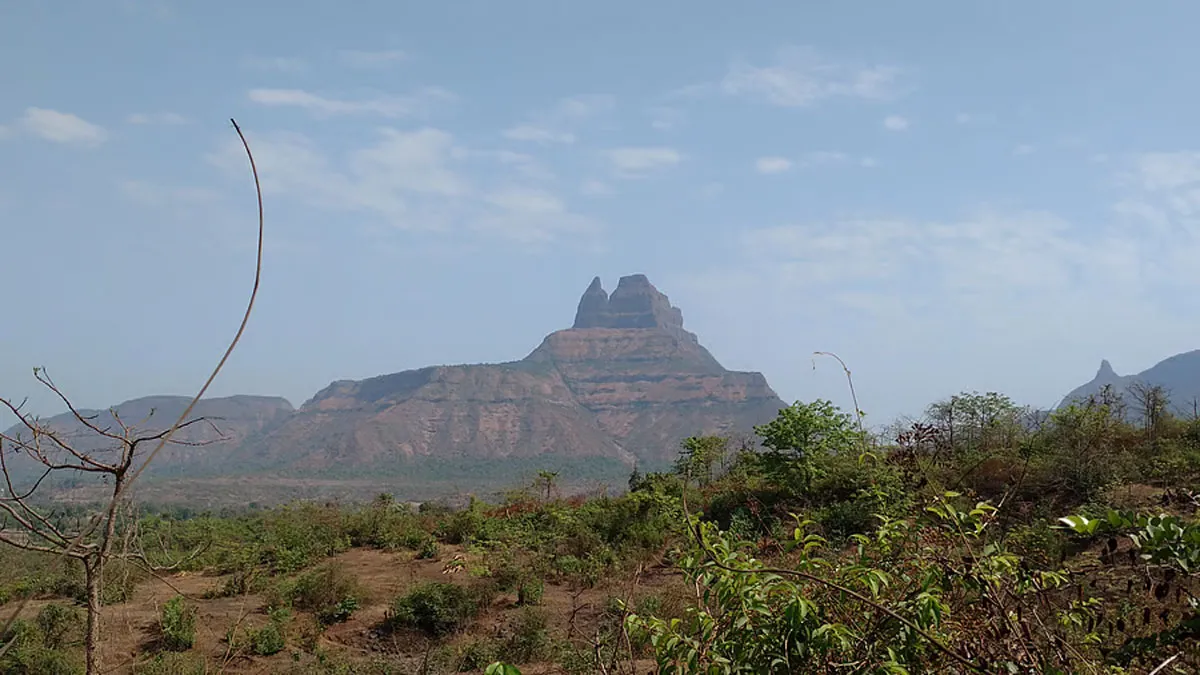
Malang Gad lies about 20 km from Kalyan suburban railway station in Thane district and roughly 62 km from south Mumbai. The site holds deep religious significance and is revered by multiple faith groups. While it houses a dargah of the 12th-century Sufi saint Hazrat Haji Abdul Rahman, popularly known as Haji Malang Baba, several right-wing Hindu groups regard the site as the temple of Shree Machindranath, considered an incarnation of Navanath of the Nath Panth.

The Malang Gad complex has three distinct levels. The lowest is a broad plateau—around 1,000 feet wide and 2,500 feet long—where the dargah of Haji Malang stands. At the far end of this plateau lies the Panch Pir, situated near the edge of the rock face and named after the five Pir or Sufi spiritual guides who are believed to have accompanied Haji Malang Baba. The shrine is located at an elevation of approximately 2,590–3,200 feet (around 790–975 metres) above sea level.

Traditionally, pilgrims had to climb nearly 2,500 steps to reach the shrine, a journey that could take several hours depending on physical ability. With the new ropeway, the ascent can now be completed in about 10 minutes. Each trip can carry up to 120 passengers, offering a safer and more accessible option for devotees, especially the elderly.

The project has been championed for years by six-time MLA Kisan Kathore, who has represented Ambarnath once and Murbad five times. Kathore inaugurated the ropeway in the presence of Sulbha Gaikwad, the BJP MLA from Kalyan East. Both leaders belong to the Bharatiya Janata Party.

The proposal for the ropeway was first submitted by Kathore when he was a member of the Nationalist Congress Party. Work on the project began in 2012 but faced several technical challenges, leading to prolonged delays before finally becoming operational.

In January–February 2024, Haji Malang returned to the political spotlight following remarks by Eknath Shinde, who spoke about the “liberation” of Malang Gad during an event at the Malang Gad Harinam Mahotsav. His comments were made against the backdrop of the pran-pratistha ceremony of Ram Lalla at the Ram Mandir in Ayodhya, attended by Narendra Modi.

The demand for the “liberation” of Haji Malang dates back to the 1980s and is associated with the late ‘Dharmaveer’ Anand Dighe and the Shiv Sena unit of Thane.

Every year during February and March, the annual urs is held at the dargah, drawing large crowds from across India who visit the shrine to offer prayers. With the ropeway now operational, authorities expect a further increase in footfall and improved safety and convenience for pilgrims.

India’s largest and longest-range funicular ropeway has become operational at Haji Malang, significantly improving access to the hilltop shrine located at Malang Gad in the mountain ranges spanning Thane and Raigad districts of the Mumbai Metropolitan Region. Malang Gad lies about 20 km from Kalyan suburban railway station in Thane district and roughly 62 km from south Mumbai. The site holds deep religious significance and is revered by multiple faith groups. While it houses a dargah of the 12th-century Sufi saint Hazrat Haji Abdul Rahman, popularly known as Haji Malang Baba, several right-wing Hindu groups regard the site as the temple of Shree Machindranath, considered an incarnation of Navanath of the Nath Panth. The Malang Gad complex has three distinct levels. The lowest is a broad plateau—around 1,000 feet wide and 2,500 feet long—where the dargah of Haji Malang stands. At the far end of this plateau lies the Panch Pir, situated near the edge of the rock face and named after the five Pir or Sufi spiritual guides who are believed to have accompanied Haji Malang Baba. The shrine is located at an elevation of approximately 2,590–3,200 feet (around 790–975 metres) above sea level. Traditionally, pilgrims had to climb nearly 2,500 steps to reach the shrine, a journey that could take several hours depending on physical ability. With the new ropeway, the ascent can now be completed in about 10 minutes. Each trip can carry up to 120 passengers, offering a safer and more accessible option for devotees, especially the elderly. The project has been championed for years by six-time MLA Kisan Kathore, who has represented Ambarnath once and Murbad five times. Kathore inaugurated the ropeway in the presence of Sulbha Gaikwad, the BJP MLA from Kalyan East. Both leaders belong to the Bharatiya Janata Party. The proposal for the ropeway was first submitted by Kathore when he was a member of the Nationalist Congress Party. Work on the project began in 2012 but faced several technical challenges, leading to prolonged delays before finally becoming operational. In January–February 2024, Haji Malang returned to the political spotlight following remarks by Eknath Shinde, who spoke about the “liberation” of Malang Gad during an event at the Malang Gad Harinam Mahotsav. His comments were made against the backdrop of the pran-pratistha ceremony of Ram Lalla at the Ram Mandir in Ayodhya, attended by Narendra Modi. The demand for the “liberation” of Haji Malang dates back to the 1980s and is associated with the late ‘Dharmaveer’ Anand Dighe and the Shiv Sena unit of Thane. Every year during February and March, the annual urs is held at the dargah, drawing large crowds from across India who visit the shrine to offer prayers. With the ropeway now operational, authorities expect a further increase in footfall and improved safety and convenience for pilgrims.

Next Story
Infrastructure Transport

MMRDA advances 250 m on Orange Gate–Marine Drive tunnel

The Mumbai Metropolitan Region Development Authority (MMRDA) has completed 250 m of underground tunnelling for the Orange Gate–Marine Drive Urban Road Tunnel using India’s largest slurry shield tunnel boring machine (TBM) deployed for an urban road project.The project involves twin tunnels extending over 7 km beneath critical transport corridors, including Central Railway, Western Railway and Metro Line 3. The work requires high-precision engineering to navigate densely developed urban infrastructure.Once completed, the tunnel is expected to reduce travel time between Orange Gate and Marin..

Next Story
Infrastructure Urban

Hindustan Zinc Pays Rs 188.46 Billion in FY26

Hindustan Zinc contributed Rs 188.46 billion to the public exchequer in FY 2025-26, according to its 9th Tax Transparency Report. The contribution, equivalent to 46 per cent of the company’s revenue, included direct and indirect taxes, government royalties, dividends to the Government of India, withholding taxes and other statutory levies.The company’s five-year cumulative contribution to the exchequer stood at Rs 915.72 billion. In FY26, Hindustan Zinc reported revenue of Rs 408.44 billion, EBITDA of Rs 221.62 billion and profit after tax of Rs 138.32 billion. It also achieved its highest..

Next Story
Infrastructure Urban

World of Concrete India 2026 Opens in Mumbai

Informa Markets in India will host the 12th edition of World of Concrete India 2026 from 3–5 June 2026 at the Bombay Exhibition Centre, Mumbai. The specialised B2B exhibition will bring together manufacturers, suppliers, contractors, developers, architects, consultants, infrastructure companies, project leaders and government stakeholders.The event is expected to feature over 350 brands and more than 18,000 trade professionals. It will cover concrete and cement, dry mortar, precast technologies, formwork, construction chemicals, industrial and commercial flooring, scaffolding, safety solutio..

Advertisement

Subscribe to Our Newsletter

Get daily newsletters around different themes from Construction world.

STAY CONNECTED

Advertisement

Advertisement

Advertisement