India Fast-Tracks Big Infrastructure to Boost Growth
ROADS & HIGHWAYS

India Fast-Tracks Big Infrastructure to Boost Growth

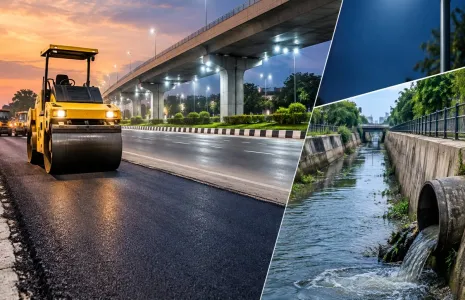
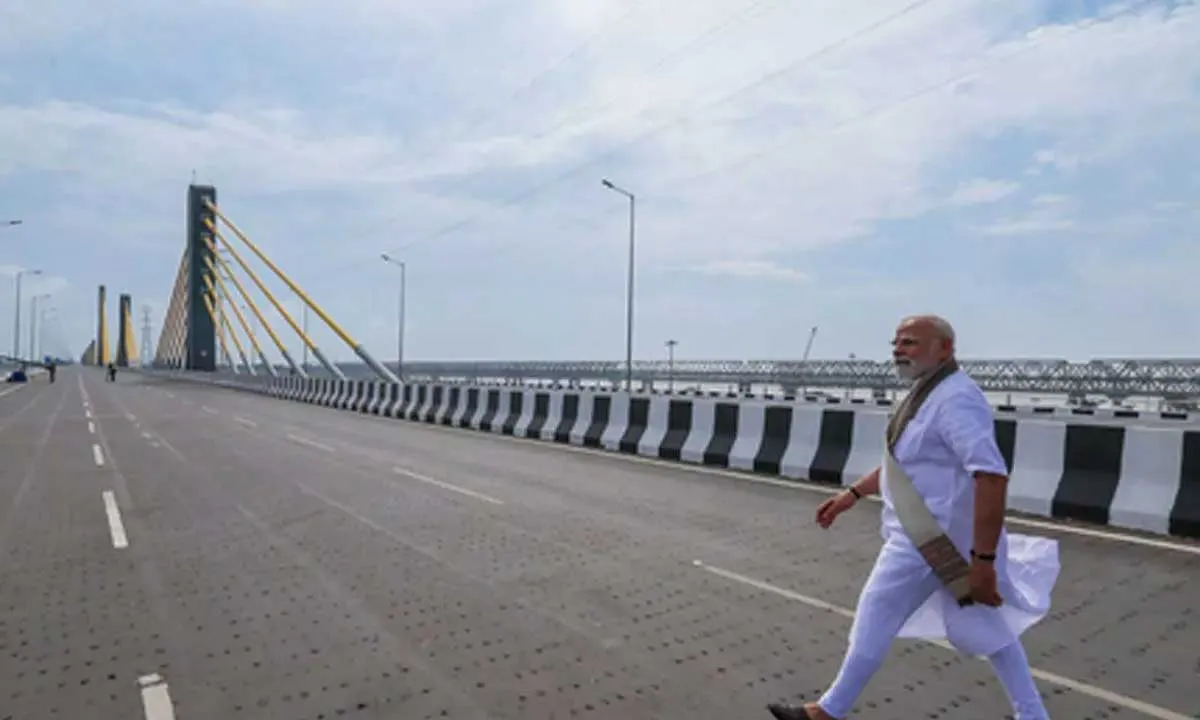
India is shifting its policy focus to fast-tracking approvals for large-scale infrastructure projects under the ‘Viksit Bharat 2047’ plan, following the implementation of Goods and Services Tax (GST) reforms. Government officials said ministries have been instructed to prioritise projects of national importance, especially those spanning multiple states or transforming entire sectors.
The road transport ministry aims to construct 50,000 km of access-controlled highways over the next 10–12 years at an estimated cost of Rs 20 billion. The Union Budget for FY26 allocated Rs 11.21 billion for infrastructure spending, with public-private partnerships (PPP) expected to play a key role in projects with strong return potential, easing pressure on state finances. Officials noted that bundling projects will accelerate approvals, with PPPs as the primary financing mechanism for high-return ventures. The strategy is designed to support India’s 7.8 per cent GDP growth in Q1 FY26 amid global tariff pressures and geopolitical risks.
The World Bank has emphasised that India needs to raise its real investment rate from 33.5 per cent of GDP to 40 per cent by 2035 to sustain long-term growth. Rising infrastructure needs underpin the nation’s urbanisation, climate commitments, and economic development goals. Capital expenditure surged to Rs 2.75 billion during April–June 2025, representing 24.5 per cent of the full-year target, reflecting the government’s investment in large-scale projects to stimulate growth and employment.
Meanwhile, global rating agency Fitch, citing the robust 7.8 per cent growth in Q2 2025, revised its FY26 growth forecast upwards to 6.9 per cent from the 6.5 per cent projected in June.

India is shifting its policy focus to fast-tracking approvals for large-scale infrastructure projects under the ‘Viksit Bharat 2047’ plan, following the implementation of Goods and Services Tax (GST) reforms. Government officials said ministries have been instructed to prioritise projects of national importance, especially those spanning multiple states or transforming entire sectors.The road transport ministry aims to construct 50,000 km of access-controlled highways over the next 10–12 years at an estimated cost of Rs 20 billion. The Union Budget for FY26 allocated Rs 11.21 billion for infrastructure spending, with public-private partnerships (PPP) expected to play a key role in projects with strong return potential, easing pressure on state finances. Officials noted that bundling projects will accelerate approvals, with PPPs as the primary financing mechanism for high-return ventures. The strategy is designed to support India’s 7.8 per cent GDP growth in Q1 FY26 amid global tariff pressures and geopolitical risks.The World Bank has emphasised that India needs to raise its real investment rate from 33.5 per cent of GDP to 40 per cent by 2035 to sustain long-term growth. Rising infrastructure needs underpin the nation’s urbanisation, climate commitments, and economic development goals. Capital expenditure surged to Rs 2.75 billion during April–June 2025, representing 24.5 per cent of the full-year target, reflecting the government’s investment in large-scale projects to stimulate growth and employment.Meanwhile, global rating agency Fitch, citing the robust 7.8 per cent growth in Q2 2025, revised its FY26 growth forecast upwards to 6.9 per cent from the 6.5 per cent projected in June. 

Next Story
Infrastructure Transport

MMRDA advances 250 m on Orange Gate–Marine Drive tunnel

The Mumbai Metropolitan Region Development Authority (MMRDA) has completed 250 m of underground tunnelling for the Orange Gate–Marine Drive Urban Road Tunnel using India’s largest slurry shield tunnel boring machine (TBM) deployed for an urban road project.The project involves twin tunnels extending over 7 km beneath critical transport corridors, including Central Railway, Western Railway and Metro Line 3. The work requires high-precision engineering to navigate densely developed urban infrastructure.Once completed, the tunnel is expected to reduce travel time between Orange Gate and Marin..

Next Story
Infrastructure Urban

Hindustan Zinc Pays Rs 188.46 Billion in FY26

Hindustan Zinc contributed Rs 188.46 billion to the public exchequer in FY 2025-26, according to its 9th Tax Transparency Report. The contribution, equivalent to 46 per cent of the company’s revenue, included direct and indirect taxes, government royalties, dividends to the Government of India, withholding taxes and other statutory levies.The company’s five-year cumulative contribution to the exchequer stood at Rs 915.72 billion. In FY26, Hindustan Zinc reported revenue of Rs 408.44 billion, EBITDA of Rs 221.62 billion and profit after tax of Rs 138.32 billion. It also achieved its highest..

Next Story
Infrastructure Urban

World of Concrete India 2026 Opens in Mumbai

Informa Markets in India will host the 12th edition of World of Concrete India 2026 from 3–5 June 2026 at the Bombay Exhibition Centre, Mumbai. The specialised B2B exhibition will bring together manufacturers, suppliers, contractors, developers, architects, consultants, infrastructure companies, project leaders and government stakeholders.The event is expected to feature over 350 brands and more than 18,000 trade professionals. It will cover concrete and cement, dry mortar, precast technologies, formwork, construction chemicals, industrial and commercial flooring, scaffolding, safety solutio..

Advertisement

Subscribe to Our Newsletter

Get daily newsletters around different themes from Construction world.

STAY CONNECTED

Advertisement

Advertisement

Advertisement