Maharashtra Approves 25km Elevated Road to Navi Mumbai Airport
ROADS & HIGHWAYS

Maharashtra Approves 25km Elevated Road to Navi Mumbai Airport

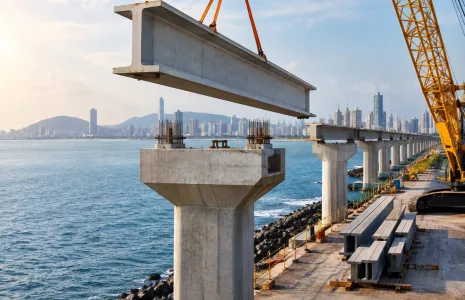
The Maharashtra cabinet recently approved the construction of a 25-kilometre elevated road connecting Thane to the upcoming Navi Mumbai International Airport (NMIA). The decision was taken during a cabinet meeting chaired by Chief Minister Devendra Fadnavis.

Alongside this project, the cabinet also cleared extensions to the Pune and Nagpur Metro lines, new stations in Pune, and plans for an international business hub in Nagpur. Several policies concerning energy and tribal development were also passed during the meeting.

The Thane–NMIA Elevated Road

The six-lane elevated road, stretching 25 kilometres, will connect Thane and Mira-Bhayander to the airport. Built at an estimated cost of Rs 6.43 billion by the City and Industrial Development Corporation of Maharashtra Limited (CIDCO), the road will feature six interchanges and is expected to cut travel time from 90 minutes to 30 minutes, offering faster access and reducing congestion on existing routes.

The Atal Setu

The Atal Setu, also known as the Mumbai Trans Harbour Link (MTHL), is a key infrastructure project connecting Mumbai to Navi Mumbai by spanning approximately 22 kilometres across the Mumbai Harbour. The route starts from Sewri in South Mumbai and stretches eastward over the sea to Nhava in Navi Mumbai.

The sea bridge eases congestion on the Vashi and Airoli bridges and facilitates quicker access to major areas of Navi Mumbai, including NMIA, via connecting roads and highways. It plays a vital role in improving connectivity between Mumbai’s island city and the expanding satellite city.

As of January 2025, a concessional toll of Rs 250 is applicable for four-wheelers on the Atal Setu for both one-way and return journeys. A return toll of Rs 125 applies if the return trip is completed within 12 hours. Electric vehicles, including electric cars and buses, are exempt from toll charges on the Atal Setu for the next five years as part of Maharashtra’s sustainable transport initiative.

Thane–NMIA Elevated Road: Toll Rate

The newly approved elevated road is expected to ease access to NMIA, with a one-way toll of Rs 365, according to reports. The airport is projected to handle 2 million passengers annually in its initial phase and up to 9 million by 2038. Authorities believe that saving travel time and reducing congestion will benefit millions of commuters over the long term, despite the higher toll cost.

Beyond providing convenience to travellers, the elevated road is expected to support economic growth in the region. Enhanced airport connectivity is likely to attract businesses, boost real estate development, and generate new job opportunities.


The Maharashtra cabinet recently approved the construction of a 25-kilometre elevated road connecting Thane to the upcoming Navi Mumbai International Airport (NMIA). The decision was taken during a cabinet meeting chaired by Chief Minister Devendra Fadnavis.Alongside this project, the cabinet also cleared extensions to the Pune and Nagpur Metro lines, new stations in Pune, and plans for an international business hub in Nagpur. Several policies concerning energy and tribal development were also passed during the meeting.The Thane–NMIA Elevated RoadThe six-lane elevated road, stretching 25 kilometres, will connect Thane and Mira-Bhayander to the airport. Built at an estimated cost of Rs 6.43 billion by the City and Industrial Development Corporation of Maharashtra Limited (CIDCO), the road will feature six interchanges and is expected to cut travel time from 90 minutes to 30 minutes, offering faster access and reducing congestion on existing routes.The Atal SetuThe Atal Setu, also known as the Mumbai Trans Harbour Link (MTHL), is a key infrastructure project connecting Mumbai to Navi Mumbai by spanning approximately 22 kilometres across the Mumbai Harbour. The route starts from Sewri in South Mumbai and stretches eastward over the sea to Nhava in Navi Mumbai.The sea bridge eases congestion on the Vashi and Airoli bridges and facilitates quicker access to major areas of Navi Mumbai, including NMIA, via connecting roads and highways. It plays a vital role in improving connectivity between Mumbai’s island city and the expanding satellite city.As of January 2025, a concessional toll of Rs 250 is applicable for four-wheelers on the Atal Setu for both one-way and return journeys. A return toll of Rs 125 applies if the return trip is completed within 12 hours. Electric vehicles, including electric cars and buses, are exempt from toll charges on the Atal Setu for the next five years as part of Maharashtra’s sustainable transport initiative.Thane–NMIA Elevated Road: Toll RateThe newly approved elevated road is expected to ease access to NMIA, with a one-way toll of Rs 365, according to reports. The airport is projected to handle 2 million passengers annually in its initial phase and up to 9 million by 2038. Authorities believe that saving travel time and reducing congestion will benefit millions of commuters over the long term, despite the higher toll cost.Beyond providing convenience to travellers, the elevated road is expected to support economic growth in the region. Enhanced airport connectivity is likely to attract businesses, boost real estate development, and generate new job opportunities. 

Next Story
Infrastructure Transport

MMRDA advances 250 m on Orange Gate–Marine Drive tunnel

The Mumbai Metropolitan Region Development Authority (MMRDA) has completed 250 m of underground tunnelling for the Orange Gate–Marine Drive Urban Road Tunnel using India’s largest slurry shield tunnel boring machine (TBM) deployed for an urban road project.The project involves twin tunnels extending over 7 km beneath critical transport corridors, including Central Railway, Western Railway and Metro Line 3. The work requires high-precision engineering to navigate densely developed urban infrastructure.Once completed, the tunnel is expected to reduce travel time between Orange Gate and Marin..

Next Story
Infrastructure Urban

Hindustan Zinc Pays Rs 188.46 Billion in FY26

Hindustan Zinc contributed Rs 188.46 billion to the public exchequer in FY 2025-26, according to its 9th Tax Transparency Report. The contribution, equivalent to 46 per cent of the company’s revenue, included direct and indirect taxes, government royalties, dividends to the Government of India, withholding taxes and other statutory levies.The company’s five-year cumulative contribution to the exchequer stood at Rs 915.72 billion. In FY26, Hindustan Zinc reported revenue of Rs 408.44 billion, EBITDA of Rs 221.62 billion and profit after tax of Rs 138.32 billion. It also achieved its highest..

Next Story
Infrastructure Urban

World of Concrete India 2026 Opens in Mumbai

Informa Markets in India will host the 12th edition of World of Concrete India 2026 from 3–5 June 2026 at the Bombay Exhibition Centre, Mumbai. The specialised B2B exhibition will bring together manufacturers, suppliers, contractors, developers, architects, consultants, infrastructure companies, project leaders and government stakeholders.The event is expected to feature over 350 brands and more than 18,000 trade professionals. It will cover concrete and cement, dry mortar, precast technologies, formwork, construction chemicals, industrial and commercial flooring, scaffolding, safety solutio..

Advertisement

Subscribe to Our Newsletter

Get daily newsletters around different themes from Construction world.

STAY CONNECTED

Advertisement

Advertisement

Advertisement

-->