Myanmar And Thailand Urge Faster Progress On Trilateral Highway
ROADS & HIGHWAYS

Myanmar And Thailand Urge Faster Progress On Trilateral Highway

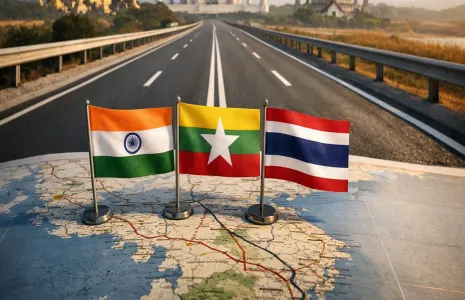
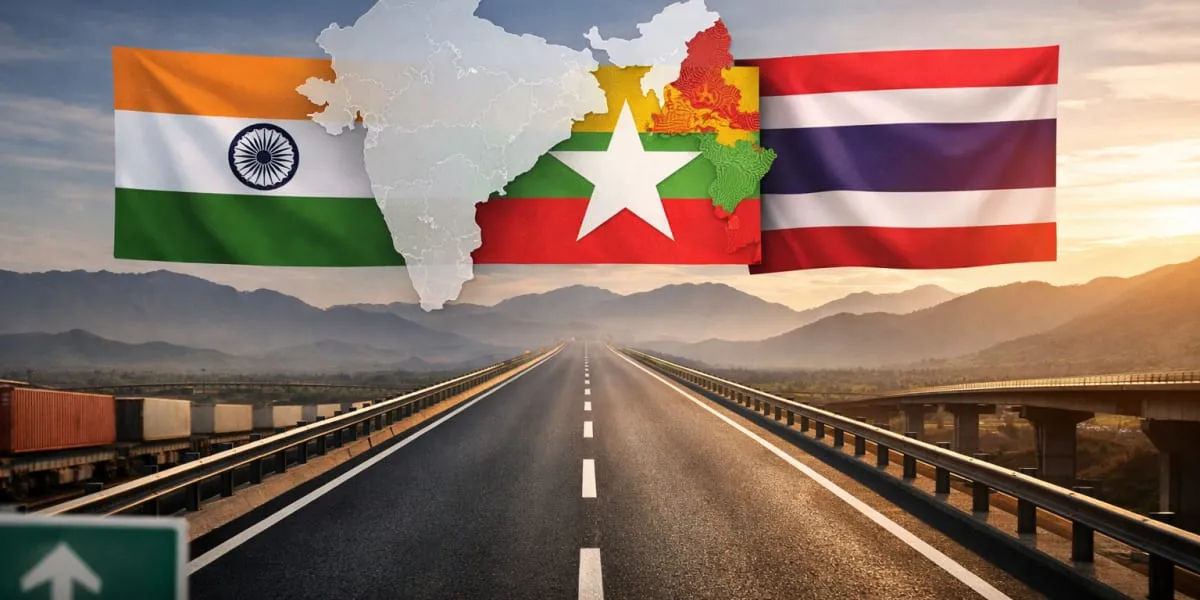
Myanmar and Thailand have urged faster progress on the India-Myanmar-Thailand Trilateral Highway Project (Trilateral Highway) and related cross-border infrastructure following a joint statement issued after the visit of Myanmar President U Min Aung Hlaing to Bangkok. The leaders discussed measures to strengthen transport and economic links between the neighbouring countries and set out a shared interest in deeper regional connectivity. The statement framed the initiative as central to enhancing trade and movement across the area.

They reaffirmed their commitment to enhancing connectivity through improved transport and infrastructure linkages and called for the establishment of a Joint Working Group on enhancing connectivity between Myanmar and Thailand. The proposed mechanism was described as a vehicle to coordinate multimodal connectivity plans covering road, maritime, port and cross-border links and to facilitate greater alignment of policies, procedures and regulations. Officials indicated the group would seek to harmonise standards and expedite project planning and implementation.

Among the priorities identified was advancement of the Trilateral Highway, which aims to improve links between South Asia and Southeast Asia and to open new corridors for commerce and investment. The discussions also encompassed promotion of maritime connectivity, improvement of transport corridors and exploration of special economic zones and logistics facilities along the shared border. These measures were presented as means to boost trade, reduce logistics costs and attract greater investment to the region.

The leaders welcomed the reopening of the border checkpoint at the Second Myanmar-Thailand Friendship Bridge linking Myawaddy and Mae Sot and agreed to consider reopening additional border trade posts subject to mutual agreement and the security situation on the ground. They signalled intent to accelerate cooperative work and to pursue practical steps that would translate the strategic vision for regional integration into tangible projects. Continued dialogue was portrayed as essential to maintaining momentum on the highway and associated connectivity initiatives.

Myanmar and Thailand have urged faster progress on the India-Myanmar-Thailand Trilateral Highway Project (Trilateral Highway) and related cross-border infrastructure following a joint statement issued after the visit of Myanmar President U Min Aung Hlaing to Bangkok. The leaders discussed measures to strengthen transport and economic links between the neighbouring countries and set out a shared interest in deeper regional connectivity. The statement framed the initiative as central to enhancing trade and movement across the area. They reaffirmed their commitment to enhancing connectivity through improved transport and infrastructure linkages and called for the establishment of a Joint Working Group on enhancing connectivity between Myanmar and Thailand. The proposed mechanism was described as a vehicle to coordinate multimodal connectivity plans covering road, maritime, port and cross-border links and to facilitate greater alignment of policies, procedures and regulations. Officials indicated the group would seek to harmonise standards and expedite project planning and implementation. Among the priorities identified was advancement of the Trilateral Highway, which aims to improve links between South Asia and Southeast Asia and to open new corridors for commerce and investment. The discussions also encompassed promotion of maritime connectivity, improvement of transport corridors and exploration of special economic zones and logistics facilities along the shared border. These measures were presented as means to boost trade, reduce logistics costs and attract greater investment to the region. The leaders welcomed the reopening of the border checkpoint at the Second Myanmar-Thailand Friendship Bridge linking Myawaddy and Mae Sot and agreed to consider reopening additional border trade posts subject to mutual agreement and the security situation on the ground. They signalled intent to accelerate cooperative work and to pursue practical steps that would translate the strategic vision for regional integration into tangible projects. Continued dialogue was portrayed as essential to maintaining momentum on the highway and associated connectivity initiatives.

Related Stories

Gold Stories

Next Story
Infrastructure Urban

KONE Opens India's First Digital Experience Centre in Pune

KONE, a global elevator and escalator manufacturer, has inaugurated its first Digital Experience Centre (DEC) in India, located in Pune. The facility aims to showcase how artificial intelligence (AI), connectivity and data-driven technologies can enhance customer experiences and improve building operations.The centre was inaugurated by Jussi Herlin, Executive Vice Chair, KONE Corporation; Philippe Delorme, President and CEO, KONE; and Nandan Nilekani, Co-founder and Chairman of the Board, Infosys.Designed as an interactive customer environment, the facility demonstrates digital solutions cover..

Next Story
Infrastructure Urban

CII GreenCo Launches Circularity Guidelines for Indian Industry

The Confederation of Indian Industry (CII) GreenCo Council has launched the CII GreenCo Circularity Guidelines – Pilot Version at the 17th CII GreenCo Waste & Resource Management Summit 2026 in Chennai. The initiative aims to strengthen resource efficiency, waste reduction and circular economy practices across Indian manufacturing and process industries.The guidelines introduce a structured framework with circularity indices covering raw materials, consumables, packaging and other resource inputs. These indicators will help industries assess existing practices, identify opportunities to ..

Next Story
Infrastructure Energy

Global Electronics Association Launches IPC-1783-CO2E Standard

The Global Electronics Association has introduced IPC-1783-CO2E, a new international standard aimed at improving consistency, transparency and comparability in product carbon footprint reporting across the electronics manufacturing industry.The standard, titled International Standard for Data Collection and Reporting of CO2 Equivalent (CO2e) Emissions for the Electronics Manufacturing Supply Chain, provides industry-specific guidance for collecting, estimating and reporting carbon emissions data.With increasing regulatory requirements and customer expectations, electronics manufacturers face c..

Advertisement

Subscribe to Our Newsletter

Get daily newsletters around different themes from Construction world.

STAY CONNECTED

Advertisement

SPECIAL OFFER
QR Code