




NHAI Sets Four Guinness Records on Andhra Highway
ROADS & HIGHWAYS

NHAI Sets Four Guinness Records on Andhra Highway

India’s highway construction reached a new benchmark as the National Highways Authority of India, working with concessionaire Rajpath Infracon Private Limited, achieved four Guinness World Records during the execution of the Bengaluru–Kadapa–Vijayawada Economic Corridor (NH-544G) in Andhra Pradesh.

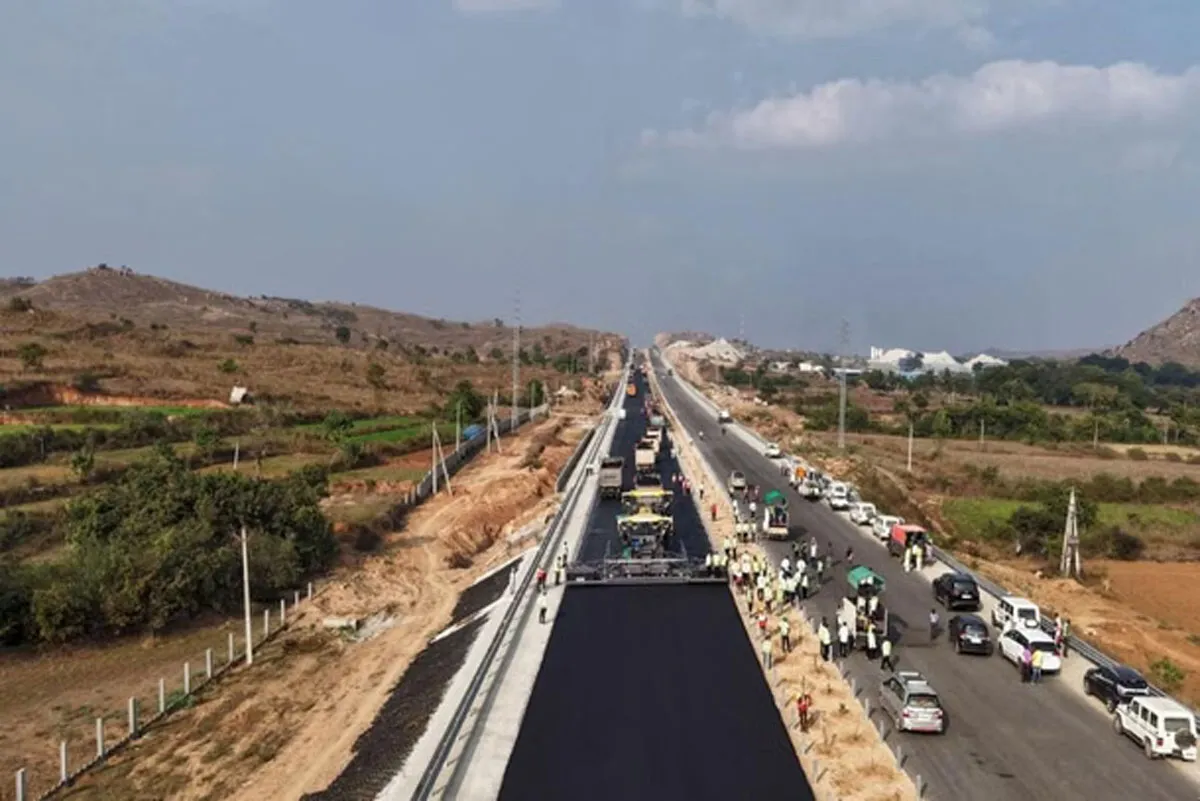
The milestone was achieved in two phases. On January 6, 2026, construction teams near Puttaparthi set two global records in a single day by completing the longest continuous laying of bituminous concrete—28.89 lane km in 24 hours—and the highest quantity of bituminous concrete laid continuously at 10,655 metric tonnes. Both feats were accomplished on a six-lane national highway, a first worldwide.

The momentum continued on January 11, 2026, when two more records were set across Packages 2 and 3 of the corridor. These included the uninterrupted laying of 57,500 metric tonnes of bituminous concrete and continuous paving of 156 lane km, equivalent to a three-lane-wide stretch of 52 km. This significantly surpassed the previous world record of 84.4 lane km.

Officials attributed the achievement to meticulous planning, advanced machinery and disciplined on-ground execution. The operation involved 70 tippers, five hot mix plants, a paver and 17 rollers working in synchrony. Quality assurance was closely monitored with support from IIT Bombay and original equipment manufacturers to ensure compliance with stringent safety and durability standards.

On January 12, Union Minister Nitin Gadkari joined virtually with Andhra Pradesh Chief Minister Chandrababu Naidu to commend NHAI and the concessionaire for the accomplishment. Gadkari said the records highlight India’s emphasis on innovation, sustainable construction, skill development and cleaner technologies, including bitumen derived from rice straw.

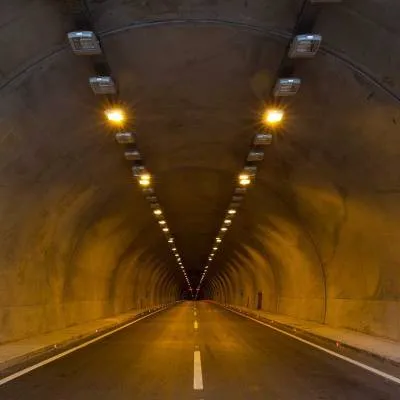
Spanning 343 km, the six-lane economic corridor is designed for high-speed, safe travel and includes 17 interchanges, 10 wayside amenities, a 5.3 km tunnel and a 21 km forest stretch. Once operational, it is expected to shorten travel distance by about 100 km and cut journey time by nearly four hours, strengthening connectivity between Bengaluru, Rayalaseema and coastal Andhra Pradesh.

India’s highway construction reached a new benchmark as the National Highways Authority of India, working with concessionaire Rajpath Infracon Private Limited, achieved four Guinness World Records during the execution of the Bengaluru–Kadapa–Vijayawada Economic Corridor (NH-544G) in Andhra Pradesh. The milestone was achieved in two phases. On January 6, 2026, construction teams near Puttaparthi set two global records in a single day by completing the longest continuous laying of bituminous concrete—28.89 lane km in 24 hours—and the highest quantity of bituminous concrete laid continuously at 10,655 metric tonnes. Both feats were accomplished on a six-lane national highway, a first worldwide. The momentum continued on January 11, 2026, when two more records were set across Packages 2 and 3 of the corridor. These included the uninterrupted laying of 57,500 metric tonnes of bituminous concrete and continuous paving of 156 lane km, equivalent to a three-lane-wide stretch of 52 km. This significantly surpassed the previous world record of 84.4 lane km. Officials attributed the achievement to meticulous planning, advanced machinery and disciplined on-ground execution. The operation involved 70 tippers, five hot mix plants, a paver and 17 rollers working in synchrony. Quality assurance was closely monitored with support from IIT Bombay and original equipment manufacturers to ensure compliance with stringent safety and durability standards. On January 12, Union Minister Nitin Gadkari joined virtually with Andhra Pradesh Chief Minister Chandrababu Naidu to commend NHAI and the concessionaire for the accomplishment. Gadkari said the records highlight India’s emphasis on innovation, sustainable construction, skill development and cleaner technologies, including bitumen derived from rice straw. Spanning 343 km, the six-lane economic corridor is designed for high-speed, safe travel and includes 17 interchanges, 10 wayside amenities, a 5.3 km tunnel and a 21 km forest stretch. Once operational, it is expected to shorten travel distance by about 100 km and cut journey time by nearly four hours, strengthening connectivity between Bengaluru, Rayalaseema and coastal Andhra Pradesh.

Next Story
Infrastructure Energy

ONGC Caps Mori-5 Well in Five Days After Blowout

Oil and Natural Gas Corporation Limited (ONGC) has successfully established well control at the Mori-5 well, completing the capping operation within a record five days. The achievement underscores ONGC’s strong blowout response capability and operational discipline in managing critical field incidents.The blowout occurred on 5 January 2026 during service operations at the well being carried out by PEC contractor M/s Deep Industries Limited. ONGC immediately activated its in-house Crisis Management framework and mobilised specialised manpower and equipment to ensure rapid, safe and controlled..

Next Story
Infrastructure Urban

NIIT MTS Acquires SweetRush for Up to $26 Million

NIIT Learning Systems Limited, through its NIIT Managed Training Services (NIIT MTS) arm, has recently acquired 100 per cent of US-based SweetRush, Inc for an aggregate consideration of up to USD 26 million. The transaction was completed via NIIT MTS’ wholly owned subsidiary, NIIT (USA), Inc., and includes performance-linked earnouts over the next five years, subject to customary adjustments.Headquartered in San Francisco, SweetRush was founded in 2001 by Arturo Schwartzberg and Andrei Hedstrom. The company employs over 100 professionals, supported by an extended network of learning experts ..

Next Story
Infrastructure Urban

Lemon Tree–Fleur Restructuring to Create Two Focused Platforms

Lemon Tree Hotels Limited and Fleur Hotels Limited have recently announced that their Boards have approved a Composite Scheme of Arrangement to simplify group structure, sharpen strategic focus and unlock long-term shareholder value, subject to regulatory and shareholder approvals.The reorganisation will result in two distinct yet complementary platforms. Lemon Tree Hotels will operate as a pure-play, asset-light hotel management and brand platform, while Fleur Hotels, a subsidiary of Lemon Tree, will emerge as a large-scale hotel ownership and development platform with a strong growth pipelin..

Advertisement

Subscribe to Our Newsletter

Get daily newsletters around different themes from Construction world.

STAY CONNECTED

Advertisement

Advertisement

Advertisement

Advertisement

Open In App