+
NHAI’s New Rules Set Lane Standards for High-Speed Corridors
ROADS & HIGHWAYS

NHAI’s New Rules Set Lane Standards for High-Speed Corridors

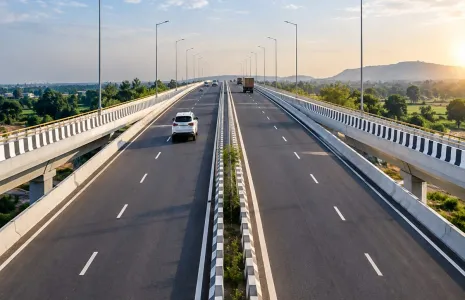
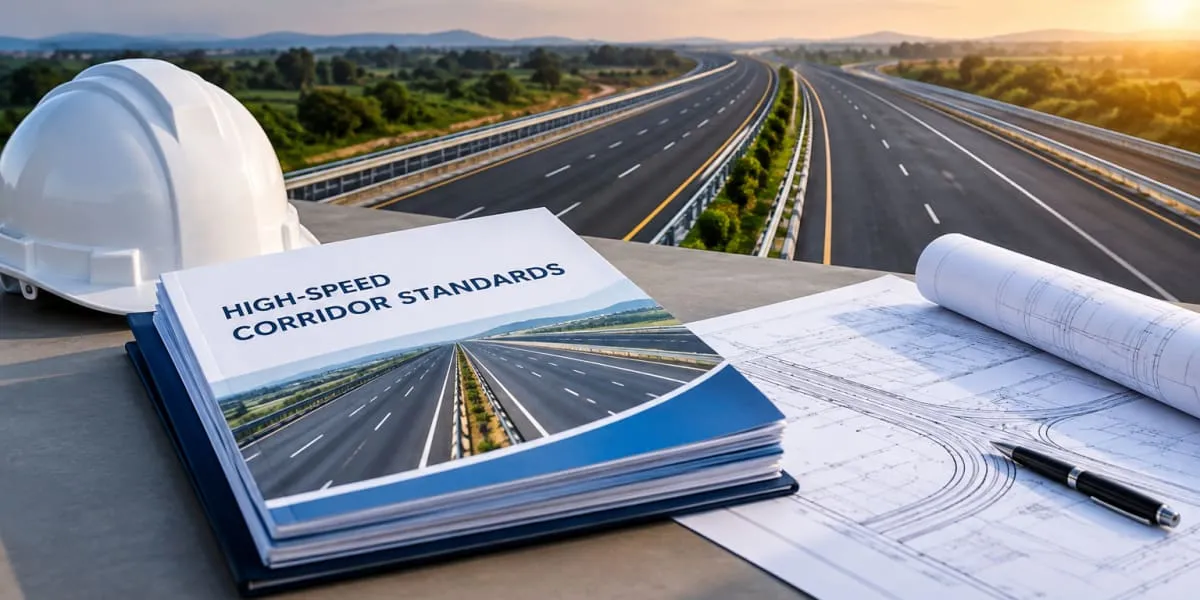
The National Highways Authority of India (NHAI) has issued detailed guidelines to standardise the design, construction and specifications of high-speed corridors, also known as access-controlled national highways or expressways. The guidelines seek to end variations in the standards used by consultants while preparing detailed project reports for such projects.

The move comes as India targets 50,000 km of high-speed corridors by 2036-37 under Vision 2047. The network totalled 3,052 km at the end of December 2025. NHAI has directed that traffic assessments account for existing, generated, induced and diverted traffic, supported by traffic modelling and validation from sources such as toll transactions, GST portals and mining departments.

Under the new lane norms, corridors with traffic of up to 15,000 passenger car units (PCU) should have a 4-lane highway and a 4-lane structure. Traffic between 15,000 and 25,000 PCU will require a 4-lane highway with a 6-lane structure, while corridors carrying 25,000 to 40,000 PCU should have both a 6-lane highway and a 6-lane structure.

The authority has specified that access must be designed to preserve uninterrupted movement on the main highway, with no at-grade road intersections. Access will be provided through properly designed ramps. In areas with frequent movement of harvesters and tractors carrying heavy farm produce, underpasses may be designed with a height of 4.5 m. Service roads are required on both sides in built-up and urban areas, along with drains and footpaths.

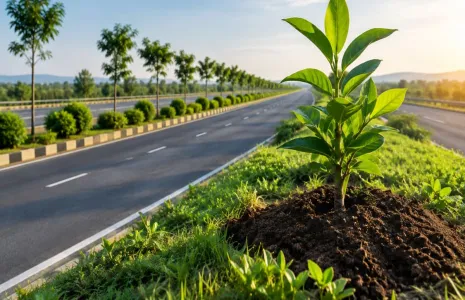
Full overhead gantries carrying direction signs must be installed 5 km and 2 km before an exit, while cantilever gantries must be placed 1 km and 500 m ahead. Lane markings must be 150 mm wide and edge markings 200 mm wide. Layouts must also accommodate multi-lane free flow tolling, while a 1 m reinforced cement concrete boundary wall will protect the right of way from encroachment and unauthorised access. Drip irrigation in medians and tree planting must be incorporated at the project-report stage.

The National Highways Authority of India (NHAI) has issued detailed guidelines to standardise the design, construction and specifications of high-speed corridors, also known as access-controlled national highways or expressways. The guidelines seek to end variations in the standards used by consultants while preparing detailed project reports for such projects. The move comes as India targets 50,000 km of high-speed corridors by 2036-37 under Vision 2047. The network totalled 3,052 km at the end of December 2025. NHAI has directed that traffic assessments account for existing, generated, induced and diverted traffic, supported by traffic modelling and validation from sources such as toll transactions, GST portals and mining departments. Under the new lane norms, corridors with traffic of up to 15,000 passenger car units (PCU) should have a 4-lane highway and a 4-lane structure. Traffic between 15,000 and 25,000 PCU will require a 4-lane highway with a 6-lane structure, while corridors carrying 25,000 to 40,000 PCU should have both a 6-lane highway and a 6-lane structure. The authority has specified that access must be designed to preserve uninterrupted movement on the main highway, with no at-grade road intersections. Access will be provided through properly designed ramps. In areas with frequent movement of harvesters and tractors carrying heavy farm produce, underpasses may be designed with a height of 4.5 m. Service roads are required on both sides in built-up and urban areas, along with drains and footpaths. Full overhead gantries carrying direction signs must be installed 5 km and 2 km before an exit, while cantilever gantries must be placed 1 km and 500 m ahead. Lane markings must be 150 mm wide and edge markings 200 mm wide. Layouts must also accommodate multi-lane free flow tolling, while a 1 m reinforced cement concrete boundary wall will protect the right of way from encroachment and unauthorised access. Drip irrigation in medians and tree planting must be incorporated at the project-report stage.

Related Stories

Gold Stories
Next Story
Infrastructure Transport

Mumbai-Ahmedabad Bullet Train’s Surat-Vapi Section Set for 2027

The first section of the Mumbai-Ahmedabad Bullet Train corridor, linking Surat and Vapi, is targeted to begin services in 2027. Construction is expected to be completed by December 2026, while Railway Minister Ashwini Vaishnaw has indicated that an inauguration could take place around the middle of 2027. The National High Speed Rail Corporation (NHSRCL) said the train being manufactured in India is expected to reach the tracks around April or May 2027. The train will undergo extensive testing before the section is opened for passenger services. The project began construction in 2021 and includ..

Next Story
Infrastructure Transport

Indian Railways Approves Four Projects Worth Rs. 7.36 bn Across Four States

Indian Railways has approved four projects with a combined value of Rs. 7.36 bn across Uttar Pradesh, Maharashtra, Andhra Pradesh and Gujarat. The programme covers train protection, signalling, electric traction supply and a road overbridge, with each project assigned to a different railway zone. In Uttar Pradesh, Rs. 2.52 bn has been approved to extend the Kavach 4.0 automatic train protection system across 607.7 km in the Lucknow Division of North Eastern Railway. The system monitors train movements and can apply the brakes if a driver fails to observe a signal or exceeds a safe speed. The w..

Next Story
Infrastructure Urban

Chandru Raheja Sells 1.49% Stake in Mindspace REIT for Rs. 5 bn

Billionaire Chandru Lachmandas Raheja has sold a 1.49 per cent holding in Mindspace Business Parks REIT for Rs. 5 bn through a bulk deal on the BSE. The transaction involved 9.9 mn units and was executed at an average price of Rs. 505 per unit, according to exchange data. Following the sale, units of Mindspace Business Parks REIT were trading 0.18 per cent lower at Rs. 504.05 on Tuesday. Exchange data did not identify the buyers involved in the transaction. Raheja is the chairman of real estate company K Raheja Corp. The sale involved 99,00,990 units, representing 1.49 per cent of the Mumbai-b..

Advertisement

Subscribe to Our Newsletter

Get daily newsletters around different themes from Construction world.

STAY CONNECTED

Advertisement

SPECIAL OFFER
QR Code