


+
Tamil Nadu Unveils Vision 2035 Road Network Plan
ROADS & HIGHWAYS

Tamil Nadu Unveils Vision 2035 Road Network Plan

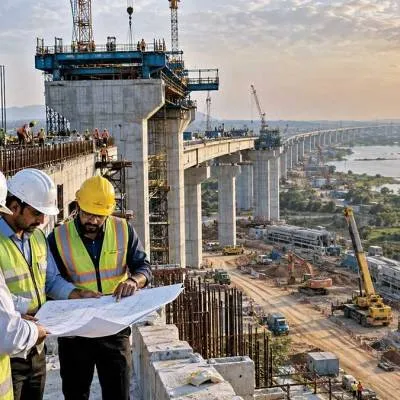
Tamil Nadu has outlined a Vision 2035 roadmap to develop a 4,543.5 km road network at an estimated cost of Rs 1,369.96 bn. The plan was presented at the CII Tamil Nadu Infrastructure Summit 2026 and was framed jointly by the National Highways Authority of India (NHAI) and the State Highways department to improve industrial connectivity and ease congestion in Chennai.

The blueprint comprises 144 corridors, including 20 spine corridors and 21 link roads, together with industrial and coastal connectivity projects and airport links. NHAI projects account for Rs 848.91 bn while the State Highways department will execute projects worth Rs 521.05 bn, with Chennai slated to receive 13 new road projects covering 164 km at an estimated cost of Rs 29.47 bn. Master plans for Coimbatore, Madurai and Hosur have been approved, while the Thoothukudi plan is awaiting approval.

Airport connectivity has been prioritised, with eight corridors proposed by the State Highways department and one by NHAI, and two state road links already taken up under spur road projects. NHAI indicated it already has 855 km of national highway projects under construction valued at more than Rs 330 bn and has a further 2,500 km in the pipeline requiring investments exceeding Rs 1 tn.

Marquee elements of the proposal include the Chennai?Tiruchy?Madurai greenfield access?controlled corridor, the Maduravoyal?Sriperumbudur elevated corridor, six?laning of the Chengalpattu?Tindivanam stretch of NH?32 and four?laning of the Nagapattinam?Thoothukudi?Kanniyakumari section of NH?32, together with improved connectivity to Cuddalore Port and bypass projects in Coimbatore, Salem and Tiruchy. The investments are intended to strengthen freight movement, improve access to industrial clusters, ports and airports and support the state’s manufacturing and export?driven economy.

Tamil Nadu has outlined a Vision 2035 roadmap to develop a 4,543.5 km road network at an estimated cost of Rs 1,369.96 bn. The plan was presented at the CII Tamil Nadu Infrastructure Summit 2026 and was framed jointly by the National Highways Authority of India (NHAI) and the State Highways department to improve industrial connectivity and ease congestion in Chennai. The blueprint comprises 144 corridors, including 20 spine corridors and 21 link roads, together with industrial and coastal connectivity projects and airport links. NHAI projects account for Rs 848.91 bn while the State Highways department will execute projects worth Rs 521.05 bn, with Chennai slated to receive 13 new road projects covering 164 km at an estimated cost of Rs 29.47 bn. Master plans for Coimbatore, Madurai and Hosur have been approved, while the Thoothukudi plan is awaiting approval. Airport connectivity has been prioritised, with eight corridors proposed by the State Highways department and one by NHAI, and two state road links already taken up under spur road projects. NHAI indicated it already has 855 km of national highway projects under construction valued at more than Rs 330 bn and has a further 2,500 km in the pipeline requiring investments exceeding Rs 1 tn. Marquee elements of the proposal include the Chennai?Tiruchy?Madurai greenfield access?controlled corridor, the Maduravoyal?Sriperumbudur elevated corridor, six?laning of the Chengalpattu?Tindivanam stretch of NH?32 and four?laning of the Nagapattinam?Thoothukudi?Kanniyakumari section of NH?32, together with improved connectivity to Cuddalore Port and bypass projects in Coimbatore, Salem and Tiruchy. The investments are intended to strengthen freight movement, improve access to industrial clusters, ports and airports and support the state’s manufacturing and export?driven economy.

Related Stories

Gold Stories

Next Story
Infrastructure Transport

Mumbai-Ahmedabad Bullet Train’s Surat-Vapi Section Set for 2027

The first section of the Mumbai-Ahmedabad Bullet Train corridor, linking Surat and Vapi, is targeted to begin services in 2027. Construction is expected to be completed by December 2026, while Railway Minister Ashwini Vaishnaw has indicated that an inauguration could take place around the middle of 2027. The National High Speed Rail Corporation (NHSRCL) said the train being manufactured in India is expected to reach the tracks around April or May 2027. The train will undergo extensive testing before the section is opened for passenger services. The project began construction in 2021 and includ..

Next Story
Infrastructure Transport

Indian Railways Approves Four Projects Worth Rs. 7.36 bn Across Four States

Indian Railways has approved four projects with a combined value of Rs. 7.36 bn across Uttar Pradesh, Maharashtra, Andhra Pradesh and Gujarat. The programme covers train protection, signalling, electric traction supply and a road overbridge, with each project assigned to a different railway zone. In Uttar Pradesh, Rs. 2.52 bn has been approved to extend the Kavach 4.0 automatic train protection system across 607.7 km in the Lucknow Division of North Eastern Railway. The system monitors train movements and can apply the brakes if a driver fails to observe a signal or exceeds a safe speed. The w..

Next Story
Infrastructure Urban

Chandru Raheja Sells 1.49% Stake in Mindspace REIT for Rs. 5 bn

Billionaire Chandru Lachmandas Raheja has sold a 1.49 per cent holding in Mindspace Business Parks REIT for Rs. 5 bn through a bulk deal on the BSE. The transaction involved 9.9 mn units and was executed at an average price of Rs. 505 per unit, according to exchange data. Following the sale, units of Mindspace Business Parks REIT were trading 0.18 per cent lower at Rs. 504.05 on Tuesday. Exchange data did not identify the buyers involved in the transaction. Raheja is the chairman of real estate company K Raheja Corp. The sale involved 99,00,990 units, representing 1.49 per cent of the Mumbai-b..

Advertisement

Subscribe to Our Newsletter

Get daily newsletters around different themes from Construction world.

STAY CONNECTED

Advertisement

SPECIAL OFFER
QR Code