Taranga Hill Ambaji Abu Road Rail Project Station Work Begins
ROADS & HIGHWAYS

Taranga Hill Ambaji Abu Road Rail Project Station Work Begins

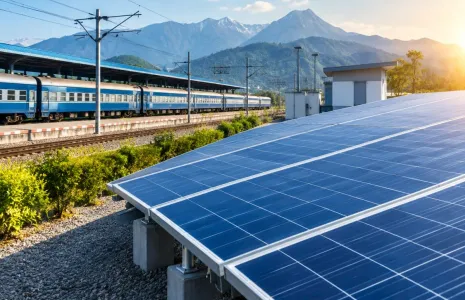
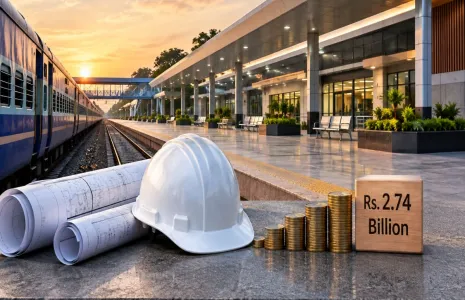
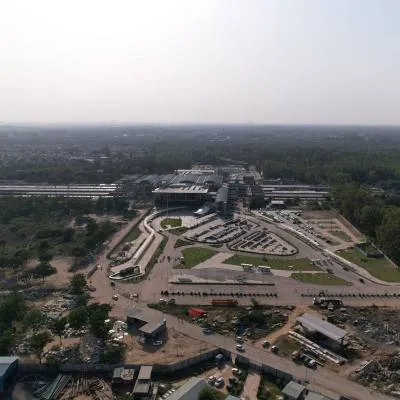
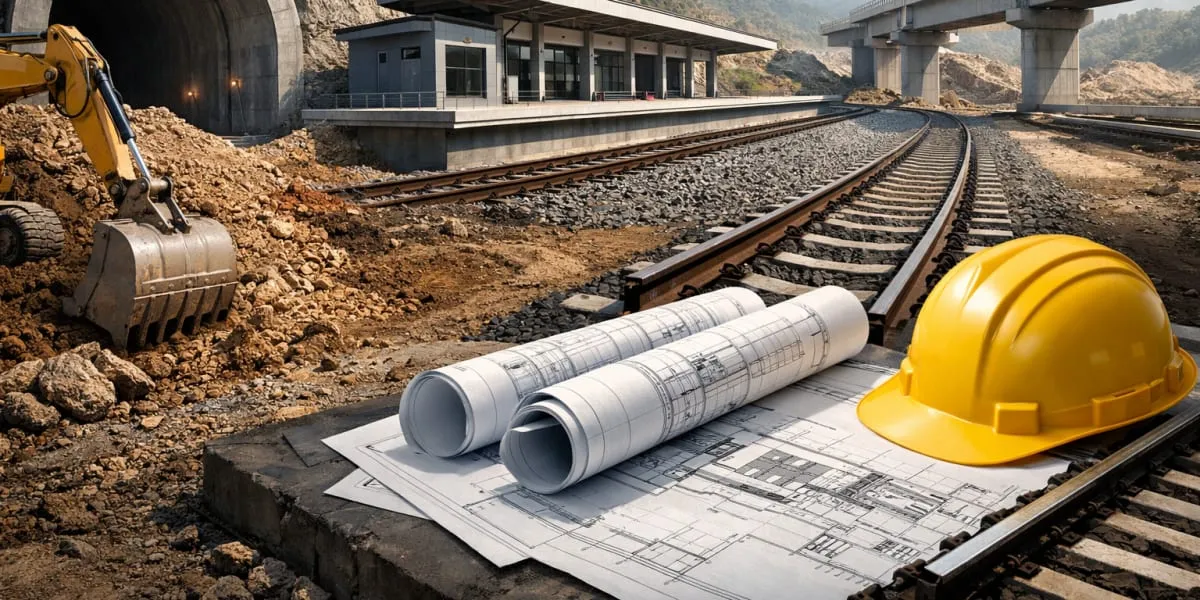
Construction on the Abu Road–Taranga Hill–Ambaji railway line is under way, with earthwork, tunnel excavation, station buildings and road under bridges at multiple locations. The 116.65 km line is estimated to cost Rs 30.5 billion (bn) and land acquisition has been completed. Station building work at Taranga Hill has commenced after Ambaji, and a new platform is under construction at Abu Road as part of the project.

Engineers are excavating 13 tunnels totalling about 13 km, with four major tunnels targeted for completion by March 2027. The longest, at about 2,300 metres, will be near the Shaktipeeth Ambaji station and tunnels are being built using the New Austrian Tunnelling Method, similar to the Udhampur–Katra project. Officials said drone photography and videography are being used regularly to enable monitoring by the Prime Minister's Office.

The route will include the tallest bridge near Surpagla village in the Abu Road block, with a height of around 80 metres, and will traverse Sirohi district in Rajasthan and the Mehsana, Sabarkantha and Banaskantha districts in Gujarat. The line will have 15 stations, including Abu Road, and Ambaji will host the largest station with a multi-storey passenger rest house to serve devotees. A base camp and a temporary laboratory have been set up in the Maliyavas area of Siyava.

Work on track laying and related infrastructure is under way in several villages in the Abu Road block, including Kui, Chandravati, Siyava, Surpagla and Deri, and officials from the engineering department are coordinating to meet the schedule. The Chief Public Relations Officer of North Western Railway said the project is progressing steadily and remains on course to meet key targets. Taranga Hill in Mehsana district, an important Jain and Buddhist pilgrimage site with a 12th-century Jain temple and the Jogidani cave, will gain rail connectivity that is expected to improve access to major religious destinations.

Construction on the Abu Road–Taranga Hill–Ambaji railway line is under way, with earthwork, tunnel excavation, station buildings and road under bridges at multiple locations. The 116.65 km line is estimated to cost Rs 30.5 billion (bn) and land acquisition has been completed. Station building work at Taranga Hill has commenced after Ambaji, and a new platform is under construction at Abu Road as part of the project. Engineers are excavating 13 tunnels totalling about 13 km, with four major tunnels targeted for completion by March 2027. The longest, at about 2,300 metres, will be near the Shaktipeeth Ambaji station and tunnels are being built using the New Austrian Tunnelling Method, similar to the Udhampur–Katra project. Officials said drone photography and videography are being used regularly to enable monitoring by the Prime Minister's Office. The route will include the tallest bridge near Surpagla village in the Abu Road block, with a height of around 80 metres, and will traverse Sirohi district in Rajasthan and the Mehsana, Sabarkantha and Banaskantha districts in Gujarat. The line will have 15 stations, including Abu Road, and Ambaji will host the largest station with a multi-storey passenger rest house to serve devotees. A base camp and a temporary laboratory have been set up in the Maliyavas area of Siyava. Work on track laying and related infrastructure is under way in several villages in the Abu Road block, including Kui, Chandravati, Siyava, Surpagla and Deri, and officials from the engineering department are coordinating to meet the schedule. The Chief Public Relations Officer of North Western Railway said the project is progressing steadily and remains on course to meet key targets. Taranga Hill in Mehsana district, an important Jain and Buddhist pilgrimage site with a 12th-century Jain temple and the Jogidani cave, will gain rail connectivity that is expected to improve access to major religious destinations.

Next Story
Infrastructure Transport

The Critical Path

In Ircon International Ltd v. Afcons Infrastructure Ltd, OMP (Comm) 279/2019, the Delhi High Court examined how delay and extension of time (‘EOT’) are to be assessed in construction contracts, particularly in the context of the ‘critical path’ while dealing with challenge to an arbitral award under Section 34 of the Arbitration and Conciliation Act 1996 (‘the Act’). The High Court’s observations regarding the critical path are of significant import for construction and infrastructure projects and related arbitration. The parties entered into a contract for construction of T..

Next Story
Infrastructure Urban

Urgently Wanted: 2 Million Workers!

Construction, India’s second largest employer by industry, employs about 50 million workers but could additionally absorb another 40 million workers, according to estimates shared by the Construction Skill Development Council of India (CSDCI) in 2023. Within this, citing trade estimates, Rahul Bahl, Managing Director, Krishna Buildestates, says the shortage of trained, skilled workers is currently about 2 million, and is expected to rise to 5 million by 2030.Not only is the construction industry struggling to find workers but construction labour productivity in India significantly trails g..

Next Story
Real Estate

144 Years in the Making!

1. A century-spanning construction storyConstruction began in 1882, making the Sagrada Família one of the longest-running architectural projects in modern history. Today, the project is overseen by the Fundació Junta Constructora del Temple Expiatori de la Sagrada Família, with Chief Architect Jordi Faulí leading its final construction phases.2. The world’s tallest church towerhe Sagrada Família in Barcelona reached its final height of 172.5 m (566 ft) on February 20, 2026, with the installation of the cross atop the Tower of Jesus Christ, making it the tallest church in the world...To ..

Advertisement

Subscribe to Our Newsletter

Get daily newsletters around different themes from Construction world.

STAY CONNECTED

Advertisement

Advertisement

Advertisement