Govt approves cab-based signalling system for Railways
RAILWAYS & METRO RAIL

Govt approves cab-based signalling system for Railways

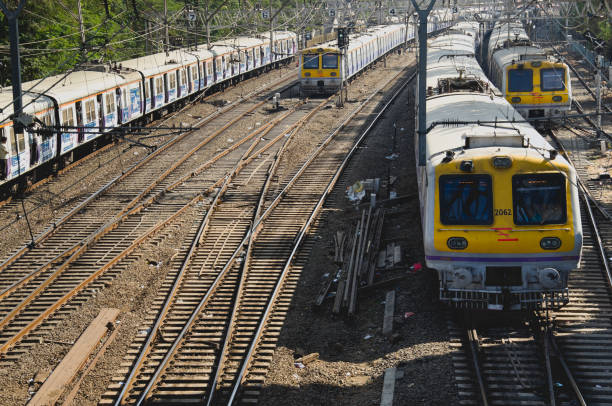
Local trains could be available every two to three minutes in the coming years, as the government has approved the allotment of the 5 MHz spectrum in the 700 MHz Indian Railways on Tuesday.

It is due to the cab-based communication system fitted inside trains and locomotives. Under the Mumbai Urban Transport Project (MUTP)-3A, the Communication Based Train Control (CBTC) system planned the fitting of the cab based communication in central and western railways costing Rs 5,928 crore. The CBTC technology will eliminate the signal poles along the track and enable signalling inside the trains. It will help the train to move faster and reduce its headway from four minutes to two minutes.

Currently, the fittings inside the trains will send signals to the poles. When a train passes, the signal shows red, yellow, double yellow, and green, based on the distance of the train. Once the CBTC is installed, the drivers and motormen will get to know the next signal sooner because of the fitting inside the train.

The railways will introduce an LTE-based Mobile Train Radio Communication (MTRC) on their routes. It will provide a WiFi facility at the station, inside trains, the communication system will improve, and it will also improve security with high end CCTVs. Indian Railways has envisaged an investment plan of Rs 56,955 crore in modernization and improves the hauling of signals and communication in the next five years through multiple signals.

Image Source


Also read: Konkan Railway to be fully electrified by December

Local trains could be available every two to three minutes in the coming years, as the government has approved the allotment of the 5 MHz spectrum in the 700 MHz Indian Railways on Tuesday. It is due to the cab-based communication system fitted inside trains and locomotives. Under the Mumbai Urban Transport Project (MUTP)-3A, the Communication Based Train Control (CBTC) system planned the fitting of the cab based communication in central and western railways costing Rs 5,928 crore. The CBTC technology will eliminate the signal poles along the track and enable signalling inside the trains. It will help the train to move faster and reduce its headway from four minutes to two minutes. Currently, the fittings inside the trains will send signals to the poles. When a train passes, the signal shows red, yellow, double yellow, and green, based on the distance of the train. Once the CBTC is installed, the drivers and motormen will get to know the next signal sooner because of the fitting inside the train. The railways will introduce an LTE-based Mobile Train Radio Communication (MTRC) on their routes. It will provide a WiFi facility at the station, inside trains, the communication system will improve, and it will also improve security with high end CCTVs. Indian Railways has envisaged an investment plan of Rs 56,955 crore in modernization and improves the hauling of signals and communication in the next five years through multiple signals. Image Source Also read: Konkan Railway to be fully electrified by December

Next Story
Infrastructure Urban

India Expands Semiconductor Training To 500 Institutions

Under the Chips to Startups programme of the India Semiconductor Mission, the Union minister responsible for Railways, Information and Broadcasting, and Electronics and IT reported notable progress in talent development. He indicated that over the past four years substantial steps have been taken towards a 10-year target of training 85,000 engineers in semiconductor design. World-class EDA tools have been deployed in 315 academic institutions across the country to provide students with practical exposure to chip design. These EDA tools are supported by leading global firms and are accessible t..

Next Story
Infrastructure Urban

Delhi Institutions Support India Semiconductor Mission

The Government of India has prioritised talent development through training, upskilling and workforce development under the Chips to Startups initiative of the India Semiconductor Mission, with officials noting progress in four years towards a 10-year target of training 85,000 engineers in semiconductor design. Electronic design automation tools provided by Synopsys, Cadence, Siemens, Renesas, Ansys and AMD have been deployed in 315 academic institutions, enabling students to gain practical chip design experience. Chips have been fabricated and tested at the Semiconductor Laboratory, Mohali, a..

Next Story
Infrastructure Urban

NHA Announces Winners Of NHCX Hackathon At IIT Hyderabad

The National Health Authority (NHA) has concluded the NHCX Hackathon under the Ayushman Bharat Digital Mission (ABDM) to stimulate innovation around the National Health Claims Exchange (NHCX). The winning teams presented their solutions at the NHCX Innovation Meet held at IIT Hyderabad during a two-day event in March 2026 that also served as the hackathon grand finale. The hackathon itself ran from 22 to 28 February 2026 and aimed to accelerate paperless, transparent claims processing across India. The event was organised with a range of ecosystem partners, including the Insurance Regulatory a..

Advertisement

Subscribe to Our Newsletter

Get daily newsletters around different themes from Construction world.

STAY CONNECTED

Advertisement

Advertisement

Advertisement