1,337 Stations Taken Up Under Amrit Bharat Scheme, 155 Completed
RAILWAYS & METRO RAIL

1,337 Stations Taken Up Under Amrit Bharat Scheme, 155 Completed

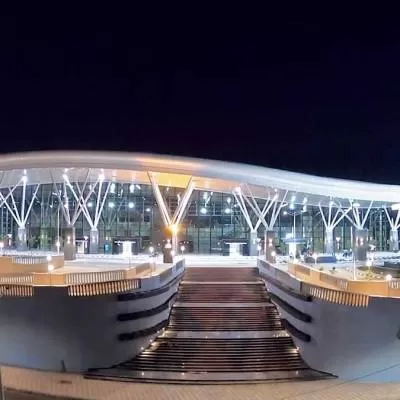
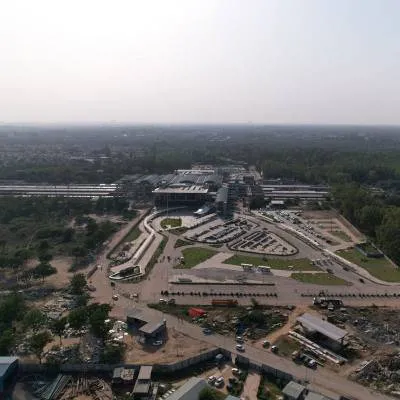
A total of 1,337 railway stations across the country have been identified for redevelopment under the Amrit Bharat Station Scheme, with construction and upgradation works completed at 155 stations so far, the government has informed Parliament.

In a written reply to a question in the Rajya Sabha, the government said the Amrit Bharat Station Scheme follows a long-term, phased redevelopment strategy based on detailed master planning. The initiative is focused on enhancing passenger amenities, improving station access and circulation, and upgrading the overall travel experience, while ensuring better integration of stations with surrounding urban infrastructure.

As part of the redevelopment works, stations are being upgraded with improved station buildings, modern waiting halls, toilets, seating arrangements and drinking water facilities. The scheme also предусматриes wider foot overbridges or air concourses, lifts, escalators and ramps to improve accessibility, along with improved platform surfaces and adequate shelters for passengers.

In addition, stations are being equipped with better passenger information systems, organised parking facilities, improved multimodal connectivity and enhanced amenities for Divyangjan passengers. The government said these measures are aimed at making stations more user-friendly, safe and inclusive.

The scheme also seeks to promote local economic activity. Provisions include kiosks under the “One Station One Product” initiative, executive lounges, landscaped areas and, where required, spaces for business meetings. These elements are intended to transform stations into vibrant public spaces rather than mere transit points.

“Amrit Bharat Station Scheme also envisages sustainable and environment friendly solutions, provision of ballastless tracks etc. as per necessity, phasing and feasibility and creation of city centre at the station in the long term,” Ashwini Vaishnaw, Railway Minister, said.

“So far 1337 stations have been identified under Amrit Bharat Station Scheme and till now works of 155 stations have been completed,” Vaishnaw added.

The minister said funding for station redevelopment is being provided primarily through Plan Head-53 for customer amenities. “The fund allocation of Rs 121.18 billion has been made for the financial year 2025-26 under Plan Head-53 for all zonal railways and expenditure (up to October 2025) of Rs 72.53 billion has been incurred so far,” he said.

News source: Swarajya

A total of 1,337 railway stations across the country have been identified for redevelopment under the Amrit Bharat Station Scheme, with construction and upgradation works completed at 155 stations so far, the government has informed Parliament.In a written reply to a question in the Rajya Sabha, the government said the Amrit Bharat Station Scheme follows a long-term, phased redevelopment strategy based on detailed master planning. The initiative is focused on enhancing passenger amenities, improving station access and circulation, and upgrading the overall travel experience, while ensuring better integration of stations with surrounding urban infrastructure.As part of the redevelopment works, stations are being upgraded with improved station buildings, modern waiting halls, toilets, seating arrangements and drinking water facilities. The scheme also предусматриes wider foot overbridges or air concourses, lifts, escalators and ramps to improve accessibility, along with improved platform surfaces and adequate shelters for passengers.In addition, stations are being equipped with better passenger information systems, organised parking facilities, improved multimodal connectivity and enhanced amenities for Divyangjan passengers. The government said these measures are aimed at making stations more user-friendly, safe and inclusive.The scheme also seeks to promote local economic activity. Provisions include kiosks under the “One Station One Product” initiative, executive lounges, landscaped areas and, where required, spaces for business meetings. These elements are intended to transform stations into vibrant public spaces rather than mere transit points.“Amrit Bharat Station Scheme also envisages sustainable and environment friendly solutions, provision of ballastless tracks etc. as per necessity, phasing and feasibility and creation of city centre at the station in the long term,” Ashwini Vaishnaw, Railway Minister, said.“So far 1337 stations have been identified under Amrit Bharat Station Scheme and till now works of 155 stations have been completed,” Vaishnaw added.The minister said funding for station redevelopment is being provided primarily through Plan Head-53 for customer amenities. “The fund allocation of Rs 121.18 billion has been made for the financial year 2025-26 under Plan Head-53 for all zonal railways and expenditure (up to October 2025) of Rs 72.53 billion has been incurred so far,” he said.News source: Swarajya

Related Stories

Gold Stories

Next Story
Infrastructure Urban

KONE Opens India's First Digital Experience Centre in Pune

KONE, a global elevator and escalator manufacturer, has inaugurated its first Digital Experience Centre (DEC) in India, located in Pune. The facility aims to showcase how artificial intelligence (AI), connectivity and data-driven technologies can enhance customer experiences and improve building operations.The centre was inaugurated by Jussi Herlin, Executive Vice Chair, KONE Corporation; Philippe Delorme, President and CEO, KONE; and Nandan Nilekani, Co-founder and Chairman of the Board, Infosys.Designed as an interactive customer environment, the facility demonstrates digital solutions cover..

Next Story
Infrastructure Urban

CII GreenCo Launches Circularity Guidelines for Indian Industry

The Confederation of Indian Industry (CII) GreenCo Council has launched the CII GreenCo Circularity Guidelines – Pilot Version at the 17th CII GreenCo Waste & Resource Management Summit 2026 in Chennai. The initiative aims to strengthen resource efficiency, waste reduction and circular economy practices across Indian manufacturing and process industries.The guidelines introduce a structured framework with circularity indices covering raw materials, consumables, packaging and other resource inputs. These indicators will help industries assess existing practices, identify opportunities to ..

Next Story
Infrastructure Energy

Global Electronics Association Launches IPC-1783-CO2E Standard

The Global Electronics Association has introduced IPC-1783-CO2E, a new international standard aimed at improving consistency, transparency and comparability in product carbon footprint reporting across the electronics manufacturing industry.The standard, titled International Standard for Data Collection and Reporting of CO2 Equivalent (CO2e) Emissions for the Electronics Manufacturing Supply Chain, provides industry-specific guidance for collecting, estimating and reporting carbon emissions data.With increasing regulatory requirements and customer expectations, electronics manufacturers face c..

Advertisement

Subscribe to Our Newsletter

Get daily newsletters around different themes from Construction world.

STAY CONNECTED

Advertisement

SPECIAL OFFER
QR Code