500 Metre Radius Around 41 Chennai Metro Stations to Become Hubs
RAILWAYS & METRO RAIL

500 Metre Radius Around 41 Chennai Metro Stations to Become Hubs

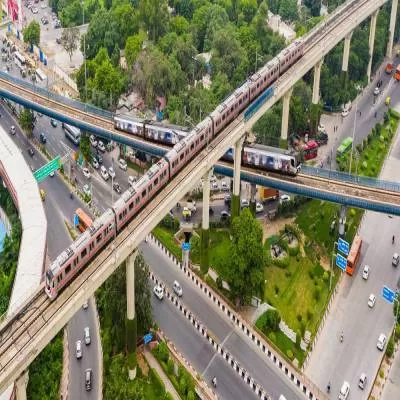
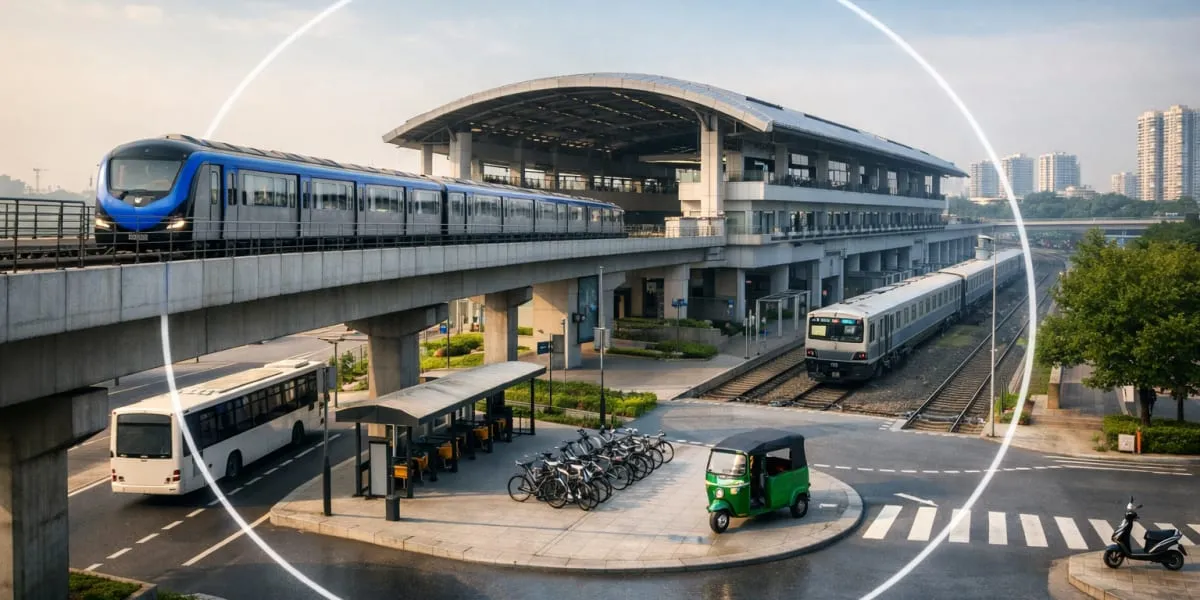
Chennai Metro Rail Limited (CMRL) has proposed that a 500 metre radius around 41 Chennai metro stations will be developed as multimodal hubs to improve connectivity and ease passenger movement. The plan seeks to integrate bus services, suburban rail, pedestrian pathways and last mile solutions within the station precincts. Officials described the initiative as part of a broader urban mobility strategy designed to reduce congestion and promote public transport usage across the city.

Design measures will prioritise seamless transfers and accessibility, with improved signage, dedicated bus bays and coordinated timetables envisaged to shorten interchange times. The hub concept includes space for non-motorised transport and defined pedestrian corridors to support safe walking and cycling. The designs will include universal access features for elderly and disabled passengers to ensure inclusivity. Authorities intend to engage with municipal bodies and transport operators to align land use and feeder services around the stations.

Implementation is expected in phases to manage construction impacts and maintain station operations, with pilot schemes likely at selected stations to test design solutions. Officials indicated that technical studies and stakeholder consultations will inform detailed plans and that multimodal integration will prioritise passenger safety and operational efficiency. Coordination with traffic management and parking strategies will be necessary to avoid displacement of congestion to surrounding areas. The approach aims to reduce private vehicle trips and to create more viable public transport alternatives for commuters.

Planners expect the multimodal hubs to contribute to urban regeneration around stations and to support economic activity by improving access to employment and services. There will be a focus on integrating last mile solutions that can be scaled across the network, with monitoring and evaluation to assess outcomes. Successful implementation will depend on sustained funding commitments and interagency coordination. Stakeholders will be invited to review preliminary designs before final approvals are sought.

Chennai Metro Rail Limited (CMRL) has proposed that a 500 metre radius around 41 Chennai metro stations will be developed as multimodal hubs to improve connectivity and ease passenger movement. The plan seeks to integrate bus services, suburban rail, pedestrian pathways and last mile solutions within the station precincts. Officials described the initiative as part of a broader urban mobility strategy designed to reduce congestion and promote public transport usage across the city. Design measures will prioritise seamless transfers and accessibility, with improved signage, dedicated bus bays and coordinated timetables envisaged to shorten interchange times. The hub concept includes space for non-motorised transport and defined pedestrian corridors to support safe walking and cycling. The designs will include universal access features for elderly and disabled passengers to ensure inclusivity. Authorities intend to engage with municipal bodies and transport operators to align land use and feeder services around the stations. Implementation is expected in phases to manage construction impacts and maintain station operations, with pilot schemes likely at selected stations to test design solutions. Officials indicated that technical studies and stakeholder consultations will inform detailed plans and that multimodal integration will prioritise passenger safety and operational efficiency. Coordination with traffic management and parking strategies will be necessary to avoid displacement of congestion to surrounding areas. The approach aims to reduce private vehicle trips and to create more viable public transport alternatives for commuters. Planners expect the multimodal hubs to contribute to urban regeneration around stations and to support economic activity by improving access to employment and services. There will be a focus on integrating last mile solutions that can be scaled across the network, with monitoring and evaluation to assess outcomes. Successful implementation will depend on sustained funding commitments and interagency coordination. Stakeholders will be invited to review preliminary designs before final approvals are sought.

Next Story
Technology

SPML Infra Secures Rs 11.28 Billion NTPC Battery Storage Project

SPML Infra has secured a Rs 11.28 billion contract from NTPC to develop a 1 GWh Battery Energy Storage System (BESS) at NTPC’s Barauni Thermal Power Station in Bihar.The project, among the largest single BESS orders awarded in India, marks SPML Infra’s entry into the large-scale grid battery energy storage segment. The scope includes design, engineering, supply, civil works, erection and commissioning of a 250 MW/1,000 MWh battery storage system along with associated electrical infrastructure.The project will be executed over 18 months and will include 15 years of operations and maintenanc..

Next Story
Real Estate

KPMG-FICCI Report Calls for Tech-Led Real Estate Growth

A joint report by KPMG in India and FICCI has highlighted technology-led transformation as critical to scaling India’s real estate sector and improving execution certainty, transparency and investor confidence. Released at the 19th FICCI Real Estate Summit, the report titled Reimagining India’s Real Estate Landscape: The role of technology in value chain transformation stated that technology is evolving from a support function to a core driver across the real estate lifecycle, including land identification, design, construction, sales, transactions and asset management. The report noted ..

Next Story
Infrastructure Urban

Vedanta Reports Record Profit in FY26

Vedanta reported its best-ever financial performance in FY26, with profit after tax of Rs 250.96 billion and revenue of Rs 1.74 trillion, supported by operational excellence across businesses. The company delivered nearly 50 per cent total shareholder return and declared a dividend of Rs 34 per share.Vedanta said its net debt-to-EBITDA improved to 0.95x, strengthening financial flexibility. Its demerger, effective 1 May 2026, is aimed at unlocking value by creating focused businesses across aluminium, oil and gas, power, iron and steel, zinc, copper, nickel and ferro alloys.Vedanta Aluminium p..

Advertisement

Subscribe to Our Newsletter

Get daily newsletters around different themes from Construction world.

STAY CONNECTED

Advertisement

Advertisement

Advertisement