Bengaluru Metro Pink Line Trials To Start End March 2026
RAILWAYS & METRO RAIL

Bengaluru Metro Pink Line Trials To Start End March 2026

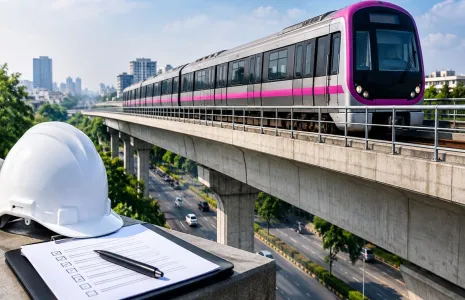
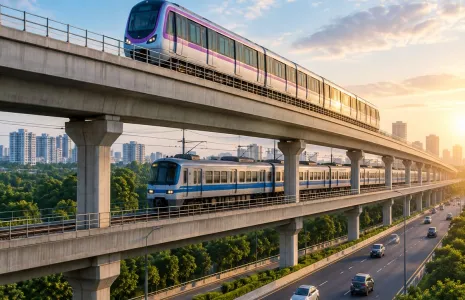
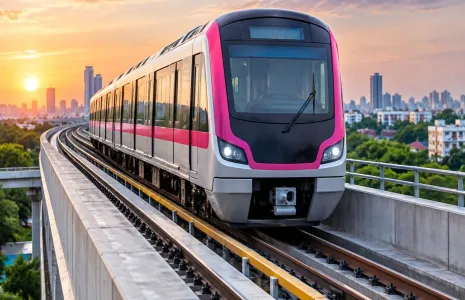
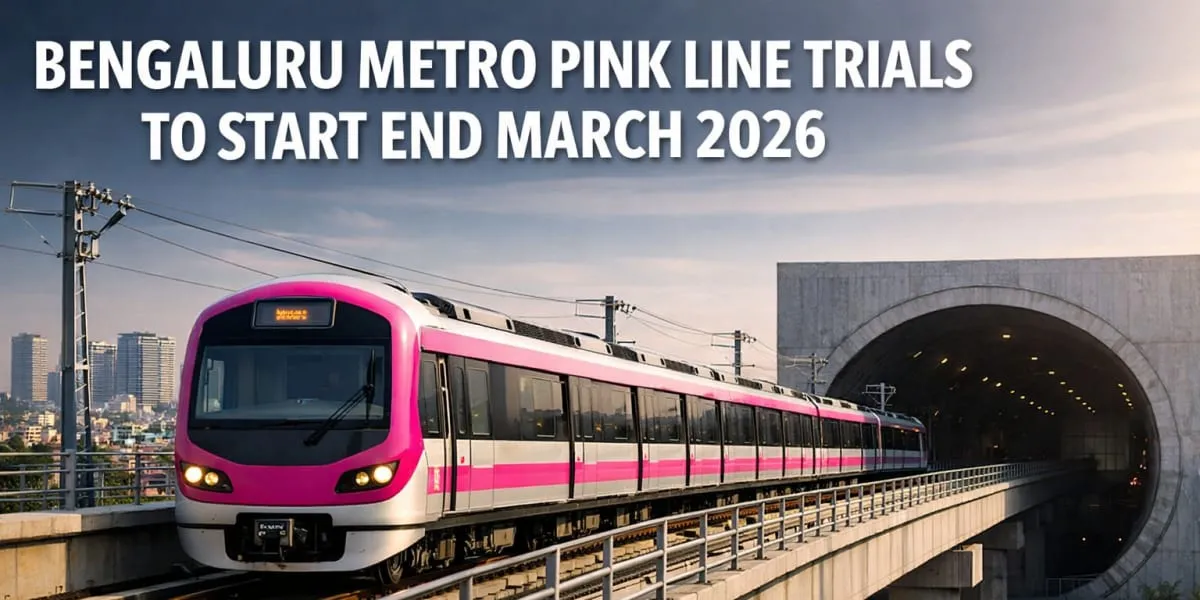
Bengaluru Metro Rail Corporation Limited (BMRCL) is preparing trial runs on the Pink Line from Kalena Agrahara to Nagawara, with testing expected to start by the end of March 2026. The development marks a key step for the Namma Metro network and has attracted attention from commuters seeking improved north-south connectivity. The corridor spans 21.3 km, with 13.8 km underground and 7.5 km elevated.

Testing will begin on the elevated section between Kalena Agrahara and Tavarekere because elevated tracks require fewer regulatory clearances than tunnels. The phase will assess track strength, train movement and signalling systems alongside mechanical and electrical coordination. Visible progress on the elevated stretch signals that the project is nearing completion.

Work on the underground stretch from Dairy Circle to Nagawara is in the final stages, with BMRCL reporting that track laying and third rail electrification inside tunnels are progressing steadily. Once certified for safety, the underground and elevated sections will be integrated into a single operational line. Two major interchange stations at MG Road, linking to the Purple Line, and Jayadeva Hospital, connecting to the Yellow Line, will allow commuters to switch lines and reduce dependence on road travel.

Commercial operations are targeted by the end of 2026 or early 2027, subject to safety approvals, and the trial phase will be closely watched as an indicator of the timeline. The start of trial runs suggests civil and systems work on the elevated stretch is largely complete and that attention will shift to integrated systems testing and regulatory certification. Commuter expectations include reductions in journey times between Bannerghatta Road and north Bengaluru of two to three hours, reflecting the potential benefits of the Pink Line for travel across the city.

Bengaluru Metro Rail Corporation Limited (BMRCL) is preparing trial runs on the Pink Line from Kalena Agrahara to Nagawara, with testing expected to start by the end of March 2026. The development marks a key step for the Namma Metro network and has attracted attention from commuters seeking improved north-south connectivity. The corridor spans 21.3 km, with 13.8 km underground and 7.5 km elevated. Testing will begin on the elevated section between Kalena Agrahara and Tavarekere because elevated tracks require fewer regulatory clearances than tunnels. The phase will assess track strength, train movement and signalling systems alongside mechanical and electrical coordination. Visible progress on the elevated stretch signals that the project is nearing completion. Work on the underground stretch from Dairy Circle to Nagawara is in the final stages, with BMRCL reporting that track laying and third rail electrification inside tunnels are progressing steadily. Once certified for safety, the underground and elevated sections will be integrated into a single operational line. Two major interchange stations at MG Road, linking to the Purple Line, and Jayadeva Hospital, connecting to the Yellow Line, will allow commuters to switch lines and reduce dependence on road travel. Commercial operations are targeted by the end of 2026 or early 2027, subject to safety approvals, and the trial phase will be closely watched as an indicator of the timeline. The start of trial runs suggests civil and systems work on the elevated stretch is largely complete and that attention will shift to integrated systems testing and regulatory certification. Commuter expectations include reductions in journey times between Bannerghatta Road and north Bengaluru of two to three hours, reflecting the potential benefits of the Pink Line for travel across the city.

Next Story
Infrastructure Transport

MMRDA advances 250 m on Orange Gate–Marine Drive tunnel

The Mumbai Metropolitan Region Development Authority (MMRDA) has completed 250 m of underground tunnelling for the Orange Gate–Marine Drive Urban Road Tunnel using India’s largest slurry shield tunnel boring machine (TBM) deployed for an urban road project.The project involves twin tunnels extending over 7 km beneath critical transport corridors, including Central Railway, Western Railway and Metro Line 3. The work requires high-precision engineering to navigate densely developed urban infrastructure.Once completed, the tunnel is expected to reduce travel time between Orange Gate and Marin..

Next Story
Infrastructure Urban

Hindustan Zinc Pays Rs 188.46 Billion in FY26

Hindustan Zinc contributed Rs 188.46 billion to the public exchequer in FY 2025-26, according to its 9th Tax Transparency Report. The contribution, equivalent to 46 per cent of the company’s revenue, included direct and indirect taxes, government royalties, dividends to the Government of India, withholding taxes and other statutory levies.The company’s five-year cumulative contribution to the exchequer stood at Rs 915.72 billion. In FY26, Hindustan Zinc reported revenue of Rs 408.44 billion, EBITDA of Rs 221.62 billion and profit after tax of Rs 138.32 billion. It also achieved its highest..

Next Story
Infrastructure Urban

World of Concrete India 2026 Opens in Mumbai

Informa Markets in India will host the 12th edition of World of Concrete India 2026 from 3–5 June 2026 at the Bombay Exhibition Centre, Mumbai. The specialised B2B exhibition will bring together manufacturers, suppliers, contractors, developers, architects, consultants, infrastructure companies, project leaders and government stakeholders.The event is expected to feature over 350 brands and more than 18,000 trade professionals. It will cover concrete and cement, dry mortar, precast technologies, formwork, construction chemicals, industrial and commercial flooring, scaffolding, safety solutio..

Advertisement

Subscribe to Our Newsletter

Get daily newsletters around different themes from Construction world.

STAY CONNECTED

Advertisement

Advertisement

Advertisement