Bengaluru-Mumbai Vande Bharat Sleeper Train Set for November 1
RAILWAYS & METRO RAIL

Bengaluru-Mumbai Vande Bharat Sleeper Train Set for November 1

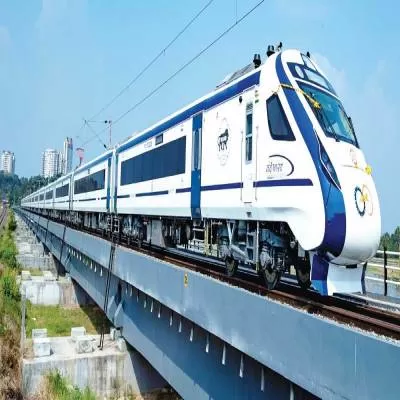
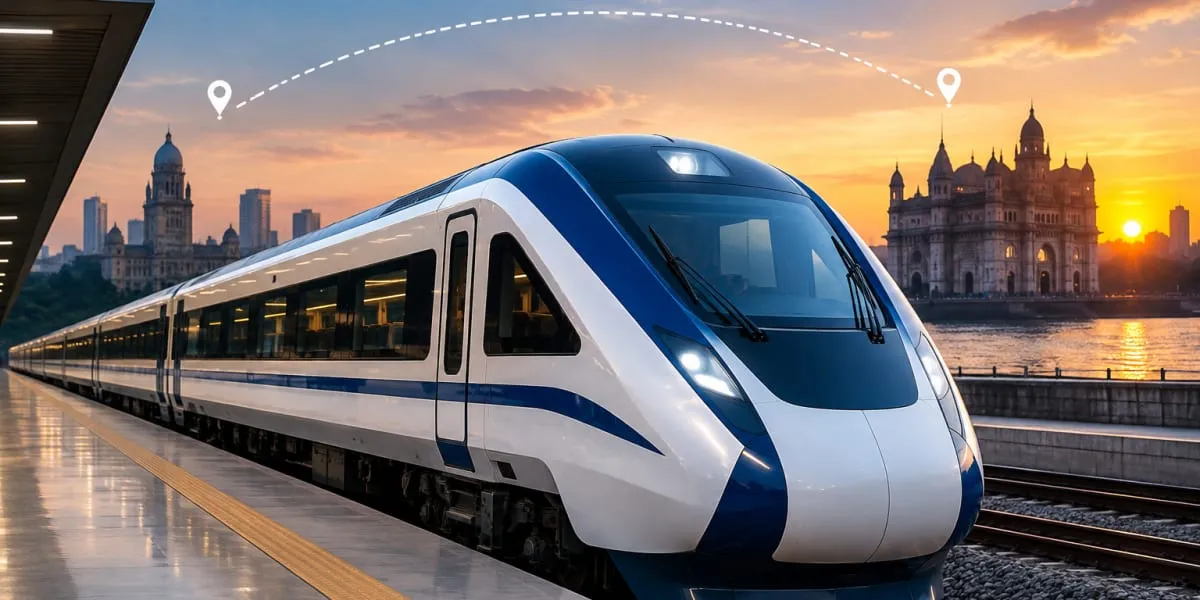
The Vande Bharat sleeper train between Bengaluru and Mumbai is scheduled to be flagged off on November 1, coinciding with Kannada Rajyotsava. The premium overnight service will connect Sir M Visvesvaraya Terminal Bengaluru with Chhatrapati Shivaji Maharaj Terminus Mumbai and will be South India’s first Vande Bharat sleeper service.

Regular operations are scheduled to begin on November 2, with the train running six days a week. A formal notification from the Railway Board is awaited. The service will operate on the Guntakal route and is intended to provide a faster rail connection between two major cities that currently do not have a superfast train service.

Under the tentative schedule, the train will depart from Sir M Visvesvaraya Terminal Bengaluru at 7.50 pm and reach Chhatrapati Shivaji Maharaj Terminus Mumbai at 11.55 am the following day. In the return direction, it will leave Mumbai at 8.10 pm and arrive in Bengaluru at 11.55 am.

The Bengaluru-Mumbai journey will take 16 hours and five minutes, while the return trip will be completed in 15 hours and 45 minutes. Proposed stoppages include Anantapur, Guntakal, Raichur, Kalaburagi, Solapur, Pune and Kalyan.

The route will be served by two 16-coach trainsets manufactured by BEML. The Railways recently conducted a trial run through the Ghat section between Mumbai and Pune. Railway enthusiasts had sought the service’s origination and termination at KSR Bengaluru, the city’s main railway station, instead of Sir M Visvesvaraya Terminal Bengaluru.

The Vande Bharat sleeper train between Bengaluru and Mumbai is scheduled to be flagged off on November 1, coinciding with Kannada Rajyotsava. The premium overnight service will connect Sir M Visvesvaraya Terminal Bengaluru with Chhatrapati Shivaji Maharaj Terminus Mumbai and will be South India’s first Vande Bharat sleeper service. Regular operations are scheduled to begin on November 2, with the train running six days a week. A formal notification from the Railway Board is awaited. The service will operate on the Guntakal route and is intended to provide a faster rail connection between two major cities that currently do not have a superfast train service. Under the tentative schedule, the train will depart from Sir M Visvesvaraya Terminal Bengaluru at 7.50 pm and reach Chhatrapati Shivaji Maharaj Terminus Mumbai at 11.55 am the following day. In the return direction, it will leave Mumbai at 8.10 pm and arrive in Bengaluru at 11.55 am. The Bengaluru-Mumbai journey will take 16 hours and five minutes, while the return trip will be completed in 15 hours and 45 minutes. Proposed stoppages include Anantapur, Guntakal, Raichur, Kalaburagi, Solapur, Pune and Kalyan. The route will be served by two 16-coach trainsets manufactured by BEML. The Railways recently conducted a trial run through the Ghat section between Mumbai and Pune. Railway enthusiasts had sought the service’s origination and termination at KSR Bengaluru, the city’s main railway station, instead of Sir M Visvesvaraya Terminal Bengaluru.

Related Stories

Gold Stories

Next Story
Building Material

PureSil Paints Develops Mineral Coatings from Industrial Waste

PureSil Paints, a brand of Relic Coatings LLP, has developed an indigenous mineral-based coating technology aimed at reducing dependence on petrochemical-derived raw materials in the paints and coatings industry. Its proprietary Silicification Technology uses agricultural and industrial by-products to manufacture architectural coatings as an alternative to conventional acrylic paints.Developed in-house by Dr Nikhil Dhote, Founder and Chief Technologist, Relic Coatings LLP, the technology uses silicate binders derived from upcycled rice husk ash and industrial coal fly ash. The formulation is d..
Next Story
Infrastructure Energy

Vedanta Eyes AI to Accelerate Mineral Exploration

Vedanta Group is exploring the use of artificial intelligence (AI) to significantly improve efficiency in mineral exploration, geological analysis and resource modelling. The company aims to reduce exploration processes that traditionally take three to four months to just six to seven days through AI-driven technologies.The proposed approach involves AI-led geological analysis and mineral block modelling to accelerate mineral resource assessment and support faster, more cost-efficient development of domestic mineral reserves. The initiative aligns with India's growing focus on critical mineral..

Next Story
Technology

NXP Launches Unified Robotics Platform for Physical AI

NXP Semiconductors has launched a unified robotics platform designed to accelerate the development and deployment of trusted physical artificial intelligence (AI) systems. Built on the company's neural axis architecture, the platform integrates AI processing, connectivity, motor control, security and energy management within a common hardware and software ecosystem.The platform combines an open-source, modular software development kit (SDK) with pre-validated reference designs, enabling developers to build robotic systems more efficiently. It supports development ranging from individual subsys..

Advertisement

Subscribe to Our Newsletter

Get daily newsletters around different themes from Construction world.

STAY CONNECTED

Advertisement

SPECIAL OFFER
QR Code