Bengaluru-Pune Could Join Next High-Speed Rail Corridors
RAILWAYS & METRO RAIL

Bengaluru-Pune Could Join Next High-Speed Rail Corridors

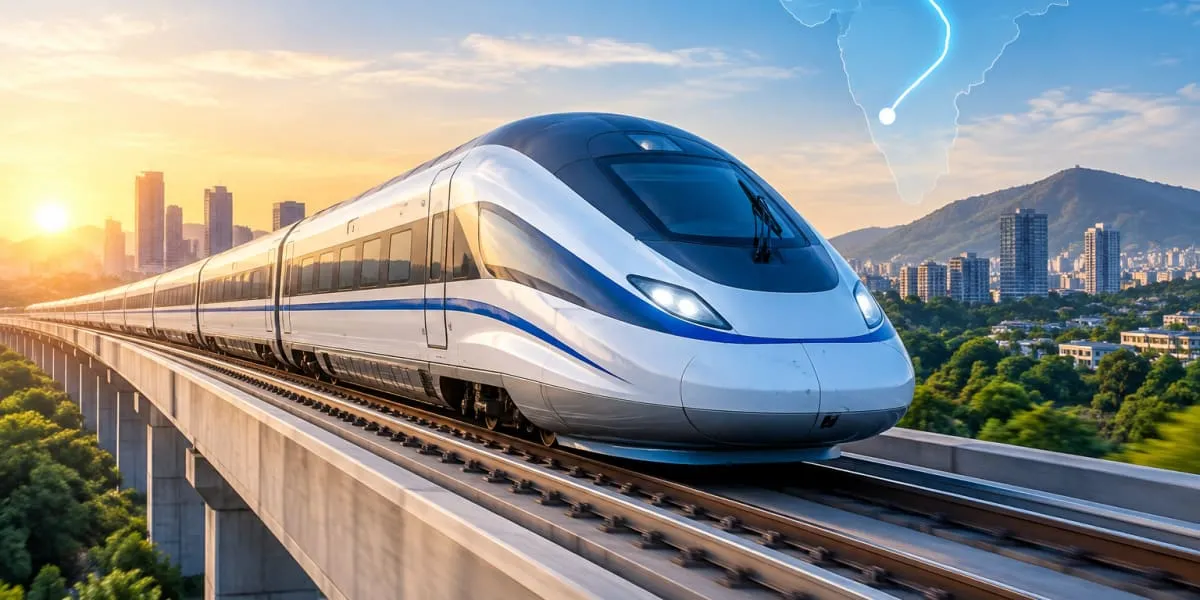
Union Railway Minister Ashwini Vaishnaw has indicated that the proposed Bengaluru-Pune bullet train corridor could be included among India’s next high-speed rail projects. He said another 3,000 km of bullet train corridors were planned for announcement in the coming years as the country advances towards the goal of Viksit Bharat.

Vaishnaw was speaking after flagging off the inaugural Bengaluru-Mumbai Vande Bharat Sleeper Express. He said Prime Minister Narendra Modi had approved 4,000 km of bullet train corridors, with additional routes expected to connect major economic and technology centres across the country.

The proposed Bengaluru-Pune corridor would run across Karnataka, connecting Bengaluru with Hubballi before continuing to Pune. Vaishnaw also referred to a southern high-speed rail corridor linking Bengaluru, Hyderabad, Amaravati and Chennai, saying it would bring the region’s large economies and technology capitals closer together.

Under the proposed southern corridor, the journey from Bengaluru to Chennai would take 73 minutes, while travel from Bengaluru to Hyderabad would take two hours and 10 minutes. Vaishnaw said the faster connections would support economic integration and create a multiplier effect for states in southern India.

He separately announced that the Bengaluru-Mangaluru Vande Bharat Express would be introduced within the next few weeks. Electrification and testing on the route have been completed, he said, adding that the service would improve rail access to coastal Karnataka, including Mangaluru, Udupi and areas towards Karwar and Goa.

Union Ministers Pralhad Joshi and H D Kumaraswamy, Ministers of State V Somanna and Shobha Karandlaje, and Members of Parliament Tejasvi Surya, P C Mohan and C N Manjunath were among those present. Vaishnaw also highlighted railway station redevelopment, Bengaluru’s suburban rail network, metro expansion, semiconductor and electronics manufacturing, and growing defence production as part of India’s broader infrastructure and self-reliance efforts.

Union Railway Minister Ashwini Vaishnaw has indicated that the proposed Bengaluru-Pune bullet train corridor could be included among India’s next high-speed rail projects. He said another 3,000 km of bullet train corridors were planned for announcement in the coming years as the country advances towards the goal of Viksit Bharat. Vaishnaw was speaking after flagging off the inaugural Bengaluru-Mumbai Vande Bharat Sleeper Express. He said Prime Minister Narendra Modi had approved 4,000 km of bullet train corridors, with additional routes expected to connect major economic and technology centres across the country. The proposed Bengaluru-Pune corridor would run across Karnataka, connecting Bengaluru with Hubballi before continuing to Pune. Vaishnaw also referred to a southern high-speed rail corridor linking Bengaluru, Hyderabad, Amaravati and Chennai, saying it would bring the region’s large economies and technology capitals closer together. Under the proposed southern corridor, the journey from Bengaluru to Chennai would take 73 minutes, while travel from Bengaluru to Hyderabad would take two hours and 10 minutes. Vaishnaw said the faster connections would support economic integration and create a multiplier effect for states in southern India. He separately announced that the Bengaluru-Mangaluru Vande Bharat Express would be introduced within the next few weeks. Electrification and testing on the route have been completed, he said, adding that the service would improve rail access to coastal Karnataka, including Mangaluru, Udupi and areas towards Karwar and Goa. Union Ministers Pralhad Joshi and H D Kumaraswamy, Ministers of State V Somanna and Shobha Karandlaje, and Members of Parliament Tejasvi Surya, P C Mohan and C N Manjunath were among those present. Vaishnaw also highlighted railway station redevelopment, Bengaluru’s suburban rail network, metro expansion, semiconductor and electronics manufacturing, and growing defence production as part of India’s broader infrastructure and self-reliance efforts.

Related Stories

Gold Stories

Next Story
Infrastructure Urban

Jupiter Wagons Wins Rs. 3.24 bn ACT2 Wagon Orders from Private Firms

Jupiter Wagons has secured private-sector orders worth more than Rs. 3.24 bn from GATX India and Chetak International for its ACT2 automobile carrier wagons. The company announced the orders on 2 November 2026, saying the contracts would strengthen its business with private wagon-leasing and logistics operators. GATX India has issued a Letter of Intent (LOI) for the manufacture and supply of 10 rakes comprising 270 ACT2 wagons. The LOI is valued at Rs. 2.15 bn and covers the production and delivery of the company’s new-design automobile carrier platform. Chetak International has separately p..

Next Story
Infrastructure Urban

Tata Motors Takes Control of Iveco with 89.42 Per Cent Stake

Tata Motors has taken control of Italian commercial-vehicle maker Iveco after acquiring an 89.42 per cent stake for approximately €3.43 bn, or Rs. 363.87 bn. The transaction gives India’s largest commercial-vehicle manufacturer control of a European business with annual revenue of Rs. 1.42 tn, while shifting attention to integration, cash-flow generation and repayment of acquisition debt. TML CV Holdings B.V., Tata Motors’ indirect wholly owned subsidiary, acquired 238.16 mn common shares at €14.40 apiece. The holding represents 89.42 per cent of Iveco’s common share capital, excludi..

Next Story
Building Material

Ambuja Cements to Invest Rs. 145 bn to Raise Capacity by FY30

Ambuja Cements will invest Rs. 145 bn to expand its cement capacity to 155 mn tonnes per annum by fiscal 2030. The planned investment, equivalent to $1.53 bn, will increase production capacity from the company’s current level of 113.5 MTPA. The company expects capacity to reach 119 MTPA by March 2027, with the wider expansion programme adding facilities across several major cement markets. The investment is intended to support the company’s long-term growth and strengthen its manufacturing network in India. The new capacity will be developed across Assam, Bihar, Jharkhand, Gujarat, Maharas..

Advertisement

Subscribe to Our Newsletter

Get daily newsletters around different themes from Construction world.

STAY CONNECTED

Advertisement

SPECIAL OFFER
QR Code