Bhubaneswar Station Redevelopment Under Amrit Bharat Scheme
RAILWAYS & METRO RAIL

Bhubaneswar Station Redevelopment Under Amrit Bharat Scheme

Union Railway Minister Ashwini Vaishnaw told Parliament that the redevelopment of railway stations under the Amrit Bharat Station Scheme represents a major shift in Indian Railways' approach to modernising station infrastructure. He said the scheme is founded on long-term, phased master plans designed to transform stations into integrated transport hubs that improve passenger convenience and city integration. The plans are intended to deliver systemic upgrades across identified stations through coordinated zoning and project management.

For the financial year 2026–27 the Centre allocated Rs 119,720 million (Rs 119,720 mn) for the programme, and Rs 46,330 million (Rs 46,330 mn) were utilised till June 2026, the minister informed the house. Funding is provided under Plan Head-53: Customer Amenities and budgets are managed by the respective railway zones to ensure phased implementation. The allocation reflects a national push to prioritise station facilities as part of broader urban infrastructure planning.

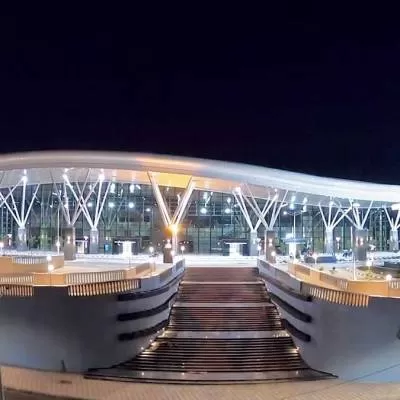
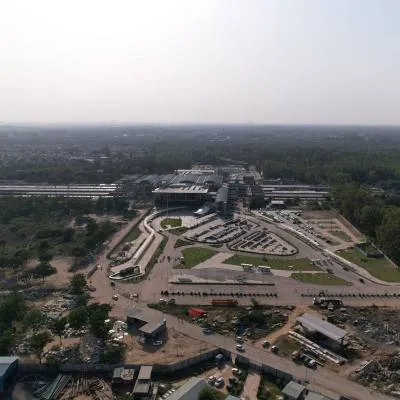
The minister identified Bhubaneswar among the important stations being redeveloped and listed Chhatrapati Sambhajinagar, Gaya, Nagpur Junction, Rameswaram and Tirupati as part of the nationwide programme. A total of 1,340 stations have been identified for redevelopment and work has been completed at 261 stations to date, illustrating the staged roll-out. Redevelopment activity combines structural rehabilitation with service upgrades to improve overall passenger experience.

Master plans for each station prioritise seamless road connectivity on both sides, expanded parking, larger waiting halls, modern toilets and wider Foot Over Bridges (FOBs). Premium amenities such as air-conditioned concourses and executive lounges are included while special measures will enhance accessibility for Divyangjans (persons with disabilities) through lifts, ramps and escalators. The scheme also promotes local enterprise via One Station One Product kiosks, sustainable infrastructure and real-time passenger information to create vibrant urban station precincts for millions of users.

Union Railway Minister Ashwini Vaishnaw told Parliament that the redevelopment of railway stations under the Amrit Bharat Station Scheme represents a major shift in Indian Railways' approach to modernising station infrastructure. He said the scheme is founded on long-term, phased master plans designed to transform stations into integrated transport hubs that improve passenger convenience and city integration. The plans are intended to deliver systemic upgrades across identified stations through coordinated zoning and project management. For the financial year 2026–27 the Centre allocated Rs 119,720 million (Rs 119,720 mn) for the programme, and Rs 46,330 million (Rs 46,330 mn) were utilised till June 2026, the minister informed the house. Funding is provided under Plan Head-53: Customer Amenities and budgets are managed by the respective railway zones to ensure phased implementation. The allocation reflects a national push to prioritise station facilities as part of broader urban infrastructure planning. The minister identified Bhubaneswar among the important stations being redeveloped and listed Chhatrapati Sambhajinagar, Gaya, Nagpur Junction, Rameswaram and Tirupati as part of the nationwide programme. A total of 1,340 stations have been identified for redevelopment and work has been completed at 261 stations to date, illustrating the staged roll-out. Redevelopment activity combines structural rehabilitation with service upgrades to improve overall passenger experience. Master plans for each station prioritise seamless road connectivity on both sides, expanded parking, larger waiting halls, modern toilets and wider Foot Over Bridges (FOBs). Premium amenities such as air-conditioned concourses and executive lounges are included while special measures will enhance accessibility for Divyangjans (persons with disabilities) through lifts, ramps and escalators. The scheme also promotes local enterprise via One Station One Product kiosks, sustainable infrastructure and real-time passenger information to create vibrant urban station precincts for millions of users.

Next Story
Infrastructure Urban

Centre Clears Power Distribution Upgrade for Uttar Pradesh

The Central Government has approved power distribution projects worth Rs 407.39 billion for Uttar Pradesh under the Revamped Distribution Sector Scheme (RDSS). The investment will be used to modernise the state's electricity distribution infrastructure and strengthen network capacity across urban and rural areas. The package targets one of the country's largest distribution networks as the state experiences rapid urbanisation and rising electricity consumption. Planned interventions include the strengthening of distribution lines, modernisation of substations, replacement of ageing electrical ..

Next Story
Infrastructure Energy

India Data Centres To Consume 191 TWh By 2040 Driving Renewables

A Wood Mackenzie report says India's operational data centre capacity is projected to increase more than fivefold to 12 gigawatt (GW) by 2030 from 2.2 GW in 2025 as artificial intelligence (AI) and cloud computing drive demand. It projects electricity consumption to rise from 10 terawatt-hour (TWh) in 2025 to 191 TWh by 2040. The study forecasts a compound annual growth rate of around 40 per cent and notes AI-dedicated capacity will surge nearly 24-fold from 275 megawatt (MW) in 2025 to 6,546 MW by 2030. The report places India's digital economy at Rs 32 trillion (tn) in 2025 and says it contr..

Next Story
Infrastructure Transport

Hydrogen Train Completes 1,200 Kilometres Of Trials

India's first hydrogen train was flagged off between Jind and Sonipat on July 17 and has travelled over 1,200 kilometres in trials, saving diesel consumption of more than 3,200 litres, a Railway Ministry press release said. The deployment marks the introduction of a zero-emission fuel cell train into route testing and represents a milestone in domestic rail innovation. The train generates electricity onboard through a chemical reaction between hydrogen and oxygen, producing electricity to propel the vehicle while emitting only water vapour as a by-product. There is no smoke and no tailpipe car..

Advertisement

Subscribe to Our Newsletter

Get daily newsletters around different themes from Construction world.

STAY CONNECTED

Advertisement

Advertisement

Advertisement