India Bullet Train Testing To Start By May Or June
RAILWAYS & METRO RAIL

India Bullet Train Testing To Start By May Or June

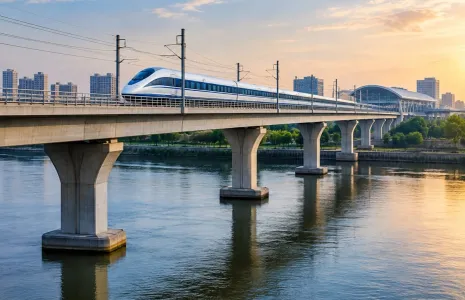
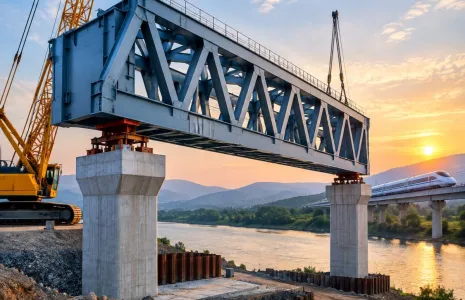
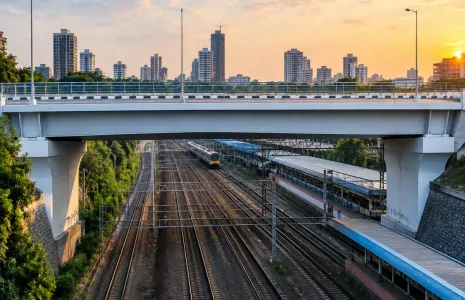
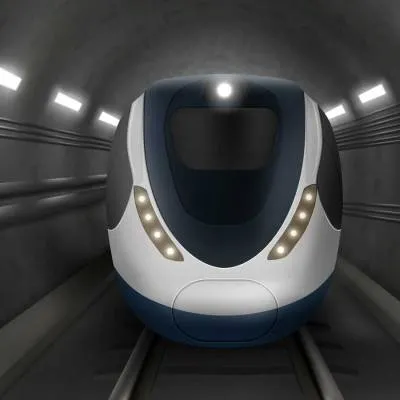
Union Railway Minister Ashwini Vaishnaw said India’s bullet train is slated to begin testing by May or June next year, with testing expected to last two to four months before inauguration by the Prime Minister. He spoke at the NaMo for Viksit Bharat event in Vadodara and noted that the first body frame had been completed and sent for a squeeze test. The project was described as part of the drive for an Atmanirbhar Bharat and rapid modernisation of rail infrastructure.

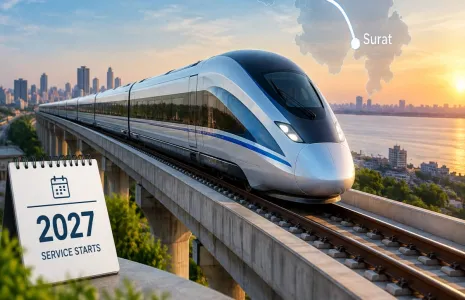
The minister said the bullet train will cut travel time between Vadodara and Mumbai to one and a half hours, signalling a significant reduction in journey durations on the corridor. He added that work on the Surat?Vapi section is expected to be completed by December this year, supporting the timetable for testing and commissioning. These timelines were presented as part of a wider plan to accelerate high speed connectivity.

Mr Vaishnaw outlined reforms across Indian Railways, saying operating and reservation systems would be modernised and outdated construction protocols revised to improve efficiency. He highlighted new wagon designs, including a special model for salt transportation, and noted that cargo trains using Vande Bharat technology were being completed. The minister also pointed to completion of long pending projects such as the Chenab Bridge and the rail link to Mizoram as evidence of renewed momentum.

He said 280 railway stations had been redeveloped and 36,000 km of new tracks had been developed, and that the pace of projects had increased despite challenges from the COVID?19 pandemic. The first section of the bullet train project was completed in 2020 and subsequent sections have since accelerated, the minister said. The modern face of Indian Railways that is emerging was presented as a legacy to benefit many future generations.

Union Railway Minister Ashwini Vaishnaw said India’s bullet train is slated to begin testing by May or June next year, with testing expected to last two to four months before inauguration by the Prime Minister. He spoke at the NaMo for Viksit Bharat event in Vadodara and noted that the first body frame had been completed and sent for a squeeze test. The project was described as part of the drive for an Atmanirbhar Bharat and rapid modernisation of rail infrastructure. The minister said the bullet train will cut travel time between Vadodara and Mumbai to one and a half hours, signalling a significant reduction in journey durations on the corridor. He added that work on the Surat?Vapi section is expected to be completed by December this year, supporting the timetable for testing and commissioning. These timelines were presented as part of a wider plan to accelerate high speed connectivity. Mr Vaishnaw outlined reforms across Indian Railways, saying operating and reservation systems would be modernised and outdated construction protocols revised to improve efficiency. He highlighted new wagon designs, including a special model for salt transportation, and noted that cargo trains using Vande Bharat technology were being completed. The minister also pointed to completion of long pending projects such as the Chenab Bridge and the rail link to Mizoram as evidence of renewed momentum. He said 280 railway stations had been redeveloped and 36,000 km of new tracks had been developed, and that the pace of projects had increased despite challenges from the COVID?19 pandemic. The first section of the bullet train project was completed in 2020 and subsequent sections have since accelerated, the minister said. The modern face of Indian Railways that is emerging was presented as a legacy to benefit many future generations.

Related Stories

Gold Stories

Next Story
Real Estate

Japanese companies expand GCC operations in India

More than 100 Japanese companies have established or are expanding Global Capability Centres (GCCs) in India, with a growing focus on artificial intelligence (AI), engineering, digital innovation, product development, cybersecurity and advanced analytics. The shift marks an expansion beyond traditional back-office and operational support functions towards higher-value technology and innovation activities.Japanese companies are increasingly using their Indian GCCs to support digital transformation, address talent shortages and contribute to global business strategies. These centres are taking o..

Next Story
Real Estate

India’s flexible office stock projected to reach 160 million sq ft by 2030

India retained its position as the world's most mature flexible office market, scoring 100 per cent on Cushman & Wakefield's Flexible Office Market Maturity Index, according to the firm's Global Trends in Flexible Office 2026 report.India's flexible office inventory reached 88.7 million sq ft (MSF) in H1 2026, accounting for 10.5 per cent of the country's total office stock. The report projects this to exceed 100 MSF in 2026 and reach approximately 160 MSF by 2030.Flexible office operators leased 8.5 MSF across India's top eight cities in H1 2026, their strongest first-half performance to ..
Next Story
Infrastructure Urban

K2 Infragen appoints Abhishek Sharma as DGM, supply chain

K2 Infragen has appointed Abhishek Sharma as Deputy General Manager, Supply Chain Management. He will oversee procurement planning, vendor partnerships and coordination with project teams.Sharma brings nearly two decades of experience in infrastructure procurement across railways, highways, expressways and hydropower. His experience includes procurement responsibilities associated with the Delhi–Meerut Expressway and the Delhi–Vadodara greenfield corridor. ..

Advertisement

Subscribe to Our Newsletter

Get daily newsletters around different themes from Construction world.

STAY CONNECTED

Advertisement

SPECIAL OFFER
QR Code