PM Modi Inaugurates 75 Redeveloped Railway Stations
RAILWAYS & METRO RAIL

PM Modi Inaugurates 75 Redeveloped Railway Stations

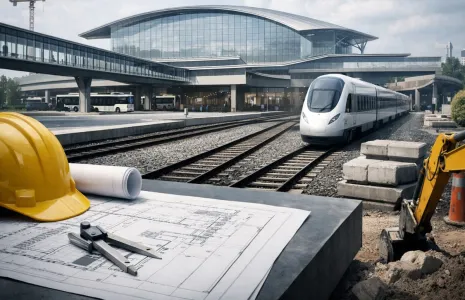
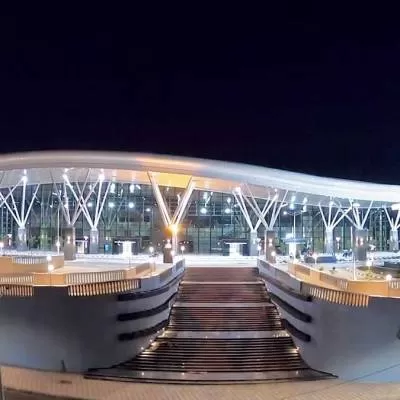
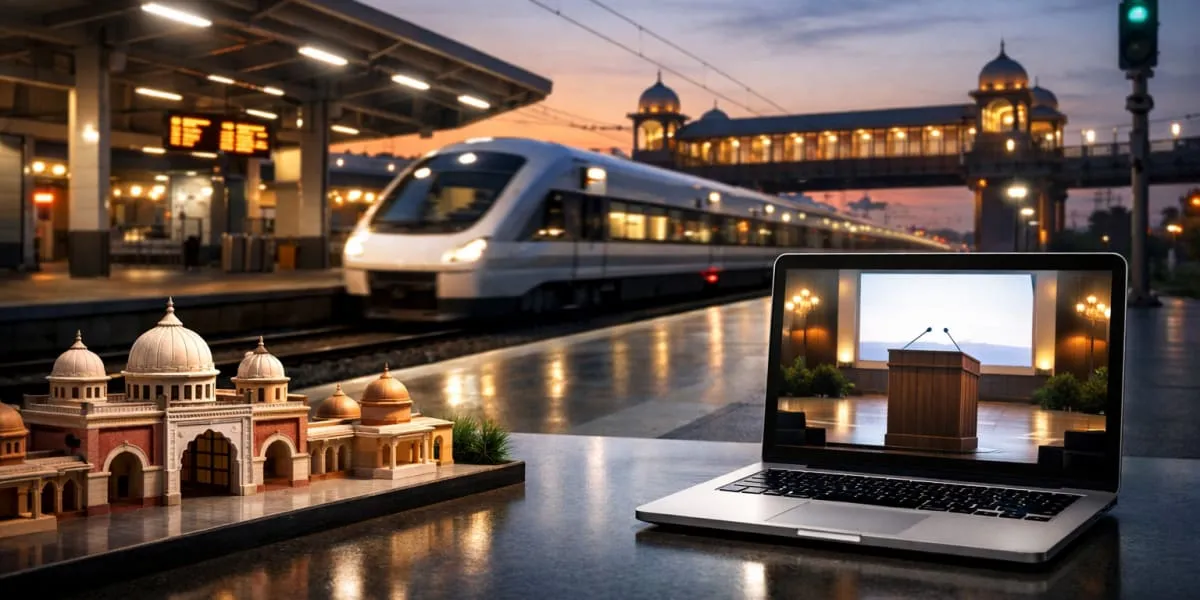
Prime Minister Narendra Modi virtually inaugurated 75 redeveloped railway stations across 20 states from Jalandhar last evening. The stations were modernised under the Amrit Bharat Station Scheme, one of the world's largest station redevelopment programmes, at a cost of about Rs 15,700 million (mn). They have been converted into passenger friendly facilities that incorporate local culture, heritage and architecture under the spirit of Virasat Bhi, Vikas Bhi.

Redevelopments included Jalandhar Cantonment, SAS Nagar (Mohali), Sri Muktsar Sahib and Sri Anandpur Sahib in Punjab, and projects in Gujarat featured Pratapnagar, Godhra, Porbandar and Bhaktinagar. Odisha works covered Barpali, Balangir, Paralakhemundi, Talcher, Kesinga, Bimalgarh and Baripada, and nine stations were addressed under Southern Railway. The selection sought to improve regional connectivity and passenger circulation.

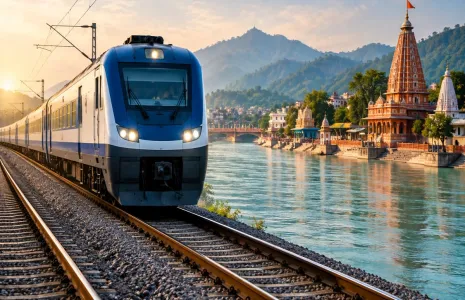
The Prime Minister flagged off the Kartoli-Ambala train service, intended to improve links across Punjab, Haryana and Himachal Pradesh, and also flagged off the Sant Ravidas Express between Amritsar Chheharta and Varanasi to establish a direct rail connection between two cultural centres. The redeveloped stations and the two services formed part of rail and road infrastructure works worth over Rs 54,700 mn announced at Jalandhar. Officials said the investments aim to accelerate economic development and enhance mobility.

He also inaugurated the 30.9 km Package-6 of the four-lane greenfield Delhi-Amritsar-Katra Expressway and described the series of projects as reflecting the rapid transformation of Indian Railways. He noted that the Centre was focused on ensuring regional development and that projects would improve quality of life and create opportunities. The administration framed the work as guided by the principle of Nagrik Devo Bhava.

Earlier the same day India received its first hydrogen powered train when a passenger service from Jind station in Haryana was flagged; that service will run between Jind and Sonipat and cover the 89 km distance in two hours. The Prime Minister laid foundation stones and dedicated development projects worth around Rs 147,000 mn in Jind and later launched additional works valued at over Rs 47,000 mn in Chandigarh covering healthcare, education and road infrastructure.

Prime Minister Narendra Modi virtually inaugurated 75 redeveloped railway stations across 20 states from Jalandhar last evening. The stations were modernised under the Amrit Bharat Station Scheme, one of the world's largest station redevelopment programmes, at a cost of about Rs 15,700 million (mn). They have been converted into passenger friendly facilities that incorporate local culture, heritage and architecture under the spirit of Virasat Bhi, Vikas Bhi. Redevelopments included Jalandhar Cantonment, SAS Nagar (Mohali), Sri Muktsar Sahib and Sri Anandpur Sahib in Punjab, and projects in Gujarat featured Pratapnagar, Godhra, Porbandar and Bhaktinagar. Odisha works covered Barpali, Balangir, Paralakhemundi, Talcher, Kesinga, Bimalgarh and Baripada, and nine stations were addressed under Southern Railway. The selection sought to improve regional connectivity and passenger circulation. The Prime Minister flagged off the Kartoli-Ambala train service, intended to improve links across Punjab, Haryana and Himachal Pradesh, and also flagged off the Sant Ravidas Express between Amritsar Chheharta and Varanasi to establish a direct rail connection between two cultural centres. The redeveloped stations and the two services formed part of rail and road infrastructure works worth over Rs 54,700 mn announced at Jalandhar. Officials said the investments aim to accelerate economic development and enhance mobility. He also inaugurated the 30.9 km Package-6 of the four-lane greenfield Delhi-Amritsar-Katra Expressway and described the series of projects as reflecting the rapid transformation of Indian Railways. He noted that the Centre was focused on ensuring regional development and that projects would improve quality of life and create opportunities. The administration framed the work as guided by the principle of Nagrik Devo Bhava. Earlier the same day India received its first hydrogen powered train when a passenger service from Jind station in Haryana was flagged; that service will run between Jind and Sonipat and cover the 89 km distance in two hours. The Prime Minister laid foundation stones and dedicated development projects worth around Rs 147,000 mn in Jind and later launched additional works valued at over Rs 47,000 mn in Chandigarh covering healthcare, education and road infrastructure.

Next Story
Real Estate

We will continue to invest in integrated commercial destinations: Amrita Gupta

Amrita Gupta, Director, Manglam Group and CEO, Manglam Spa and Resorts, speaks on how projects like Westin Jaipur Resort and Sheraton Jaipur are strengthening Manglam Group's integrated real estate and hospitality strategy.Manglam Group has announced a Rs 1,000 crore hospitality expansion in Rajasthan—what strategic vision is driving this next phase of growth?Hospitality has emerged as a defining pillar of Manglam Group’s long-term growth strategy, underpinned by a vision of creating destination-led experiences that transcend conventional hospitality. The genesis of this journey was The We..

Next Story
Infrastructure Energy

Batliboi Wins Rs 520 Mn Contract For Solar Cell Pollution Controls

Batliboi Limited has secured a major contract from SAEL Industries Limited to supply pollution control systems for a new solar cell manufacturing facility at Jewar in Uttar Pradesh. The order instructs Batliboi Limited's EEG Division to design, engineer, supply, install and commission a PEX system to support SAEL Industries Limited's six GW solar cell line. The contract is domestic in origin and was submitted to the stock exchanges under regulatory disclosure requirements. The contract value is Rs 520 mn, reflecting a substantial order for environmental control equipment for the manufacturing ..

Next Story
Infrastructure Urban

Delhi Approves PARIVARTAN Scheme To Replace Old Trucks And Buses

The Delhi government has approved the Programme for Accelerated Renewal and Incentivisation of Vehicle Assets for Reducing Transport Air Pollution and Network Emissions (PARIVARTAN) to cut transport-related emissions in the national capital. The scheme, supported by the Ministry of Road Transport and Highways (MoRTH), will phase out old, polluting trucks and buses and replace them with BS-VI, higher-emission-standard or electric vehicles. The initiative is intended to modernise the commercial vehicle fleet and strengthen the capital's clean transport system. Owners of Light Goods Vehicles that..

Advertisement

Subscribe to Our Newsletter

Get daily newsletters around different themes from Construction world.

STAY CONNECTED

Advertisement

Advertisement

Advertisement