Cabinet Clears Rs 27.8 Billion Railway Capacity Projects
RAILWAYS & METRO RAIL

Cabinet Clears Rs 27.8 Billion Railway Capacity Projects

The Cabinet Committee on Economic Affairs (CCEA), chaired by Prime Minister Narendra Modi, has approved two major Railway projects with a combined outlay of Rs 27.81 billion. The Ministry of Railways will undertake both schemes to expand capacity, ease congestion and improve operational reliability across key corridors.

The approved works include: • Devbhumi Dwarka (Okha)–Kanalus doubling (141 km) • Badlapur–Karjat third and fourth lines (32 km)

According to the government, expanding line capacity will enhance mobility, streamline operations and significantly improve service efficiency for Indian Railways. The projects are aligned with the Prime Minister’s vision of a modern, self-reliant (Atmanirbhar) India, with infrastructure-led growth fuelling wider economic development and employment opportunities.

Planned under the PM Gati Shakti National Master Plan, the initiatives focus on improving multimodal connectivity and logistics efficiency through integrated planning and stakeholder coordination. Together, the projects span four districts in Maharashtra and Gujarat and will expand India’s railway network by approximately 224 km.

The multi-tracking works are expected to improve connectivity for about 585 villages, home to nearly 3.2 million people.

The Kanalus–Okha doubling project will enhance access to the Dwarkadhish Temple, one of Gujarat’s most prominent pilgrimage sites, and is expected to support broader development across the Saurashtra region.

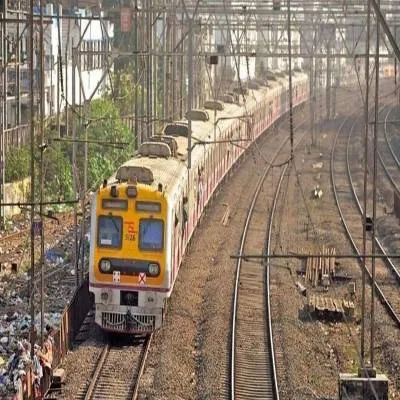
The Badlapur–Karjat upgrade forms part of the Mumbai suburban corridor. Adding the third and fourth lines will bolster suburban capacity, accommodate future passenger demand and improve connectivity to southern India.

Both routes play a critical role in freight movement, carrying commodities such as coal, salt, containers, cement and petroleum products. The capacity addition is projected to handle an extra 18 million tonnes per annum, supporting India’s climate and logistics goals. Increased rail freight will also cut oil imports by an estimated 30 million litres and reduce CO? emissions by 160 million kilograms, equivalent to planting 64 lakh trees.

The Cabinet Committee on Economic Affairs (CCEA), chaired by Prime Minister Narendra Modi, has approved two major Railway projects with a combined outlay of Rs 27.81 billion. The Ministry of Railways will undertake both schemes to expand capacity, ease congestion and improve operational reliability across key corridors. The approved works include: • Devbhumi Dwarka (Okha)–Kanalus doubling (141 km) • Badlapur–Karjat third and fourth lines (32 km) According to the government, expanding line capacity will enhance mobility, streamline operations and significantly improve service efficiency for Indian Railways. The projects are aligned with the Prime Minister’s vision of a modern, self-reliant (Atmanirbhar) India, with infrastructure-led growth fuelling wider economic development and employment opportunities. Planned under the PM Gati Shakti National Master Plan, the initiatives focus on improving multimodal connectivity and logistics efficiency through integrated planning and stakeholder coordination. Together, the projects span four districts in Maharashtra and Gujarat and will expand India’s railway network by approximately 224 km. The multi-tracking works are expected to improve connectivity for about 585 villages, home to nearly 3.2 million people. The Kanalus–Okha doubling project will enhance access to the Dwarkadhish Temple, one of Gujarat’s most prominent pilgrimage sites, and is expected to support broader development across the Saurashtra region. The Badlapur–Karjat upgrade forms part of the Mumbai suburban corridor. Adding the third and fourth lines will bolster suburban capacity, accommodate future passenger demand and improve connectivity to southern India. Both routes play a critical role in freight movement, carrying commodities such as coal, salt, containers, cement and petroleum products. The capacity addition is projected to handle an extra 18 million tonnes per annum, supporting India’s climate and logistics goals. Increased rail freight will also cut oil imports by an estimated 30 million litres and reduce CO? emissions by 160 million kilograms, equivalent to planting 64 lakh trees.

Next Story
Infrastructure Urban

BMC Begins Rs 660-Mn Project to Revive Powai Lake Ecosystem

The Brihanmumbai Municipal Corporation (BMC) has launched a Rs 660-million restoration initiative aimed at improving the ecological health of Powai Lake. The project focuses on diverting sewage inflow, establishing a modern sewage treatment plant (STP), and expanding the removal of water hyacinth, which has increasingly overwhelmed the lake’s surface in recent months. The civic body has set an 18-month deadline for completing the works.According to officials, the rapid spread of hyacinth is directly linked to untreated sewage entering the lake, providing a nutrient-rich environment for the i..

Next Story
Infrastructure Transport

Foundation Laid for Rs 500 Mn Four-lane Road Project in Nalgonda

Roads & Buildings Minister Komatireddy Venkat Reddy inaugurated a major infrastructure initiative in Nalgonda by laying the foundation stone for a Rs 500 million four-lane road project within the town’s municipal limits. The project aims to enhance mobility and ease congestion along a key stretch of the Mahbubnagar–Nalgonda corridor.The new four-lane road will run from the Nagarjunasagar ‘X’ Roads to the Darveshipuram Yellamma Temple, featuring a central median and integrated central lighting to improve road safety and night-time visibility. According to the minister, construction ..

Next Story
Infrastructure Transport

Maharashtra Clears DPR for 55 Km Uttan–Virar Sea Link Project

The Maharashtra government has approved the Detailed Project Report (DPR) for the Uttan–Virar Sea Link (UVSL), a major infrastructure project that will extend Mumbai’s coastal mobility network and complete the city’s envisioned ring road. Designed as an eight-lane, high-speed corridor, the project will span a total length of 55.12 km, including a 24.35 km sea bridge between Uttan and Virar and close to 31 km of approach roads.According to the DPR, the approach road network will include a 9.32 km connecting stretch at Uttan, a 2.5 km link at Vasai, and an 18.95 km road at Virar. The proje..

Advertisement

Subscribe to Our Newsletter

Get daily newsletters around different themes from Construction world.

STAY CONNECTED

Advertisement

Advertisement

Advertisement

Get CW App