China runs first fully electrified bullet train in Tibet region
RAILWAYS & METRO RAIL

China runs first fully electrified bullet train in Tibet region

The Sichuan-Tibet Railway’s 435.5 km Lhasa-Nyingchi section was inaugurated ahead of the ruling Communist Party of China's (CPC) centennial celebrations on July 1.

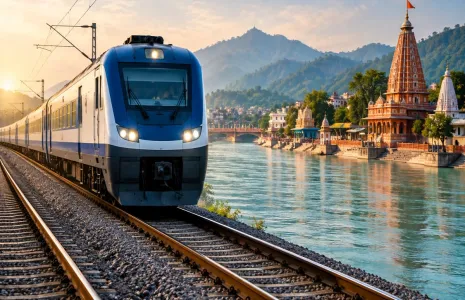
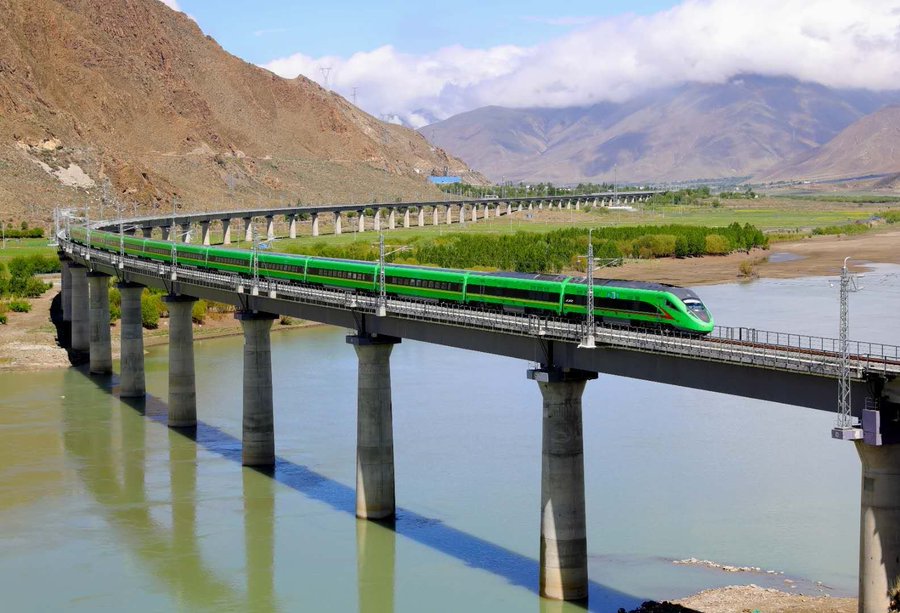
On Friday, China launched the first fully electrified bullet train in Tibet's remote Himalayan region, connecting Lhasa, the provincial capital, and Nyingchi, a Tibetan border town strategically located near the state of Arunachal Pradesh.

On Friday morning, the Tibet Autonomous Region's electrified railway connected Lhasa and Nyingchi for the first time, while Fuxing bullet trains began service on the Himalayan plateau region.

The Sichuan-Tibet Railway will be the second railway into Tibet after the Qinghai-Tibet Railway. The railway line will pass through the southeast corner of the Qinghai-Tibet Plateau, one of the world's most geologically active regions.

China's President Xi Jinping ordered officials to speed up the construction of the new railway line in November, saying it would play a critical role in ensuring the border's stability.

The Sichuan-Tibet Railway will begin in Chengdu, the capital of Sichuan Province, and travel through Ya'an before entering Tibet via Qamdo, cutting the travel time from Chengdu to Lhasa to 13 hours from 48 hours.

Nyingchi is a prefecture-level city in Medog, located near the Arunachal Pradesh border, according to the report. China claims that Arunachal Pradesh, India's northeastern state, is part of South Tibet. India, on the other hand, categorically denies this claim. The 3,488 km Line of Actual Control is at the centre of the India-China border dispute.

Image Source


Also read: Bullet train project: India formulates first green rating system

Also read: Mumbai-Ahmedabad bullet train project faces bottlenecks

"Join industry leaders at RAHSTA Expo, India's premier platform for roads, highways and traffic infrastructure. Register now to explore innovations, network with experts and shape the future of mobility."

The Sichuan-Tibet Railway’s 435.5 km Lhasa-Nyingchi section was inaugurated ahead of the ruling Communist Party of China's (CPC) centennial celebrations on July 1. On Friday, China launched the first fully electrified bullet train in Tibet's remote Himalayan region, connecting Lhasa, the provincial capital, and Nyingchi, a Tibetan border town strategically located near the state of Arunachal Pradesh. On Friday morning, the Tibet Autonomous Region's electrified railway connected Lhasa and Nyingchi for the first time, while Fuxing bullet trains began service on the Himalayan plateau region. The Sichuan-Tibet Railway will be the second railway into Tibet after the Qinghai-Tibet Railway. The railway line will pass through the southeast corner of the Qinghai-Tibet Plateau, one of the world's most geologically active regions. China's President Xi Jinping ordered officials to speed up the construction of the new railway line in November, saying it would play a critical role in ensuring the border's stability. The Sichuan-Tibet Railway will begin in Chengdu, the capital of Sichuan Province, and travel through Ya'an before entering Tibet via Qamdo, cutting the travel time from Chengdu to Lhasa to 13 hours from 48 hours. Nyingchi is a prefecture-level city in Medog, located near the Arunachal Pradesh border, according to the report. China claims that Arunachal Pradesh, India's northeastern state, is part of South Tibet. India, on the other hand, categorically denies this claim. The 3,488 km Line of Actual Control is at the centre of the India-China border dispute. Image Source Also read: Bullet train project: India formulates first green rating system Also read: Mumbai-Ahmedabad bullet train project faces bottlenecks

Next Story
Infrastructure Transport

MMRDA advances 250 m on Orange Gate–Marine Drive tunnel

The Mumbai Metropolitan Region Development Authority (MMRDA) has completed 250 m of underground tunnelling for the Orange Gate–Marine Drive Urban Road Tunnel using India’s largest slurry shield tunnel boring machine (TBM) deployed for an urban road project.The project involves twin tunnels extending over 7 km beneath critical transport corridors, including Central Railway, Western Railway and Metro Line 3. The work requires high-precision engineering to navigate densely developed urban infrastructure.Once completed, the tunnel is expected to reduce travel time between Orange Gate and Marin..

Next Story
Infrastructure Urban

Hindustan Zinc Pays Rs 188.46 Billion in FY26

Hindustan Zinc contributed Rs 188.46 billion to the public exchequer in FY 2025-26, according to its 9th Tax Transparency Report. The contribution, equivalent to 46 per cent of the company’s revenue, included direct and indirect taxes, government royalties, dividends to the Government of India, withholding taxes and other statutory levies.The company’s five-year cumulative contribution to the exchequer stood at Rs 915.72 billion. In FY26, Hindustan Zinc reported revenue of Rs 408.44 billion, EBITDA of Rs 221.62 billion and profit after tax of Rs 138.32 billion. It also achieved its highest..

Next Story
Infrastructure Urban

World of Concrete India 2026 Opens in Mumbai

Informa Markets in India will host the 12th edition of World of Concrete India 2026 from 3–5 June 2026 at the Bombay Exhibition Centre, Mumbai. The specialised B2B exhibition will bring together manufacturers, suppliers, contractors, developers, architects, consultants, infrastructure companies, project leaders and government stakeholders.The event is expected to feature over 350 brands and more than 18,000 trade professionals. It will cover concrete and cement, dry mortar, precast technologies, formwork, construction chemicals, industrial and commercial flooring, scaffolding, safety solutio..

Advertisement

Subscribe to Our Newsletter

Get daily newsletters around different themes from Construction world.

STAY CONNECTED

Advertisement

Advertisement

Advertisement