+
Gurugram Metro Unveils Hemicyclic Corridor Plan
RAILWAYS & METRO RAIL

Gurugram Metro Unveils Hemicyclic Corridor Plan

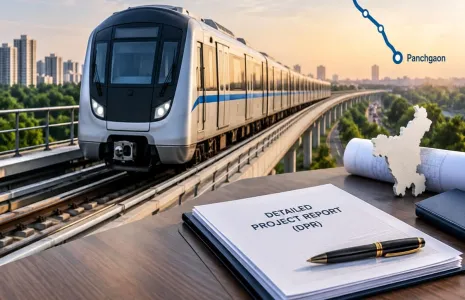
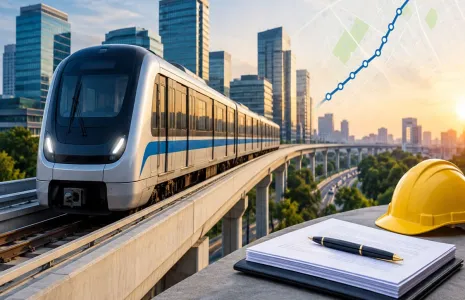
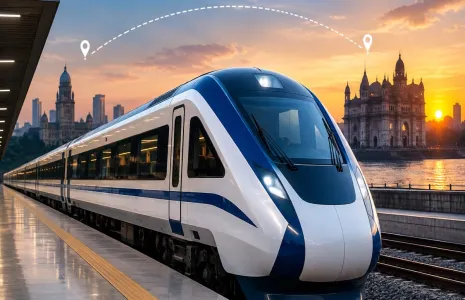
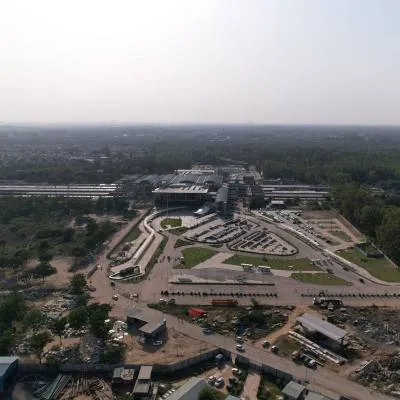
Gurugram Metro Rail Limited has outlined a hemicyclic corridor running 28.5 km, comprising 26.65 km of main elevated line and one point eight five km spur, with twenty seven elevated stations and a depot in Sector thirty three for operations and maintenance. The corridor is designed to weave residential, commercial, industrial and institutional zones, including Udyog Vihar and Cyber City, while catalysing emerging transit oriented development areas along the Dwarka Expressway. Multi modal links are planned to interface with the Delhi Metro Yellow Line, the RRTS corridor, local bus depots, Rapid Metro and regional railway stations to enable seamless transfers for commuters. This configuration is intended to support equitable access to employment centres, educational institutions and social amenities across old and new city areas.

The project projects ridership of zero point five million (0.5 mn) daily passengers and is conceived to reduce reliance on private vehicles, lower congestion and contribute to improved urban air quality. Stations are being planned with energy efficient architecture, natural lighting and ventilation to curtail consumption, while the corporation is exploring rooftop solar for stations and depot power needs to reduce the network carbon footprint. Emphasis on pedestrian friendly precincts and cycling access at station nodes aims to foster walking and non motorised transport as first and last mile options. Transit oriented development around stations is expected to promote mixed use neighbourhoods that encourage public transport uptake.

The technical framework features a 750V DC third rail traction system for compact operations and a centralised Supervisory Control and Data Acquisition system for real time monitoring and control. Advanced signalling, communication and safety systems have been incorporated to optimise train frequency and reduce waiting times, with the depot enabling streamlined maintenance and faster recovery from disruptions. Operational design seeks to balance capacity, reliability and passenger convenience to build commuter confidence. The network approach is positioned as a backbone for a resilient urban mobility ecosystem.

Operationally, the corporation reported a 13.59 per cent increase in ridership, with six point two four nine million (6.249 mn) passengers using the Rapid Metro between April and July 2025, signalling rising public uptake. By assuming operations and maintenance responsibilities from Delhi Metro Rail Corporation, Gurugram Metro Rail Limited expects to streamline processes and optimise costs while delivering integrated, responsive services. The depot and maintenance regime are intended to support consistent performance and minimise service disruptions. Continued monitoring and environmental and social impact assessments aim to mitigate risks and align delivery with urban planning goals.

Economic and social impacts are central to the project narrative, with improved connectivity anticipated to enhance commercial activity, support investment in emerging districts and uplift property markets in transit oriented development areas. Inclusive mobility outcomes are expected to broaden access for diverse neighbourhoods to jobs, education and healthcare, contributing to healthier urban living. Stakeholder engagement with communities and planners is being prioritised to align infrastructure with broader city objectives. Under the leadership of Dr Chander Shekhar Khare, IAS, the corporation positions the metro as an integrated enabler of sustainable, connected and resilient Gurugram.

Gurugram Metro Rail Limited has outlined a hemicyclic corridor running 28.5 km, comprising 26.65 km of main elevated line and one point eight five km spur, with twenty seven elevated stations and a depot in Sector thirty three for operations and maintenance. The corridor is designed to weave residential, commercial, industrial and institutional zones, including Udyog Vihar and Cyber City, while catalysing emerging transit oriented development areas along the Dwarka Expressway. Multi modal links are planned to interface with the Delhi Metro Yellow Line, the RRTS corridor, local bus depots, Rapid Metro and regional railway stations to enable seamless transfers for commuters. This configuration is intended to support equitable access to employment centres, educational institutions and social amenities across old and new city areas. The project projects ridership of zero point five million (0.5 mn) daily passengers and is conceived to reduce reliance on private vehicles, lower congestion and contribute to improved urban air quality. Stations are being planned with energy efficient architecture, natural lighting and ventilation to curtail consumption, while the corporation is exploring rooftop solar for stations and depot power needs to reduce the network carbon footprint. Emphasis on pedestrian friendly precincts and cycling access at station nodes aims to foster walking and non motorised transport as first and last mile options. Transit oriented development around stations is expected to promote mixed use neighbourhoods that encourage public transport uptake. The technical framework features a 750V DC third rail traction system for compact operations and a centralised Supervisory Control and Data Acquisition system for real time monitoring and control. Advanced signalling, communication and safety systems have been incorporated to optimise train frequency and reduce waiting times, with the depot enabling streamlined maintenance and faster recovery from disruptions. Operational design seeks to balance capacity, reliability and passenger convenience to build commuter confidence. The network approach is positioned as a backbone for a resilient urban mobility ecosystem. Operationally, the corporation reported a 13.59 per cent increase in ridership, with six point two four nine million (6.249 mn) passengers using the Rapid Metro between April and July 2025, signalling rising public uptake. By assuming operations and maintenance responsibilities from Delhi Metro Rail Corporation, Gurugram Metro Rail Limited expects to streamline processes and optimise costs while delivering integrated, responsive services. The depot and maintenance regime are intended to support consistent performance and minimise service disruptions. Continued monitoring and environmental and social impact assessments aim to mitigate risks and align delivery with urban planning goals. Economic and social impacts are central to the project narrative, with improved connectivity anticipated to enhance commercial activity, support investment in emerging districts and uplift property markets in transit oriented development areas. Inclusive mobility outcomes are expected to broaden access for diverse neighbourhoods to jobs, education and healthcare, contributing to healthier urban living. Stakeholder engagement with communities and planners is being prioritised to align infrastructure with broader city objectives. Under the leadership of Dr Chander Shekhar Khare, IAS, the corporation positions the metro as an integrated enabler of sustainable, connected and resilient Gurugram.

Related Stories

Gold Stories

Next Story
Infrastructure Urban

Emiza Expands Bhiwandi Fulfilment Capacity by 2.32 Lakh Sq Ft

Emiza, a leading third-party logistics (3PL) provider, has expanded its Mumbai operations with the launch of two new fulfilment facilities in Bhiwandi, adding a combined capacity of 2.32 lakh sq ft to its network.The new facilities, spread across 75,000 sq ft and 1,57,000 sq ft, mark Emiza’s fifth and sixth warehouses in the Mumbai region. The expansion strengthens the company’s fulfilment infrastructure in Western India amid the rapid growth of India’s digital commerce ecosystem.With increasing online consumption, wider product categories and rising customer expectations for faster deli..

Next Story
Infrastructure Urban

Ingersoll Rand Showcases Air Solutions for Semiconductor Sector

Ingersoll Rand will showcase its advanced compressed air solutions for India’s growing semiconductor ecosystem at SEMICON India 2026, scheduled from September 17–19 at Yashobhoomi, New Delhi.The company will display its portfolio of oil-free compressors, centrifugal compression technologies and advanced air treatment systems at Stall No. 1156, Hall No. 1. The solutions are designed to address the stringent air quality, reliability and efficiency requirements of semiconductor manufacturing applications.With India accelerating investments across semiconductor manufacturing, packaging, equipm..

Next Story
Infrastructure Energy

RECPDCL Transfers Musalgaon Transmission SPV to MSETCL

REC Power Development and Consultancy Limited (RECPDCL), a wholly owned subsidiary of REC Limited, has handed over Musalgaon Power Transmission Limited, a project-specific Special Purpose Vehicle (SPV), to Maharashtra State Electricity Transmission Company Limited (MSETCL).MSETCL emerged as the successful bidder through the Tariff-Based Competitive Bidding (TBCB) process conducted by RECPDCL, the Bid Process Coordinator, for developing Maharashtra’s intra-state transmission project on a Build, Own, Operate and Transfer (BOOT) basis.The SPV was handed over by Shri Ratnesh Kumar, General Manag..

Advertisement

Subscribe to Our Newsletter

Get daily newsletters around different themes from Construction world.

STAY CONNECTED

Advertisement

SPECIAL OFFER
QR Code