+
Haryana Clears 64 km Namo Bharat RRTS Link In NCR Cities
RAILWAYS & METRO RAIL

Haryana Clears 64 km Namo Bharat RRTS Link In NCR Cities

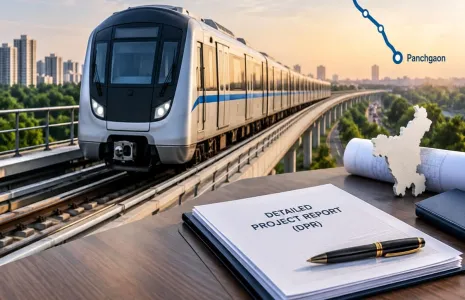
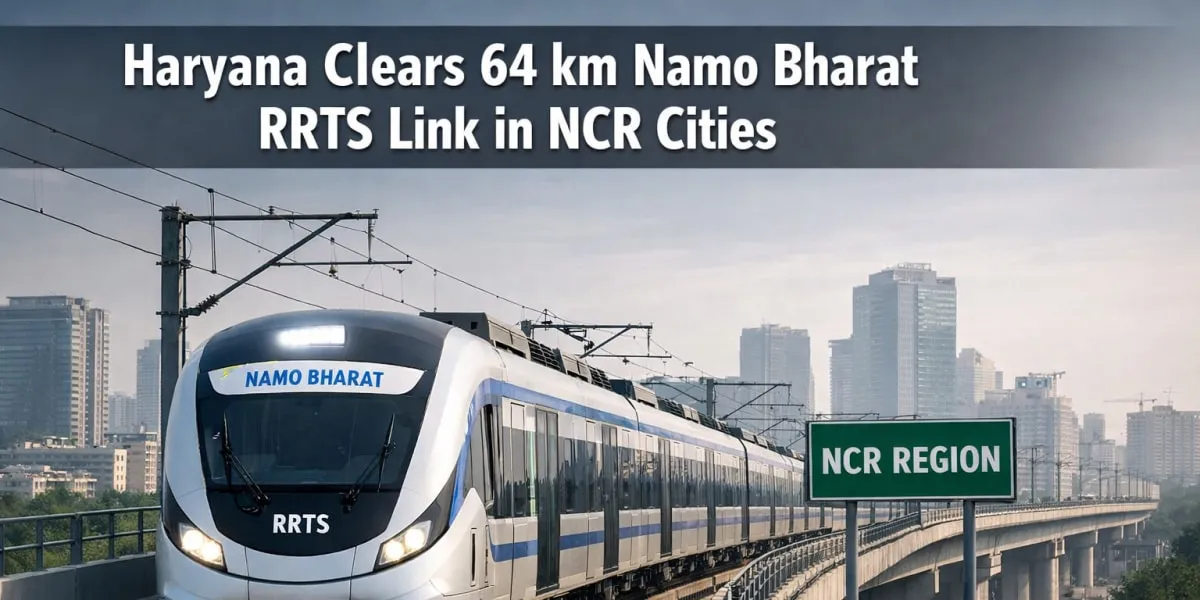
Haryana has cleared a 64 km section of the Namo Bharat rapid rail transit system (RRTS) that will link cities across the National Capital Region (NCR). The clearance marks a key administrative milestone for a project intended to improve regional connectivity between urban centres and satellite towns. Authorities indicated the approval paves the way for detailed design finalisation and subsequent construction activity.

The cleared corridor is expected to provide a fast, high-capacity public transport option that complements existing rail and road networks. Project proponents expect reductions in commuter travel times and more reliable scheduling for daily travellers, while also facilitating last mile integration with local transport. The scheme is likely to involve new stations, dedicated tracks and modern signalling systems.

Planning for the RRTS has emphasised integration with metro services, bus networks and regional rail so that passengers experience seamless transfers. Planners have prioritised accessibility and operational efficiency to encourage a modal shift from private vehicles to mass transit. Officials noted that such integration would support economic activity by easing movement of the workforce across the NCR.

Environmental and urban benefits associated with the project include potential reductions in congestion and vehicle emissions as journeys move to electrified rail. The project framework has included assessments of land use and community impact, together with measures to minimise disruption during construction. Implementation will require coordination between the state, neighbouring authorities and central agencies.

Next steps involve final clearance of detailed designs, procurement of contractors and setting a construction schedule, subject to statutory requirements and funding arrangements. Stakeholders have underscored the need for timely execution to deliver commuter benefits and to maximise returns on public investment. Continued oversight will be necessary to ensure the project meets safety, quality and operational targets.

Haryana has cleared a 64 km section of the Namo Bharat rapid rail transit system (RRTS) that will link cities across the National Capital Region (NCR). The clearance marks a key administrative milestone for a project intended to improve regional connectivity between urban centres and satellite towns. Authorities indicated the approval paves the way for detailed design finalisation and subsequent construction activity. The cleared corridor is expected to provide a fast, high-capacity public transport option that complements existing rail and road networks. Project proponents expect reductions in commuter travel times and more reliable scheduling for daily travellers, while also facilitating last mile integration with local transport. The scheme is likely to involve new stations, dedicated tracks and modern signalling systems. Planning for the RRTS has emphasised integration with metro services, bus networks and regional rail so that passengers experience seamless transfers. Planners have prioritised accessibility and operational efficiency to encourage a modal shift from private vehicles to mass transit. Officials noted that such integration would support economic activity by easing movement of the workforce across the NCR. Environmental and urban benefits associated with the project include potential reductions in congestion and vehicle emissions as journeys move to electrified rail. The project framework has included assessments of land use and community impact, together with measures to minimise disruption during construction. Implementation will require coordination between the state, neighbouring authorities and central agencies. Next steps involve final clearance of detailed designs, procurement of contractors and setting a construction schedule, subject to statutory requirements and funding arrangements. Stakeholders have underscored the need for timely execution to deliver commuter benefits and to maximise returns on public investment. Continued oversight will be necessary to ensure the project meets safety, quality and operational targets.

Next Story
Infrastructure Urban

India Issues Joint Space Cyber Security Guidelines

The Indian Computer Emergency Response Team (CERT-In), under the Ministry of Electronics and Information Technology, and the Space Industry Association of India (SIA-India) released a comprehensive framework and guidelines for space cyber security at the DefSat Conference and Expo 2026 in New Delhi from 24 to 26 February 2026. The release noted that space cyber security, including satellite communication systems, is vital to connectivity in remote and strategic regions and underpins national security, disaster response, navigation, broadcasting and a wide range of economic activities. The advi..

Next Story
Infrastructure Urban

MeitY And DSCI Honour Winners Of Cyber Security Grand Challenge 2.0

The Ministry of Electronics and Information Technology (MeitY) and the Data Security Council of India (DSCI) felicitated winners of the Cyber Security Grand Challenge 2.0, a programme to strengthen national cyber security capability and build expertise in critical technology areas. The event, presided over by S. Krishnan, Secretary at MeitY, marked the end of a staged innovation competition launched in January 2025 on the MyGov platform. The combined prize pool was Rs 68.5 mn for the competition overall. The grand winners comprised three start?ups. Cambrian Skillsda Technologies and Consultanc..

Next Story
Infrastructure Urban

UIDAI Teams With Google To Map Authorised Aadhaar Centres

The Unique Identification Authority of India (UIDAI) has partnered with Google to enable display of authorised Aadhaar centres on Google Maps, a measure intended to improve access and convenience for residents nationwide. The initiative will publish verified centre locations and associated service types to make navigation straightforward and reduce uncertainty. The announcement emphasises that the integration will direct users to centres that have been authenticated by the authority. The service will indicate the nature of services offered at each centre, including adult enrolment, child enrol..

Advertisement

Subscribe to Our Newsletter

Get daily newsletters around different themes from Construction world.

STAY CONNECTED

Advertisement

Advertisement

Advertisement

Open In App