+
Haryana Clears 64 km Namo Bharat RRTS Linking NCR Cities
RAILWAYS & METRO RAIL

Haryana Clears 64 km Namo Bharat RRTS Linking NCR Cities

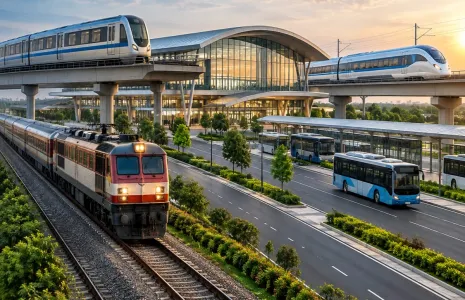
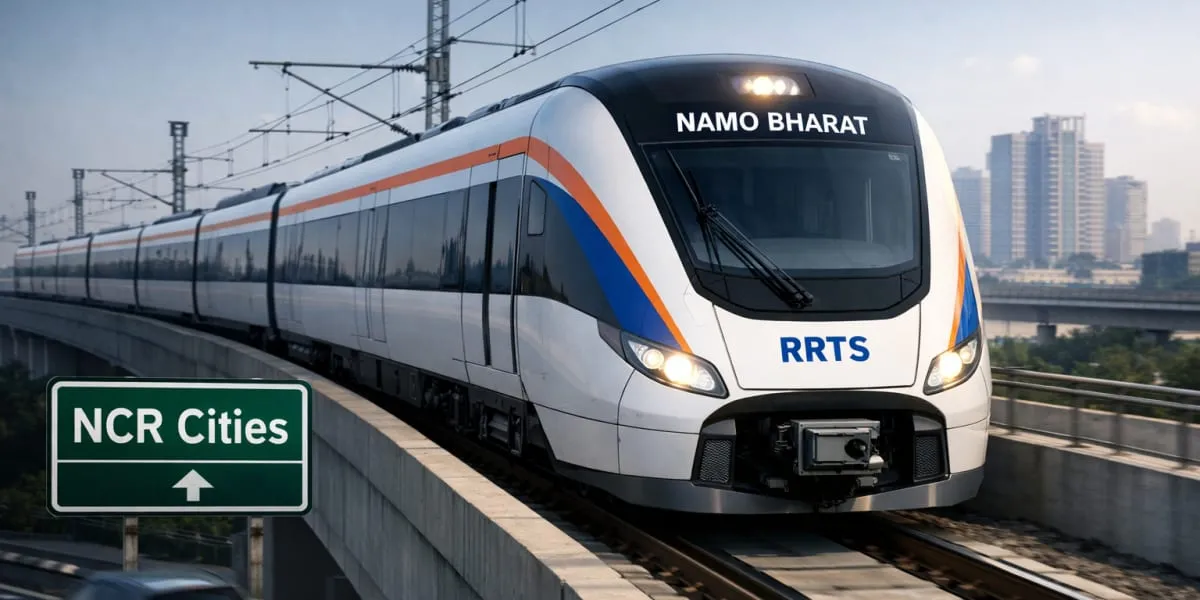
The Haryana government has cleared a 64 km Namo Bharat Rapid Rail Transit System (RRTS) corridor linking cities across the National Capital Region (NCR). The approval covers route alignment and preliminary clearances for the regional rapid transit project designed to improve intercity connectivity. Officials indicated the corridor will provide a faster, higher capacity alternative to road travel for daily commuters and longer distance passengers. The decision follows consultation between state and central agencies and reflects an emphasis on regional transport integration.

The RRTS corridor is expected to reduce travel times significantly and ease congestion on arterial highways by offering a high frequency, grade separated service. The project will be designed to integrate with existing metro and bus networks to facilitate seamless transfers and last mile connectivity. Planners anticipate improvements in access to employment, education and health services across the region. Services are planned to run at high frequency during peak hours to meet commuter demand and to offer comfortable, accessible rolling stock for diverse user groups.

Following state clearance the proposal will move towards detailed project reports and statutory approvals from central agencies, with land acquisition and environmental clearances to follow. The implementing authority will invite tenders for design and construction after finalising technical specifications and funding arrangements. Authorities intend to coordinate with municipal bodies to align station locations with urban development plans. Funding modalities will be finalised in consultation with central financing bodies and potential private partners while ensuring fiscal sustainability.

Construction is expected to commence once all legal and financial conditions are met, with phased implementation planned to minimise disruption. The project is intended to spur economic activity and support sustainable urban mobility in the NCR by shifting commuters from private vehicles to public transit. Stakeholders will monitor progress and adjust timelines to address ground realities. Construction and allied activity are expected to generate local employment and create opportunities for small and medium enterprises involved in supply chains.

The Haryana government has cleared a 64 km Namo Bharat Rapid Rail Transit System (RRTS) corridor linking cities across the National Capital Region (NCR). The approval covers route alignment and preliminary clearances for the regional rapid transit project designed to improve intercity connectivity. Officials indicated the corridor will provide a faster, higher capacity alternative to road travel for daily commuters and longer distance passengers. The decision follows consultation between state and central agencies and reflects an emphasis on regional transport integration. The RRTS corridor is expected to reduce travel times significantly and ease congestion on arterial highways by offering a high frequency, grade separated service. The project will be designed to integrate with existing metro and bus networks to facilitate seamless transfers and last mile connectivity. Planners anticipate improvements in access to employment, education and health services across the region. Services are planned to run at high frequency during peak hours to meet commuter demand and to offer comfortable, accessible rolling stock for diverse user groups. Following state clearance the proposal will move towards detailed project reports and statutory approvals from central agencies, with land acquisition and environmental clearances to follow. The implementing authority will invite tenders for design and construction after finalising technical specifications and funding arrangements. Authorities intend to coordinate with municipal bodies to align station locations with urban development plans. Funding modalities will be finalised in consultation with central financing bodies and potential private partners while ensuring fiscal sustainability. Construction is expected to commence once all legal and financial conditions are met, with phased implementation planned to minimise disruption. The project is intended to spur economic activity and support sustainable urban mobility in the NCR by shifting commuters from private vehicles to public transit. Stakeholders will monitor progress and adjust timelines to address ground realities. Construction and allied activity are expected to generate local employment and create opportunities for small and medium enterprises involved in supply chains.

Next Story
Infrastructure Urban

India Issues Joint Space Cyber Security Guidelines

The Indian Computer Emergency Response Team (CERT-In), under the Ministry of Electronics and Information Technology, and the Space Industry Association of India (SIA-India) released a comprehensive framework and guidelines for space cyber security at the DefSat Conference and Expo 2026 in New Delhi from 24 to 26 February 2026. The release noted that space cyber security, including satellite communication systems, is vital to connectivity in remote and strategic regions and underpins national security, disaster response, navigation, broadcasting and a wide range of economic activities. The advi..

Next Story
Infrastructure Urban

MeitY And DSCI Honour Winners Of Cyber Security Grand Challenge 2.0

The Ministry of Electronics and Information Technology (MeitY) and the Data Security Council of India (DSCI) felicitated winners of the Cyber Security Grand Challenge 2.0, a programme to strengthen national cyber security capability and build expertise in critical technology areas. The event, presided over by S. Krishnan, Secretary at MeitY, marked the end of a staged innovation competition launched in January 2025 on the MyGov platform. The combined prize pool was Rs 68.5 mn for the competition overall. The grand winners comprised three start?ups. Cambrian Skillsda Technologies and Consultanc..

Next Story
Infrastructure Urban

UIDAI Teams With Google To Map Authorised Aadhaar Centres

The Unique Identification Authority of India (UIDAI) has partnered with Google to enable display of authorised Aadhaar centres on Google Maps, a measure intended to improve access and convenience for residents nationwide. The initiative will publish verified centre locations and associated service types to make navigation straightforward and reduce uncertainty. The announcement emphasises that the integration will direct users to centres that have been authenticated by the authority. The service will indicate the nature of services offered at each centre, including adult enrolment, child enrol..

Advertisement

Subscribe to Our Newsletter

Get daily newsletters around different themes from Construction world.

STAY CONNECTED

Advertisement

Advertisement

Advertisement

Open In App