Haryana Clears 64 km Namo Bharat RRTS Linking NCR Cities
RAILWAYS & METRO RAIL

Haryana Clears 64 km Namo Bharat RRTS Linking NCR Cities

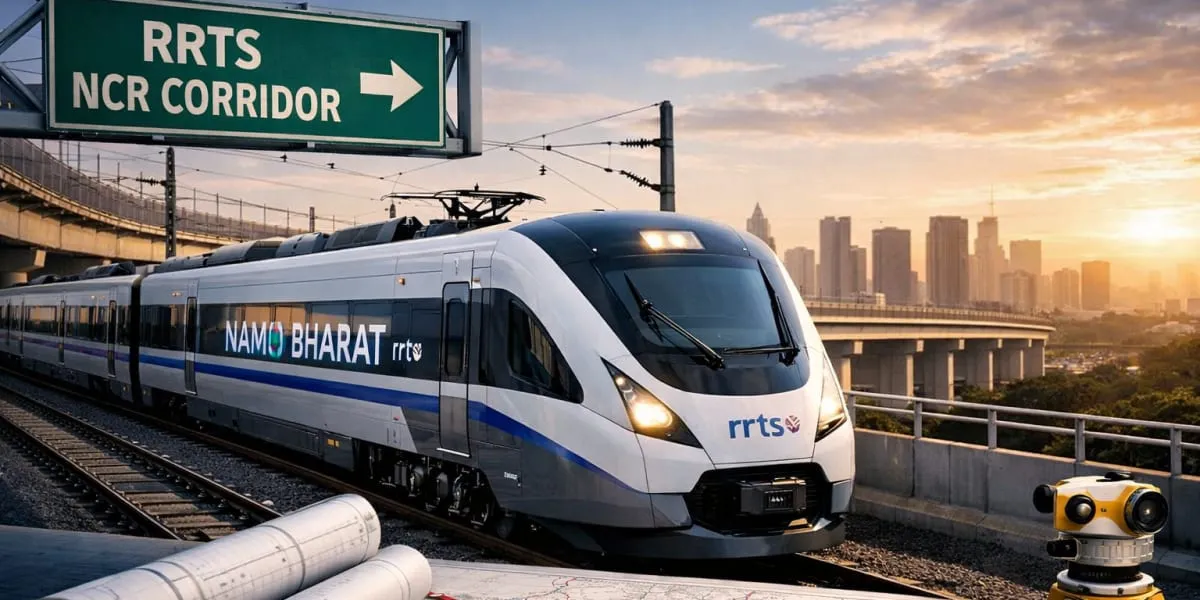
The Haryana government has given formal clearance to a 64 kilometre alignment of the Namo Bharat Regional Rapid Transit System (Namo Bharat RRTS) that will link cities across the National Capital Region. The decision follows detailed examination of route options and design parameters by state planners and is intended to improve intercity connectivity and provide a high-capacity alternative to road travel. Officials described the clearance as a key step in accelerating regional transit investments and preparing the project for subsequent technical and regulatory processes.

The 64 kilometre link is expected to serve major commuter corridors within the region and to reduce journey times by offering dedicated corridors for high-frequency services while aiming to ease congestion on arterial roads. Planning documents indicate that the alignment will intersect with existing mass transit systems to enable transfers and to create multimodal nodes, thereby improving accessibility for daily commuters and supporting wider urban development objectives. Project sponsors will advance detailed engineering work and secure necessary clearances before procurement proceeds.

Implementation will require coordination between state agencies, urban local bodies and national transport authorities, and it will involve land acquisition, utility relocation and environmental assessments. Stakeholders expect the scheme to attract investment and to generate employment during the construction and operation phases. Community engagement and clear compensation frameworks will be critical to address local concerns and to keep the schedule on track.

Following the clearance, officials will focus on finalising the detailed project report, tender processes and a financing plan that may include public-private participation or central funding support. Timely mobilisation of resources and prompt clearances will determine the pace of work while planners monitor alignment impacts on traffic flow and urban form. Observers noted that the Namo Bharat RRTS could reshape daily commuting patterns in the National Capital Region by offering a reliable, higher-capacity rail alternative to road transport.

The Haryana government has given formal clearance to a 64 kilometre alignment of the Namo Bharat Regional Rapid Transit System (Namo Bharat RRTS) that will link cities across the National Capital Region. The decision follows detailed examination of route options and design parameters by state planners and is intended to improve intercity connectivity and provide a high-capacity alternative to road travel. Officials described the clearance as a key step in accelerating regional transit investments and preparing the project for subsequent technical and regulatory processes. The 64 kilometre link is expected to serve major commuter corridors within the region and to reduce journey times by offering dedicated corridors for high-frequency services while aiming to ease congestion on arterial roads. Planning documents indicate that the alignment will intersect with existing mass transit systems to enable transfers and to create multimodal nodes, thereby improving accessibility for daily commuters and supporting wider urban development objectives. Project sponsors will advance detailed engineering work and secure necessary clearances before procurement proceeds. Implementation will require coordination between state agencies, urban local bodies and national transport authorities, and it will involve land acquisition, utility relocation and environmental assessments. Stakeholders expect the scheme to attract investment and to generate employment during the construction and operation phases. Community engagement and clear compensation frameworks will be critical to address local concerns and to keep the schedule on track. Following the clearance, officials will focus on finalising the detailed project report, tender processes and a financing plan that may include public-private participation or central funding support. Timely mobilisation of resources and prompt clearances will determine the pace of work while planners monitor alignment impacts on traffic flow and urban form. Observers noted that the Namo Bharat RRTS could reshape daily commuting patterns in the National Capital Region by offering a reliable, higher-capacity rail alternative to road transport.

Next Story
Real Estate

Indian real estate attracts USD 1.4 bn institutional investments in Q1 2026: Vestian

Institutional investments in India’s real estate sector touched USD 1.4 billion in Q1 2026, marking the highest first-quarter inflow since 2022, according to Vestian. While investments fell 62 per cent quarter-on-quarter due to an exceptionally high base in the previous quarter, they rose 74 per cent compared to the same period last year, reflecting sustained investor confidence despite rising geopolitical and macroeconomic challenges.Commercial real estate remained the key driver of investment activity during the quarter, accounting for 80 per cent of total inflows, sharply higher than 38 p..

Next Story
Infrastructure Transport

VECV crosses 1 lakh annual vehicle sales milestone in FY26

VE Commercial Vehicles (VECV), a joint venture between Volvo Group and Eicher Motors, has surpassed the 1 lakh annual sales mark in FY 2025–26, recording its highest-ever commercial vehicle sales performance. The company said it sold more than 100,000 vehicles during the year, marking a major milestone aligned with the original vision of the Volvo–Eicher joint venture.The strong performance was supported by demand across categories. Light and Medium Duty (LMD) trucks contributed 47,789 units, accounting for 46.1 per cent of total sales. Heavy Duty (HD) trucks recorded 26,867 units (25.9 pe..

Next Story
Technology

Rodic Digital & Advisory partners SatSure to deploy EO intelligence in public sector

Rodic Digital & Advisory (RDA), the strategic advisory and digital transformation arm of Rodic Consultants, has signed a strategic cooperation Memorandum of Understanding (MoU) with SatSure to jointly pursue opportunities in India’s public sector. The collaboration aims to integrate high-resolution Earth Observation (EO) data and geospatial AI into government workflows to strengthen monitoring, compliance, and operational decision-making across key sectors.The partnership combines SatSure’s Earth intelligence capabilities with RDA’s expertise in government digital transformation and ..

Advertisement

Subscribe to Our Newsletter

Get daily newsletters around different themes from Construction world.

STAY CONNECTED

Advertisement

Advertisement

Advertisement