HMRTC Plans 18 Metro Stations Along Gurugram Faridabad RRTS Corridor
RAILWAYS & METRO RAIL

HMRTC Plans 18 Metro Stations Along Gurugram Faridabad RRTS Corridor

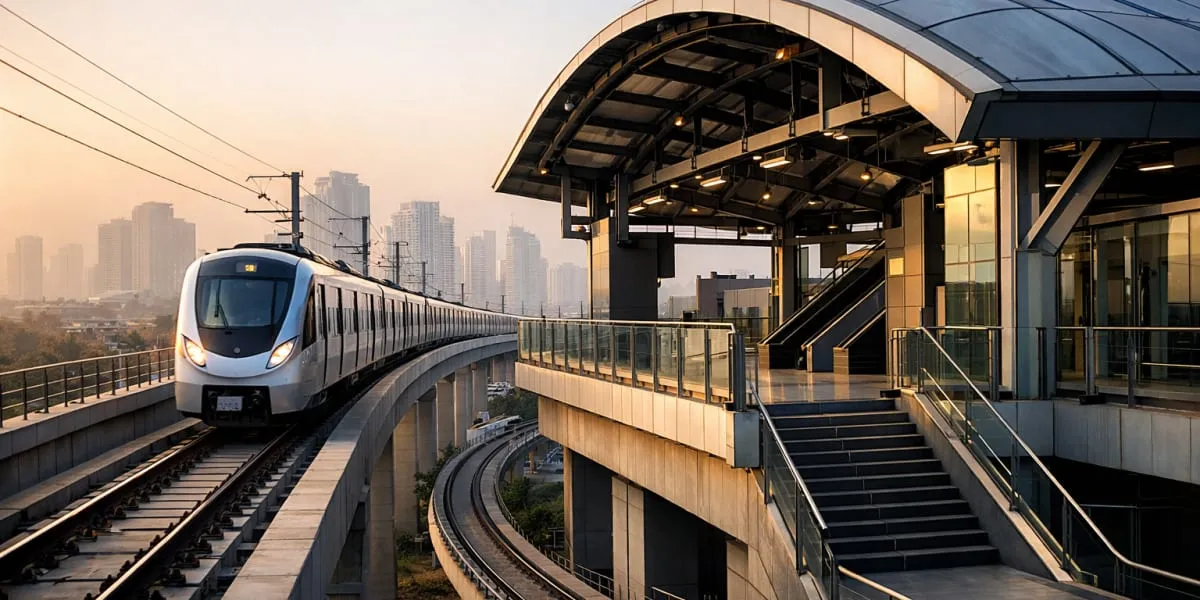
The Haryana Mass Rapid Transport Corporation (HMRTC) has proposed the construction of 18 metro stations along the Namo Bharat corridor that will connect Gurugram, Faridabad and Greater Noida. 10 stations are planned in Faridabad while eight are expected in Gurugram. The proposal forms part of a broader plan to extend semi-high-speed rapid transit capacity within the National Capital Region. The authority has positioned the corridor as a key element in regional mobility planning.

The Gurugram–Faridabad Rapid Rail Transit System (RRTS) line will stretch about 64 kilometres and will adopt the same operational model used for the Delhi–Meerut RRTS and Meerut Metro, enabling metro and Namo Bharat trains to share infrastructure. A significant portion of the route, about 52 kilometres, will run through Gurugram while the remaining 12 kilometres will lie in Uttar Pradesh. The shared infrastructure is intended to streamline operations and reduce duplication of track facilities. Design planners anticipate that interoperability will support reliable high frequency services.

Interchanges are planned to link the new corridor with the existing Delhi Metro network, with a key connection proposed at the Millennium City Centre Metro station on the Yellow Line to facilitate passenger transfers. An additional interchange at Sector 61 is intended to connect the Namo Bharat station with a proposed metro line between Sector 56 and Pachgaon, creating direct links between residential and employment centres. The network design seeks to integrate services to shorten journey times and improve accessibility for daily commuters. Project planners expect such nodes to enhance the overall effectiveness of the regional transport system.

The scheme is described as a semi-high-speed transit initiative that will provide enhanced connectivity across municipal boundaries and support modal shift from road to rail. Planners indicate that the corridor will offer a safe, affordable and sustainable travel option, improving reliability for passengers and fostering greater intercity connectivity. The distribution of stations across Faridabad and Gurugram is aimed at balancing coverage and operational efficiency. Implementation will require coordinated planning between state and regional authorities to align standards and schedules.

The Haryana Mass Rapid Transport Corporation (HMRTC) has proposed the construction of 18 metro stations along the Namo Bharat corridor that will connect Gurugram, Faridabad and Greater Noida. 10 stations are planned in Faridabad while eight are expected in Gurugram. The proposal forms part of a broader plan to extend semi-high-speed rapid transit capacity within the National Capital Region. The authority has positioned the corridor as a key element in regional mobility planning. The Gurugram–Faridabad Rapid Rail Transit System (RRTS) line will stretch about 64 kilometres and will adopt the same operational model used for the Delhi–Meerut RRTS and Meerut Metro, enabling metro and Namo Bharat trains to share infrastructure. A significant portion of the route, about 52 kilometres, will run through Gurugram while the remaining 12 kilometres will lie in Uttar Pradesh. The shared infrastructure is intended to streamline operations and reduce duplication of track facilities. Design planners anticipate that interoperability will support reliable high frequency services. Interchanges are planned to link the new corridor with the existing Delhi Metro network, with a key connection proposed at the Millennium City Centre Metro station on the Yellow Line to facilitate passenger transfers. An additional interchange at Sector 61 is intended to connect the Namo Bharat station with a proposed metro line between Sector 56 and Pachgaon, creating direct links between residential and employment centres. The network design seeks to integrate services to shorten journey times and improve accessibility for daily commuters. Project planners expect such nodes to enhance the overall effectiveness of the regional transport system. The scheme is described as a semi-high-speed transit initiative that will provide enhanced connectivity across municipal boundaries and support modal shift from road to rail. Planners indicate that the corridor will offer a safe, affordable and sustainable travel option, improving reliability for passengers and fostering greater intercity connectivity. The distribution of stations across Faridabad and Gurugram is aimed at balancing coverage and operational efficiency. Implementation will require coordinated planning between state and regional authorities to align standards and schedules.

Next Story
Resources

SCOPE Rebrands as Sentova, Expands Global Advisory

SCOPE has rebranded as Sentova, marking its transition into a global investment banking and financial advisory platform focused on institutional deal-making and cross-border capital flows. The firm will operate across three core verticals—venture capital fundraising, private equity buyouts and investment consulting—offering end-to-end advisory from deal structuring to transaction closure. The move reflects growing integration of global capital markets, particularly across the India–Gulf and US–Middle East corridors, where Sentova aims to facilitate capital deployment through its inve..

Next Story
Products

Häfele Launches Horizon Digital Lock

Häfele has introduced the Horizon Digital Lock under its Evolve range, offering a smart security solution designed for contemporary homes. The digital lock integrates advanced features such as Smart Password, Smart Voice and Smart Freeze, enabling enhanced usability alongside robust security. It supports multiple locking modes including auto locking, passage, privacy and double authentication, allowing users to customise security levels based on usage. The system offers flexible access control through fingerprint, RFID card and password-enabled admin access, along with multiple user and gue..

Next Story
Real Estate

Casagrand Launches Premium Villa Project in Tiruppur

Casagrand has launched Casagrand Blossoms, a premium villa community in Poondi, marking a new phase in Tiruppur’s residential market. Spread across 8.4 acres, the project comprises 113 low-density 4 BHK villas ranging from 2,543 to 2,767 sq ft, with prices starting at Rs 15.9 million. The development is designed with a focus on open spaces, with over 5.5 acres dedicated to open areas, including 2.3 acres of landscaped greenery. The project features 59 lifestyle amenities, including a 9,300 sq ft clubhouse and a 6,300 sq ft swimming pool, along with fitness, recreation and wellness faciliti..

Advertisement

Subscribe to Our Newsletter

Get daily newsletters around different themes from Construction world.

STAY CONNECTED

Advertisement

Advertisement

Advertisement