Hyderabad Plans Pod Based Transit To Link Metro Stations
RAILWAYS & METRO RAIL

Hyderabad Plans Pod Based Transit To Link Metro Stations

The Telangana government is exploring a pod-based transport system to improve last-mile connectivity for commuters using the Hyderabad Metro. Hyderabad Metro Rail Limited (HMRL) has initiated steps to assess the feasibility of introducing an automated personal rapid transit (PRT) network in the city, signalling official interest in a new feeder option.

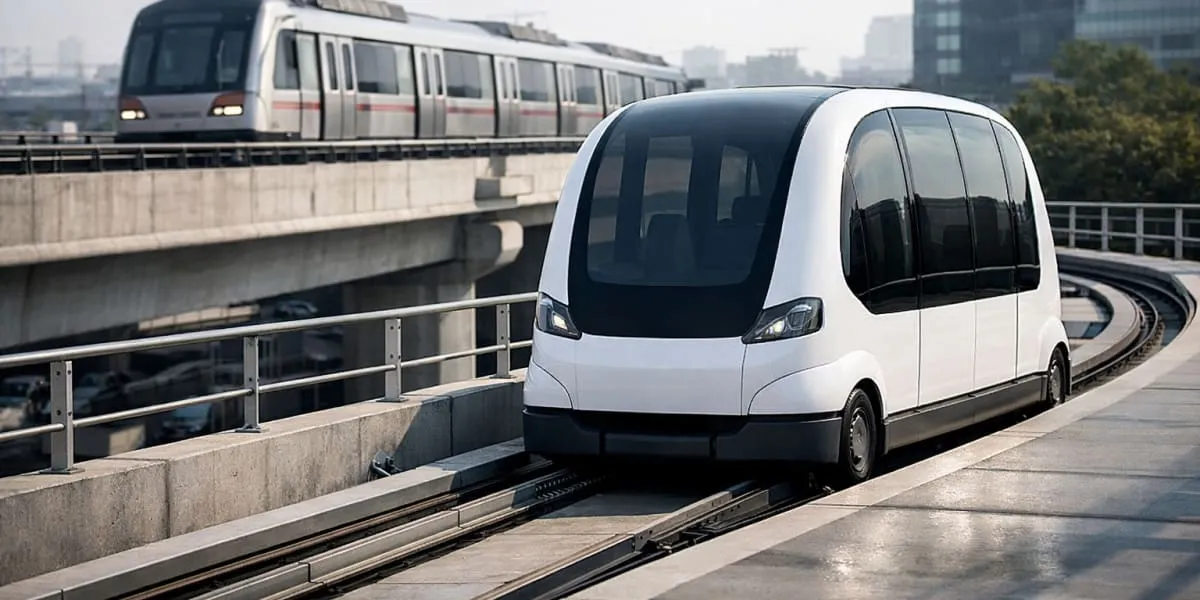
The proposed system would use small battery-operated pods designed to carry four to six passengers each and could collectively handle up to 10,000 passengers per hour. The pods are intended to link metro stations with nearby residential neighbourhoods and commercial areas, helping to bridge the gap between stations and commuters' final destinations. The design aims to offer frequent short trips with minimal waiting.

To move the plan forward, HMRL floated a tender to appoint a consultant for a techno-economic feasibility study and the selected agency will be responsible for preparing the system design. The consultant will also oversee the bidding process for implementation, allowing the authority to evaluate technical, operational and financial parameters before committing to construction. The study will also examine integration with existing station layouts and ticketing arrangements.

The pilot corridor is proposed along the Raidurg–Kukatpally stretch and would cover several busy locations including Raidurg, Hi-Tec City, Financial District and Secretariat. The route is expected to serve dense employment and residential clusters where last-mile gaps are most pronounced and could provide a focused test bed for operational protocols.

Officials see the automated PRT as a complement to existing mass transit rather than a replacement, offering on demand feeder mobility that could reduce short car trips and ease pressure on station access. Further work on the feasibility study and subsequent procurement will determine timelines, costs and the scale at which the system may be rolled out. Stakeholders will review the study findings before final decisions are taken.

The Telangana government is exploring a pod-based transport system to improve last-mile connectivity for commuters using the Hyderabad Metro. Hyderabad Metro Rail Limited (HMRL) has initiated steps to assess the feasibility of introducing an automated personal rapid transit (PRT) network in the city, signalling official interest in a new feeder option. The proposed system would use small battery-operated pods designed to carry four to six passengers each and could collectively handle up to 10,000 passengers per hour. The pods are intended to link metro stations with nearby residential neighbourhoods and commercial areas, helping to bridge the gap between stations and commuters' final destinations. The design aims to offer frequent short trips with minimal waiting. To move the plan forward, HMRL floated a tender to appoint a consultant for a techno-economic feasibility study and the selected agency will be responsible for preparing the system design. The consultant will also oversee the bidding process for implementation, allowing the authority to evaluate technical, operational and financial parameters before committing to construction. The study will also examine integration with existing station layouts and ticketing arrangements. The pilot corridor is proposed along the Raidurg–Kukatpally stretch and would cover several busy locations including Raidurg, Hi-Tec City, Financial District and Secretariat. The route is expected to serve dense employment and residential clusters where last-mile gaps are most pronounced and could provide a focused test bed for operational protocols. Officials see the automated PRT as a complement to existing mass transit rather than a replacement, offering on demand feeder mobility that could reduce short car trips and ease pressure on station access. Further work on the feasibility study and subsequent procurement will determine timelines, costs and the scale at which the system may be rolled out. Stakeholders will review the study findings before final decisions are taken.

Next Story
Infrastructure Transport

Pune To Build Nine Km Link Road Between Highways

The Pune Municipal Corporation (PMC) has decided to appoint an expert to plan the development of a nine km long, 60 metre wide road from Khadi Machine chowk to Wadki chowk as an extension to the Katraj-Kondhwa road to link the Mumbai-Satara and Pune-Solapur national highways. The scheme is intended to divert heavy vehicle traffic away from the city and improve access between the two arterial routes. The project has been prioritised by the PMC and forms part of a larger set of schemes in which 19 roads have been identified for development at a combined cost of Rs 9.82 billion (bn) to address c..

Next Story
Infrastructure Transport

Barabanki Bahraich Six Lane Highway Approved in Uttar Pradesh

The Uttar Pradesh government has approved construction of a new six-lane highway linking Barabanki and Bahraich as part of National Highway 927, and the cabinet has cleared the project. The alignment will pass through Mustafabad and Kaiserganj and extend for about 101.5 km, creating a key corridor for local and long-distance movement. The National Highways Authority of India will oversee the work and has signalled the scheme is intended to strengthen regional connectivity and cross-border access to Nepal. The project carries an estimated total cost of Rs 69,690 million, equivalent to Rs 69.69..

Next Story
Infrastructure Transport

Toll At Kharegaon Likely As Highway Upgrade Nears Completion

A section of the highway at Kharegaon has undergone an upgrade and is approaching completion, and authorities have indicated plans for a toll to be introduced once works finish. The project has focused on strengthening the carriageway, improving drainage and upgrading intersections to enhance safety and capacity. Officials have said the toll will be used to recover construction costs and fund ongoing maintenance. The upgrade included resurfacing of the pavement, widening of certain stretches and installation of modern signage and lighting to reduce accident risk. Contractors completed most ma..

Advertisement

Subscribe to Our Newsletter

Get daily newsletters around different themes from Construction world.

STAY CONNECTED

Advertisement

Advertisement

Advertisement