Indian Railways Posts Record Growth And Rapid Modernisation
RAILWAYS & METRO RAIL

Indian Railways Posts Record Growth And Rapid Modernisation

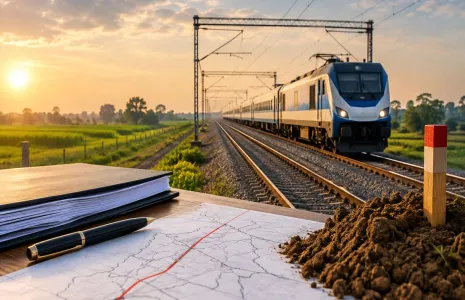
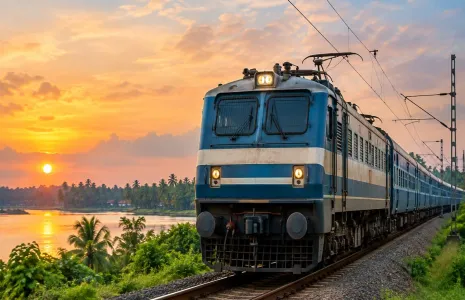
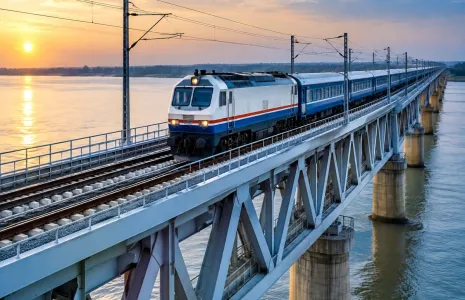
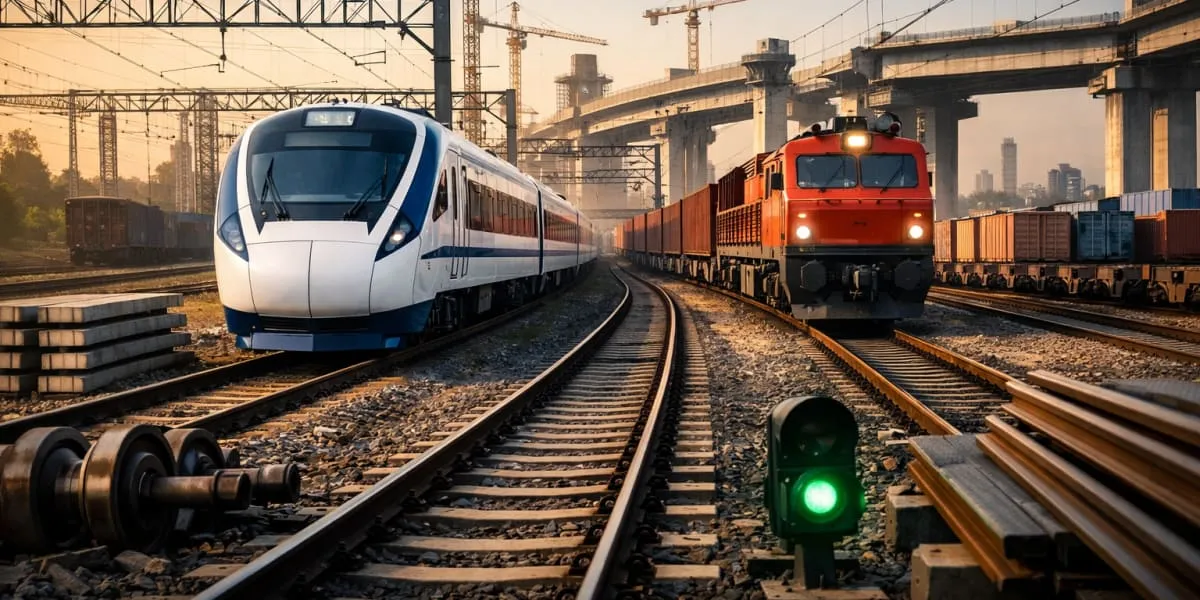
Indian Railways recorded a year of strong and well rounded progress in FY 2025–26, completing significant milestones across freight operations, passenger services, infrastructure development and safety systems. The achievements reflect a balanced emphasis on capacity expansion, technology driven modernisation and self reliance in manufacturing that supported economic activity and enhanced national connectivity.

Rail operations remained robust, with around 25,000 trains running daily to ensure widespread connectivity, and additional special services deployed during peak demand periods to ease travel. Freight transportation reached a historic high of 1,670 million tonnes (mn t) of loading for the year, supporting the movement of coal, cement, fertilisers and food grains across supply chains.

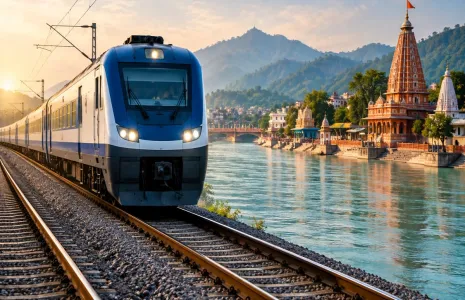
Manufacturing outcomes under the Make in India initiative included the production of 1,674 locomotives and 6,677 LHB coaches, contributing to safer and more comfortable travel. Passenger services advanced with the introduction of Vande Bharat Sleeper trains alongside existing Vande Bharat and Amrit Bharat services, enhancing long distance options and overall journey experience.

Safety measures accelerated with the indigenous Kavach automatic train protection system commissioned on over 3,100 route kilometres and a further 24,400 kilometres planned for implementation. Digital transformation progressed with the July 2025 launch of the RailOne App, which consolidated ticketing, enquiries and grievance redressal, and with the removal of over 30.4 million (mn) suspicious user accounts to promote fair access. Infrastructure initiatives included the commissioning of 35 Gati Shakti Cargo Terminals and the redevelopment of 119 Amrit Bharat stations, while connectivity projects such as the Bairabi–Sairang rail line and bridge works to Jammu and Kashmir improved regional links and livelihoods. The organisation signalled continued commitment to building an efficient, technology led and passenger centric rail network aligned with the national development vision.

Indian Railways recorded a year of strong and well rounded progress in FY 2025–26, completing significant milestones across freight operations, passenger services, infrastructure development and safety systems. The achievements reflect a balanced emphasis on capacity expansion, technology driven modernisation and self reliance in manufacturing that supported economic activity and enhanced national connectivity. Rail operations remained robust, with around 25,000 trains running daily to ensure widespread connectivity, and additional special services deployed during peak demand periods to ease travel. Freight transportation reached a historic high of 1,670 million tonnes (mn t) of loading for the year, supporting the movement of coal, cement, fertilisers and food grains across supply chains. Manufacturing outcomes under the Make in India initiative included the production of 1,674 locomotives and 6,677 LHB coaches, contributing to safer and more comfortable travel. Passenger services advanced with the introduction of Vande Bharat Sleeper trains alongside existing Vande Bharat and Amrit Bharat services, enhancing long distance options and overall journey experience. Safety measures accelerated with the indigenous Kavach automatic train protection system commissioned on over 3,100 route kilometres and a further 24,400 kilometres planned for implementation. Digital transformation progressed with the July 2025 launch of the RailOne App, which consolidated ticketing, enquiries and grievance redressal, and with the removal of over 30.4 million (mn) suspicious user accounts to promote fair access. Infrastructure initiatives included the commissioning of 35 Gati Shakti Cargo Terminals and the redevelopment of 119 Amrit Bharat stations, while connectivity projects such as the Bairabi–Sairang rail line and bridge works to Jammu and Kashmir improved regional links and livelihoods. The organisation signalled continued commitment to building an efficient, technology led and passenger centric rail network aligned with the national development vision.

Next Story
Infrastructure Transport

Sector 51-52 Metro skywalk in Noida remains shut despite being ready for over a year

Thousands of commuters travelling between Delhi Metro Rail Corporation’s (DMRC) Sector 52 station and Noida Metro Rail Corporation’s (NMRC) Sector 51 station continue to face daily inconvenience as the 300-metre air-conditioned skywalk connecting the two stations remains closed, despite being completed over a year ago, according to a report.The Noida Metro Rail Corporation built the foot overbridge to enable a seamless interchange between the Delhi Metro and Noida Metro networks. However, pending finishing work and a structural obstruction have delayed its opening.Krishna Karunesh, Chief E..

Next Story
Infrastructure Transport

Maharashtra clears Metro Line 5A, expansion of Mumbai Metro Line 5

The Maharashtra government has approved the expansion of Mumbai Metro Line 5 along with a new integrated corridor, Metro Line 5A, forming a combined 34.2-km metro network across the Thane-Bhiwandi-Kalyan-Ulhasnagar belt. The integrated project has been cleared at an estimated cost of ₹18,130.55 crore, according to a government resolution (GR).Metro Line 5 was originally approved in October 2017 as a 24.9-km fully elevated corridor with 17 stations connecting Thane, Bhiwandi and Kalyan, with an initial project cost of ₹8,416.51 crore. The corridor is being developed in two phases.The first ..

Next Story
Infrastructure Transport

Bengaluru Metro expansion seen driving office demand

Bengaluru’s expanding metro network is expected to emerge as a major catalyst for real estate growth, with the Yellow and Pink Lines likely to boost both office demand and residential prices across key micro-markets, according to a report by Colliers India.The report estimates that over the next two years, Bengaluru could witness an additional 5–7 million sq ft of Grade A office space demand across the Central Business District (CBD), Secondary Business District (SBD) and Electronic City. Improved metro connectivity and reduced commute times are expected to drive higher occupier interest a..

Advertisement

Subscribe to Our Newsletter

Get daily newsletters around different themes from Construction world.

STAY CONNECTED

Advertisement

Advertisement

Advertisement