+
Indian Railways Reduces Charges for Bulk Cement Tank Transport
RAILWAYS & METRO RAIL

Indian Railways Reduces Charges for Bulk Cement Tank Transport

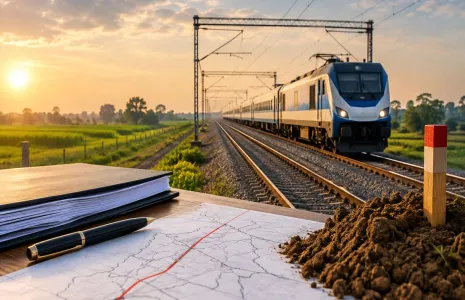
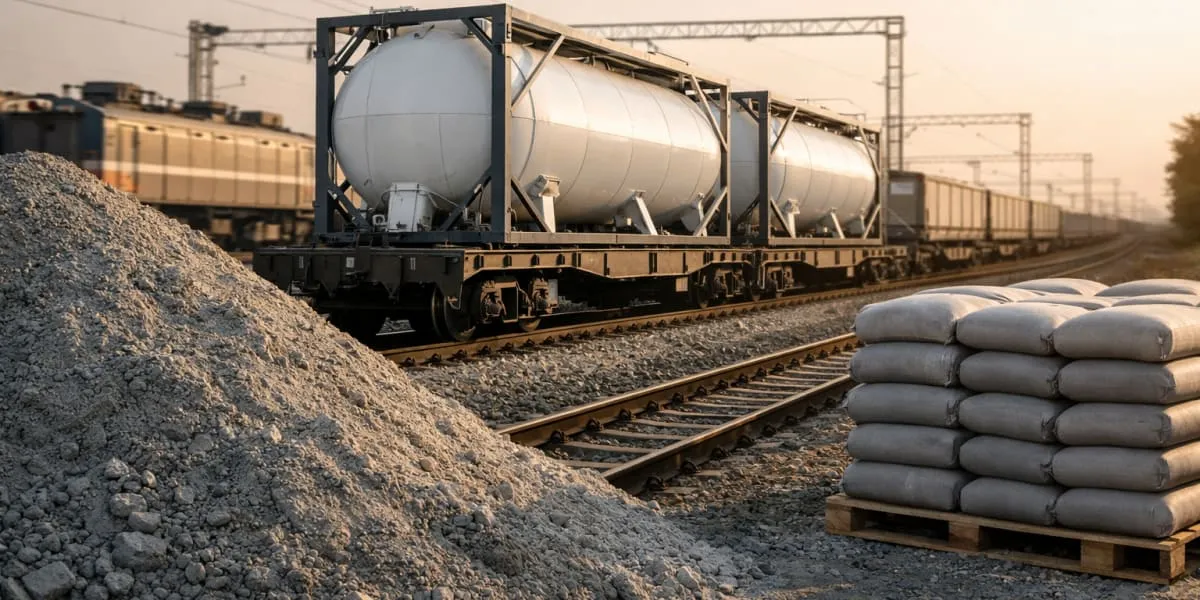
Indian Railways (IR) has reduced charges for transporting bulk cement in tank containers as part of a drive to promote rail freight and improve supply chain efficiency. The policy change is intended to encourage a shift from road transport to specialised tank containers by lowering per unit handling and carriage costs. Officials indicated that the adjustment aims to make rail a more attractive option for cement producers and traders, thereby supporting steady movement of construction material across regions.

The revised tariff structure reduces terminal handling and wagon access fees when tank containers are moved in block rakes or through nominated private sidings, and it simplifies billing for multiple point deliveries. The change is expected to improve wagon utilisation and reduce turnaround times, bringing economies of scale for larger consignments. Operators will also benefit from clearer rate signals that favour bulk, continuous movement and lower inventory holding for consignees.

Cement manufacturers and logistics providers are likely to reassess routing and modal choices in response to the adjusted rates, seeking lower transport expenditure and faster delivery cycles. Ports and inland terminals handling tank containers may see higher volumes, prompting a review of handling capacity and scheduling. IR plans to monitor load factors and delivery performance to ensure the revisions translate into sustained modal shift and improved service reliability.

Analysts say the reduction could also yield environmental benefits by lowering truck miles and cutting emissions associated with road haulage, while reducing congestion on critical corridors. Shippers may reconfigure network plans to exploit longer train formations and dedicated rakes for cement tank containers, which could support faster replenishment at construction sites. The move follows broader efforts to make freight corridors more efficient and to support infrastructure growth through cost rationalisation and operational reform.

Indian Railways (IR) has reduced charges for transporting bulk cement in tank containers as part of a drive to promote rail freight and improve supply chain efficiency. The policy change is intended to encourage a shift from road transport to specialised tank containers by lowering per unit handling and carriage costs. Officials indicated that the adjustment aims to make rail a more attractive option for cement producers and traders, thereby supporting steady movement of construction material across regions. The revised tariff structure reduces terminal handling and wagon access fees when tank containers are moved in block rakes or through nominated private sidings, and it simplifies billing for multiple point deliveries. The change is expected to improve wagon utilisation and reduce turnaround times, bringing economies of scale for larger consignments. Operators will also benefit from clearer rate signals that favour bulk, continuous movement and lower inventory holding for consignees. Cement manufacturers and logistics providers are likely to reassess routing and modal choices in response to the adjusted rates, seeking lower transport expenditure and faster delivery cycles. Ports and inland terminals handling tank containers may see higher volumes, prompting a review of handling capacity and scheduling. IR plans to monitor load factors and delivery performance to ensure the revisions translate into sustained modal shift and improved service reliability. Analysts say the reduction could also yield environmental benefits by lowering truck miles and cutting emissions associated with road haulage, while reducing congestion on critical corridors. Shippers may reconfigure network plans to exploit longer train formations and dedicated rakes for cement tank containers, which could support faster replenishment at construction sites. The move follows broader efforts to make freight corridors more efficient and to support infrastructure growth through cost rationalisation and operational reform.

Next Story
Infrastructure Urban

Implementation Status of Jal Jeevan Mission

Since August 2019 the Government has implemented Jal Jeevan Mission to provide assured potable water through household tap connections in rural India. At the start of the mission only 32.3 million (mn) rural households, representing 16.7 per cent, were reported to have tap water connections. States and union territories have reported that 125.8 mn additional rural households have since been provided with tap connections. As a result, of about 193.6 mn rural households roughly 158.2 mn, or 81.71 per cent, are reported to have tap water supply at home.\n\nThe State, district and village level st..

Next Story
Infrastructure Urban

Jal Jeevan Mission Reaches Eighty One Per Cent Rural Coverage

The Government reported substantial progress under the Jal Jeevan Mission, launched in August 2019 to provide tap water to every rural household. At launch only 32.3 million (mn) rural households had tap connections and states and Union territories reported provision of 125.8 mn additional households by March 2026. Consequently, out of about 193.6 mn rural households around 158.2 mn, or 81.71 per cent, are reported to have tap water at home. The Finance Minister announced extension of the mission until 2028 in the 2025-26 budget speech. The Swachh Bharat Mission Grameen, launched in October 20..

Next Story
Infrastructure Urban

Empowering Local Governance for Sustainable Rural Water Supply

The Ministry of Jal Shakti has aligned the Jal Jeevan Mission (JJM) with the 73rd Amendment to strengthen village level planning and community ownership of water supply. Gram Panchayats, village water and sanitation committees and Pani Samitis are to plan, implement, manage and maintain piped water systems, with gram sabha processes formalising handover and oversight. Implementation support agencies including non government organisations, community based organisations and self help groups have been empanelled to train local committees and promote women participation. Under JJM, the department ..

Advertisement

Subscribe to Our Newsletter

Get daily newsletters around different themes from Construction world.

STAY CONNECTED

Advertisement

Advertisement

Advertisement