+
Indian Railways Sanctions Capacity And Connectivity Projects
RAILWAYS & METRO RAIL

Indian Railways Sanctions Capacity And Connectivity Projects

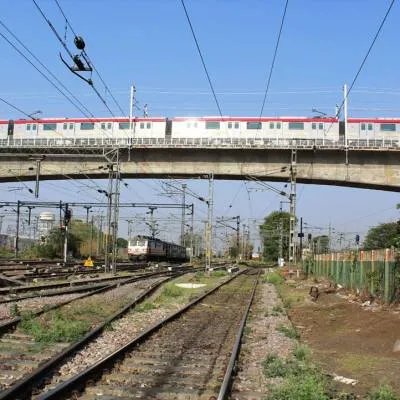
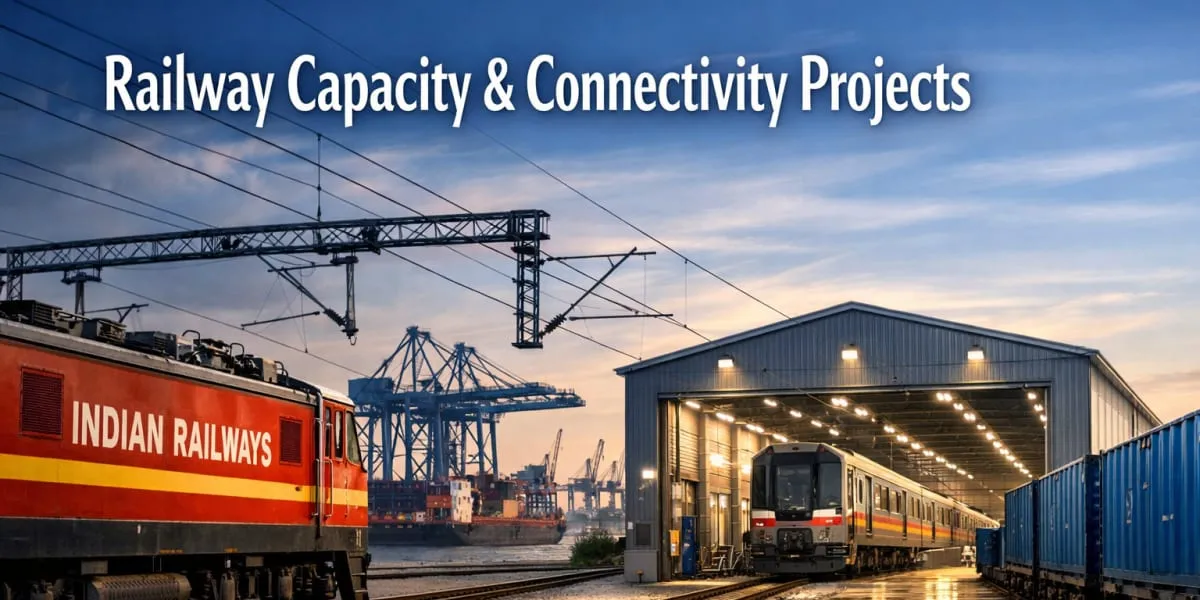
Indian Railways has approved infrastructure projects across the Northern, Southern and Eastern Railway zones to modernise maintenance capacity, decongest corridors and improve efficiency. The measures, costing about Rs 8,716.36 million (mn) in total, will support higher passenger and freight services and strengthen port connectivity.

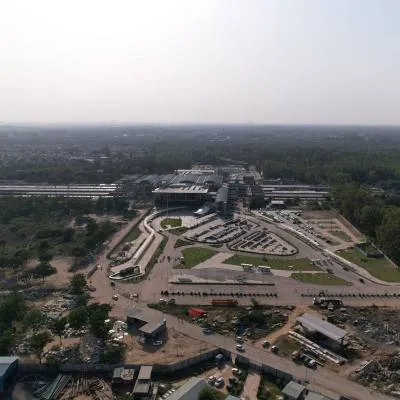
Shri Ganganagar Station in Rajasthan will receive coach maintenance upgrades under Phase-I at Rs 1,742.644 mn. The works will expand washing, stabling and maintenance lines and provide modern equipment, including automatic coach washing capability, raising average maintenance capacity by six rakes per day and enabling new services.

Lalgarh depot augmentation under Phase-II has been sanctioned at Rs 1,396.82 mn and will add washing lines, extend the sick line and build a service building while installing lifting systems and cranes. The development will improve readiness for Vande Bharat sets and reduce turnaround times.

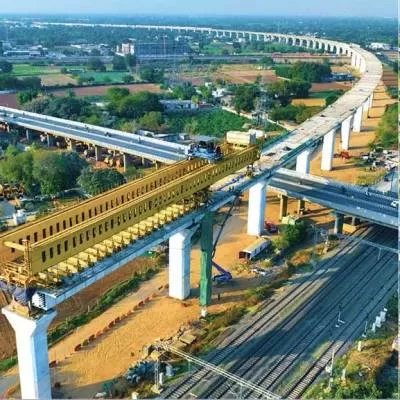
Doubling of the 21.10-kilometre Turavur–Mararikulam section in Kerala is sanctioned at Rs 4,505.9 mn to enhance capacity on the Ernakulam–Alappuzha–Kayankulam corridor. The work will permit nine additional passenger trains per day in each direction and facilitate freight movement of about two point eight eight million tonnes (t) per annum, reducing detention of freight trains by up to 17 to 19 minutes and of passenger trains by about 12 to 15 minutes.

The four point seven five-kilometre Kalipahari Bypass Line in West Bengal has been approved at Rs 1,071.0 mn to eliminate engine reversal at Asansol Yard and cut yard congestion by providing direct connectivity between the two zones. The bypass is expected to save around 90 minutes for approximately nine freight trains per day and about 30 minutes for eight coaching trains, improving line capacity and turnaround. Collectively, these projects advance Indian Railways' drive to deliver faster, safer and more reliable services.

Indian Railways has approved infrastructure projects across the Northern, Southern and Eastern Railway zones to modernise maintenance capacity, decongest corridors and improve efficiency. The measures, costing about Rs 8,716.36 million (mn) in total, will support higher passenger and freight services and strengthen port connectivity. Shri Ganganagar Station in Rajasthan will receive coach maintenance upgrades under Phase-I at Rs 1,742.644 mn. The works will expand washing, stabling and maintenance lines and provide modern equipment, including automatic coach washing capability, raising average maintenance capacity by six rakes per day and enabling new services. Lalgarh depot augmentation under Phase-II has been sanctioned at Rs 1,396.82 mn and will add washing lines, extend the sick line and build a service building while installing lifting systems and cranes. The development will improve readiness for Vande Bharat sets and reduce turnaround times. Doubling of the 21.10-kilometre Turavur–Mararikulam section in Kerala is sanctioned at Rs 4,505.9 mn to enhance capacity on the Ernakulam–Alappuzha–Kayankulam corridor. The work will permit nine additional passenger trains per day in each direction and facilitate freight movement of about two point eight eight million tonnes (t) per annum, reducing detention of freight trains by up to 17 to 19 minutes and of passenger trains by about 12 to 15 minutes. The four point seven five-kilometre Kalipahari Bypass Line in West Bengal has been approved at Rs 1,071.0 mn to eliminate engine reversal at Asansol Yard and cut yard congestion by providing direct connectivity between the two zones. The bypass is expected to save around 90 minutes for approximately nine freight trains per day and about 30 minutes for eight coaching trains, improving line capacity and turnaround. Collectively, these projects advance Indian Railways' drive to deliver faster, safer and more reliable services.

Related Stories

Gold Stories

Next Story
Infrastructure Urban

Infrastructure Opportunity Outlook by IMPACCT.Info

India’s infrastructure pipeline is witnessing dynamic activity across stages — from immediate bidding to future planning. IMPACCT segments these into three categories: Immediate, 3–6 Month, and Future Opportunities, enabling businesses to identify, prepare, and participate in high-value tenders and projects across sectors.To read full article Click Here ..

Next Story
Real Estate

Glass, Reframed!

Glass façades, quintessential aesthetic building envelopes globally, have been widely adopted in India as well. But when the focus is high-performance building systems that deliver energy efficiency, comfort and architectural identity, glass isn’t the only preference. Combination solutions, involving glass and some other material, improve façade outcomes. Some combinations come at comparable prices, some at a higher price. Here is a selection of performance-oriented solutions...To read the full story Click Here ..

Next Story
Infrastructure Urban

Beyond Building Faster

India’s cities are expanding at an unprecedented pace, bringing new infrastructure and development opportunities while also intensifying challenges around mobility, public spaces, liveability and supporting infrastructure. The question, therefore, is not simply whether India can build faster, but whether it can build cities that work better.At a CW webinar, Are We Designing Better Cities – or Just Building Faster?, moderator Ar. Samir Shaikh, Founding Principal, AR&UD Studio, brought together perspectives from design, development, master planning and technology...To read the full artic..

Advertisement

Subscribe to Our Newsletter

Get daily newsletters around different themes from Construction world.

STAY CONNECTED

Advertisement

SPECIAL OFFER
QR Code