+
IWAI Board Approves Feasibility Study for Urban Water Transport
RAILWAYS & METRO RAIL

IWAI Board Approves Feasibility Study for Urban Water Transport

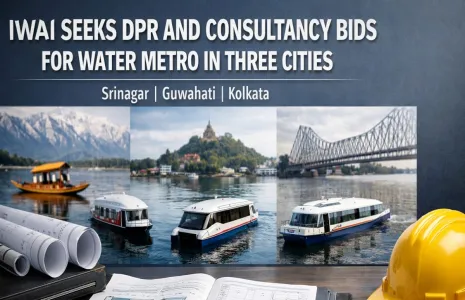
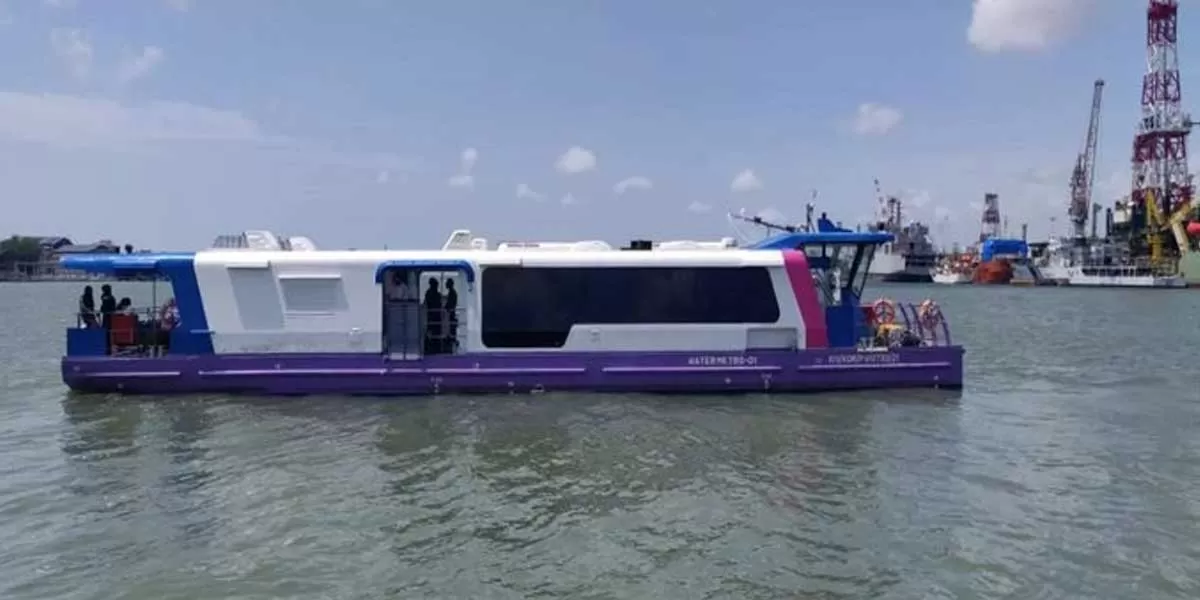
In a significant move towards sustainable urban mobility, the Inland Waterways Authority of India (IWAI) has decided to conduct a feasibility study for developing an Urban Water Transport System across multiple cities. This decision, taken at the 196th Board Meeting of IWAI, will explore the implementation of the Water Metro model in full or part across 17 cities spanning 12 states. The study will be conducted by Kochi Metro Rail Limited (KMRL), leveraging its expertise in integrated transport solutions.

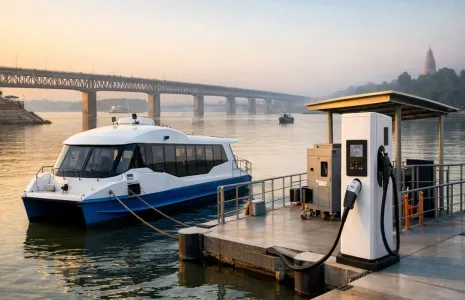
This initiative aims to establish a modern, efficient, and eco-friendly urban transport system by utilising India’s extensive network of navigable waterways. The Water Metro model, successfully pioneered in Kochi, presents a game-changing approach to urban mobility, offering a safe, sustainable, and non-polluting alternative to traditional transport systems. By integrating waterways with other modes of transport, the project seeks to reduce congestion, promote tourism, and drive regional economic growth.

Cities Identified for Water Metro Development IWAI, in consultation with the Ministry of Ports, Shipping, and Waterways, has shortlisted the following cities for the feasibility study:Ayodhya, Dhubri, Goa, Guwahati, Kollam, Kolkata, Prayagraj, Patna, Srinagar, Varanasi, Mumbai, Vasai, Mangalore (Gurupura River), Gandhinagar-Ahmedabad (Sabarmati River), Alleppey (Kerala), as well as Lakshadweep and Andaman & Nicobar Islands.

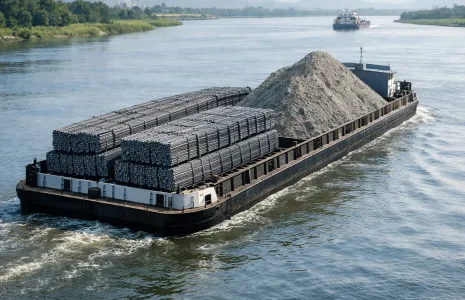
The inclusion of Lakshadweep and Andaman & Nicobar Islands highlights the potential for inter-island ferry services, significantly improving connectivity in these regions.Nationwide Expansion of Inland Waterways. Under the leadership of Prime Minister Shri Narendra Modi and the guidance of Minister of Ports, Shipping, and Waterways Shri Sarbananda Sonowal, IWAI has been expanding the scope of inland waterways from Arunachal Pradesh in the East to Gujarat in the West, and from Jammu & Kashmir in the North to Kerala in the South.

In a significant move towards sustainable urban mobility, the Inland Waterways Authority of India (IWAI) has decided to conduct a feasibility study for developing an Urban Water Transport System across multiple cities. This decision, taken at the 196th Board Meeting of IWAI, will explore the implementation of the Water Metro model in full or part across 17 cities spanning 12 states. The study will be conducted by Kochi Metro Rail Limited (KMRL), leveraging its expertise in integrated transport solutions. This initiative aims to establish a modern, efficient, and eco-friendly urban transport system by utilising India’s extensive network of navigable waterways. The Water Metro model, successfully pioneered in Kochi, presents a game-changing approach to urban mobility, offering a safe, sustainable, and non-polluting alternative to traditional transport systems. By integrating waterways with other modes of transport, the project seeks to reduce congestion, promote tourism, and drive regional economic growth. Cities Identified for Water Metro Development IWAI, in consultation with the Ministry of Ports, Shipping, and Waterways, has shortlisted the following cities for the feasibility study:Ayodhya, Dhubri, Goa, Guwahati, Kollam, Kolkata, Prayagraj, Patna, Srinagar, Varanasi, Mumbai, Vasai, Mangalore (Gurupura River), Gandhinagar-Ahmedabad (Sabarmati River), Alleppey (Kerala), as well as Lakshadweep and Andaman & Nicobar Islands. The inclusion of Lakshadweep and Andaman & Nicobar Islands highlights the potential for inter-island ferry services, significantly improving connectivity in these regions.Nationwide Expansion of Inland Waterways. Under the leadership of Prime Minister Shri Narendra Modi and the guidance of Minister of Ports, Shipping, and Waterways Shri Sarbananda Sonowal, IWAI has been expanding the scope of inland waterways from Arunachal Pradesh in the East to Gujarat in the West, and from Jammu & Kashmir in the North to Kerala in the South.

Related Stories

Gold Stories

Next Story
Real Estate

Kamdhenu Realities acquires 4-acre Navi Mumbai land parcel

Kamdhenu Realities has acquired a 4-acre land parcel from RPG Life Sciences on Thane-Belapur Road for approximately Rs 1.5 billion, expanding its commercial real estate portfolio in Navi Mumbai.The parcel has a total developable potential of 1.8 million sq ft, on which Kamdhenu plans to develop a destination-scale commercial and lifestyle ecosystem. The proposed development will combine corporate office suites with high-street retail, F&B outlets, double-height lobbies, business infrastructure and lifestyle amenities.Located close to IKEA and opposite the upcoming Pawane Railway Station, t..

Next Story
Infrastructure Transport

97 Per Cent Of Rongjeng-Mangsang-Adokgre Road Nears Completion

Deputy Chief Minister in-charge of public works Prestone Tynsong said in Shillong on 26 August that 97 per cent physical progress had been achieved on the ongoing Rongjeng-Mangsang-Adokgre road being constructed under the Non-Lapsable Central Pool of Resources (NLCPR). He noted the project was sanctioned in 2017 and that the stipulated time for completion had been 24 months from issue of the final work order. The deputy chief minister informed the assembly that the government had decided to include the remaining work under a World Bank project. In reply to a query from Rongjeng MLA Jim M Sangm..

Next Story
Infrastructure Transport

First TBM Starts Digging Five Point Three Kilometre Tunnel Under SGNP

The Goregaon-Mulund Link Road (GMLR) Phase three (B) project has reached a key milestone as the first tunnel boring machine (TBM) began excavation of the first of two tunnels beneath the Sanjay Gandhi National Park (SGNP). The machine, named Tulsi, started cutting a five point three kilometre bore that will link Dadasaheb Phalke Chitranagari in Goregaon East with Amar Nagar in Mulund West. Officials issued a statement noting the commencement of tunnelling work under the protected green belt. The twin tunnels are being constructed using mechanised tunnelling methods that aim to limit surface di..

Advertisement

Subscribe to Our Newsletter

Get daily newsletters around different themes from Construction world.

STAY CONNECTED

Advertisement

SPECIAL OFFER
QR Code