Japan Lends Rs 61 bn For Namma Metro Phase Three
RAILWAYS & METRO RAIL

Japan Lends Rs 61 bn For Namma Metro Phase Three

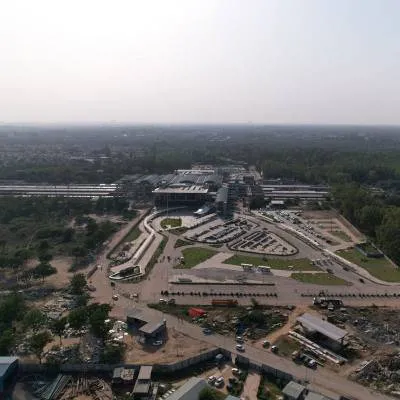
The Japan International Cooperation Agency (JICA) will lend Rs 6,100 crore (Rs 61 bn) as Official Development Assistance for Namma Metro Phase Three, according to a government statement. The loan agreement was signed in New Delhi by senior officials from the Department of Economic Affairs and JICA. The funding aims to support remaining civil works on the 44.5 kilometre project. The assistance is intended to complement domestic funding, support project continuity and strengthen oversight mechanisms.

The loan carries a repayment period of 30 years including a 10 year grace period and applies an interest rate linked to the Tokyo Term Risk Free Rate plus 80 basis points for the project. Consulting services will attract an interest charge of 0.80 per cent and procurement will be conducted under general untied conditions. The terms are intended to provide long term fiscal space while ensuring procurement flexibility. TORF operates as a yen benchmark and links the loan to market conditions and broader developments.

The Bengaluru Metro Rail Corporation Limited (BMRCL) will use the financing to float civil tenders for the outstanding packages and to accelerate construction where possible. Project planners have revised the completion deadline to April 2032 to reflect revised schedules and procurement timelines. Authorities expect the loan to bridge funding gaps and enable continuity of work across remaining corridors. BMRCL has been advised to sequence tenders to maintain steady workflow across zones.

Officials noted that adherence to contractual timelines and transparent procurement will be essential to realise benefits for commuters and to contain cost escalation. The arrangement is expected to bolster confidence among contractors and suppliers engaged in the metro expansion. Project managers will continue to coordinate with central and state agencies to monitor progress and spending. The focus on transparent procurement aims to mitigate cost escalation risks and protect taxpayers.

The Japan International Cooperation Agency (JICA) will lend Rs 6,100 crore (Rs 61 bn) as Official Development Assistance for Namma Metro Phase Three, according to a government statement. The loan agreement was signed in New Delhi by senior officials from the Department of Economic Affairs and JICA. The funding aims to support remaining civil works on the 44.5 kilometre project. The assistance is intended to complement domestic funding, support project continuity and strengthen oversight mechanisms. The loan carries a repayment period of 30 years including a 10 year grace period and applies an interest rate linked to the Tokyo Term Risk Free Rate plus 80 basis points for the project. Consulting services will attract an interest charge of 0.80 per cent and procurement will be conducted under general untied conditions. The terms are intended to provide long term fiscal space while ensuring procurement flexibility. TORF operates as a yen benchmark and links the loan to market conditions and broader developments. The Bengaluru Metro Rail Corporation Limited (BMRCL) will use the financing to float civil tenders for the outstanding packages and to accelerate construction where possible. Project planners have revised the completion deadline to April 2032 to reflect revised schedules and procurement timelines. Authorities expect the loan to bridge funding gaps and enable continuity of work across remaining corridors. BMRCL has been advised to sequence tenders to maintain steady workflow across zones. Officials noted that adherence to contractual timelines and transparent procurement will be essential to realise benefits for commuters and to contain cost escalation. The arrangement is expected to bolster confidence among contractors and suppliers engaged in the metro expansion. Project managers will continue to coordinate with central and state agencies to monitor progress and spending. The focus on transparent procurement aims to mitigate cost escalation risks and protect taxpayers.

Related Stories

Gold Stories

Next Story
Infrastructure Urban

KONE Opens India's First Digital Experience Centre in Pune

KONE, a global elevator and escalator manufacturer, has inaugurated its first Digital Experience Centre (DEC) in India, located in Pune. The facility aims to showcase how artificial intelligence (AI), connectivity and data-driven technologies can enhance customer experiences and improve building operations.The centre was inaugurated by Jussi Herlin, Executive Vice Chair, KONE Corporation; Philippe Delorme, President and CEO, KONE; and Nandan Nilekani, Co-founder and Chairman of the Board, Infosys.Designed as an interactive customer environment, the facility demonstrates digital solutions cover..

Next Story
Infrastructure Urban

CII GreenCo Launches Circularity Guidelines for Indian Industry

The Confederation of Indian Industry (CII) GreenCo Council has launched the CII GreenCo Circularity Guidelines – Pilot Version at the 17th CII GreenCo Waste & Resource Management Summit 2026 in Chennai. The initiative aims to strengthen resource efficiency, waste reduction and circular economy practices across Indian manufacturing and process industries.The guidelines introduce a structured framework with circularity indices covering raw materials, consumables, packaging and other resource inputs. These indicators will help industries assess existing practices, identify opportunities to ..

Next Story
Infrastructure Energy

Global Electronics Association Launches IPC-1783-CO2E Standard

The Global Electronics Association has introduced IPC-1783-CO2E, a new international standard aimed at improving consistency, transparency and comparability in product carbon footprint reporting across the electronics manufacturing industry.The standard, titled International Standard for Data Collection and Reporting of CO2 Equivalent (CO2e) Emissions for the Electronics Manufacturing Supply Chain, provides industry-specific guidance for collecting, estimating and reporting carbon emissions data.With increasing regulatory requirements and customer expectations, electronics manufacturers face c..

Advertisement

Subscribe to Our Newsletter

Get daily newsletters around different themes from Construction world.

STAY CONNECTED

Advertisement

SPECIAL OFFER
QR Code