+
Karnataka Eyes Kochi Model For Coastal Water Metro
RAILWAYS & METRO RAIL

Karnataka Eyes Kochi Model For Coastal Water Metro

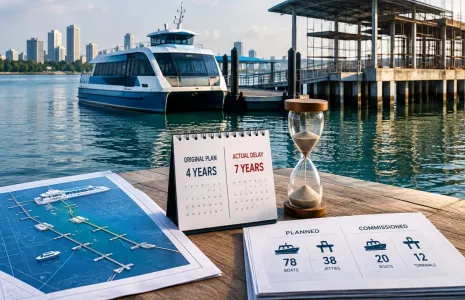
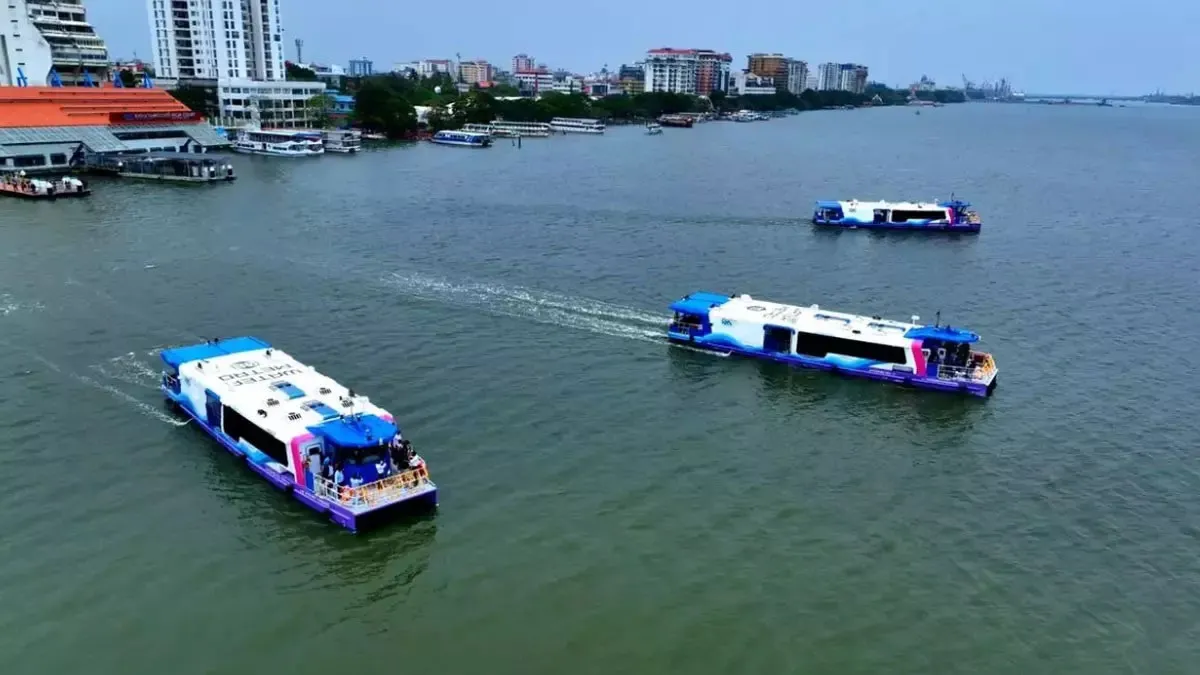
The Coastal Development Authority (CDA) has studied the Kochi Water Metro to assess its suitability for Karnataka's coastal belt, following a visit to Kochi Metro Rail Ltd (KMRL). The delegation was led by authority chairman M A Gafoor and included secretary Pradeep D'Souza and other officials. The team examined operational and technical aspects of the Kochi system, including the construction of floating jetties, vessel operations, shipbuilding yards and water-level management systems. Observations were oriented towards practical implementation in Karnataka.

The delegation noted that the Kochi Water Metro, launched in 2023, has been developed at a relatively low cost and was described as a viable public transport model. Cost estimates were recorded in the range of Rs 1 bn to Rs 2 bn, following conversion from crore to internationally comparable units. Officials considered that such capital requirements could make a water metro an affordable supplement to coastal transport in the state, provided suitable routes and infrastructure are identified. Further assessment of operating costs and integration with existing services was identified as necessary before recommendations are finalised.

Gafoor noted that the coastal districts of Dakshina Kannada, Udupi and Uttara Kannada together contain 186 backwater stretches that could potentially be utilised for a water metro project. He recalled that an earlier report from KMRL had indicated, based on certain specifications, that the system might not extend beyond the Gurupura-Maravoor bridge. The authority plans to supply additional data points and identify alternative locations to reappraise feasibility and to address technical constraints highlighted by the earlier assessment. The delegation sought further technical guidance on route design and vessel specifications to inform the reappraisal.

A consolidated report will be submitted to the state government in a few days, after which the authority will await directions on funding support and next steps. Discussions were held with KMRL Managing Director Lokanath Behera on how backwaters in coastal regions could be integrated into water-based public transport networks. Officials signalled that further technical studies and stakeholder consultations would be needed before any rollout is proposed. The authority indicated that community engagement and environmental assessments would form part of subsequent planning stages.

The Coastal Development Authority (CDA) has studied the Kochi Water Metro to assess its suitability for Karnataka's coastal belt, following a visit to Kochi Metro Rail Ltd (KMRL). The delegation was led by authority chairman M A Gafoor and included secretary Pradeep D'Souza and other officials. The team examined operational and technical aspects of the Kochi system, including the construction of floating jetties, vessel operations, shipbuilding yards and water-level management systems. Observations were oriented towards practical implementation in Karnataka. The delegation noted that the Kochi Water Metro, launched in 2023, has been developed at a relatively low cost and was described as a viable public transport model. Cost estimates were recorded in the range of Rs 1 bn to Rs 2 bn, following conversion from crore to internationally comparable units. Officials considered that such capital requirements could make a water metro an affordable supplement to coastal transport in the state, provided suitable routes and infrastructure are identified. Further assessment of operating costs and integration with existing services was identified as necessary before recommendations are finalised. Gafoor noted that the coastal districts of Dakshina Kannada, Udupi and Uttara Kannada together contain 186 backwater stretches that could potentially be utilised for a water metro project. He recalled that an earlier report from KMRL had indicated, based on certain specifications, that the system might not extend beyond the Gurupura-Maravoor bridge. The authority plans to supply additional data points and identify alternative locations to reappraise feasibility and to address technical constraints highlighted by the earlier assessment. The delegation sought further technical guidance on route design and vessel specifications to inform the reappraisal. A consolidated report will be submitted to the state government in a few days, after which the authority will await directions on funding support and next steps. Discussions were held with KMRL Managing Director Lokanath Behera on how backwaters in coastal regions could be integrated into water-based public transport networks. Officials signalled that further technical studies and stakeholder consultations would be needed before any rollout is proposed. The authority indicated that community engagement and environmental assessments would form part of subsequent planning stages.

Next Story
Infrastructure Urban

Implementation Status of Jal Jeevan Mission

Since August 2019 the Government has implemented Jal Jeevan Mission to provide assured potable water through household tap connections in rural India. At the start of the mission only 32.3 million (mn) rural households, representing 16.7 per cent, were reported to have tap water connections. States and union territories have reported that 125.8 mn additional rural households have since been provided with tap connections. As a result, of about 193.6 mn rural households roughly 158.2 mn, or 81.71 per cent, are reported to have tap water supply at home.\n\nThe State, district and village level st..

Next Story
Infrastructure Urban

Jal Jeevan Mission Reaches Eighty One Per Cent Rural Coverage

The Government reported substantial progress under the Jal Jeevan Mission, launched in August 2019 to provide tap water to every rural household. At launch only 32.3 million (mn) rural households had tap connections and states and Union territories reported provision of 125.8 mn additional households by March 2026. Consequently, out of about 193.6 mn rural households around 158.2 mn, or 81.71 per cent, are reported to have tap water at home. The Finance Minister announced extension of the mission until 2028 in the 2025-26 budget speech. The Swachh Bharat Mission Grameen, launched in October 20..

Next Story
Infrastructure Urban

Empowering Local Governance for Sustainable Rural Water Supply

The Ministry of Jal Shakti has aligned the Jal Jeevan Mission (JJM) with the 73rd Amendment to strengthen village level planning and community ownership of water supply. Gram Panchayats, village water and sanitation committees and Pani Samitis are to plan, implement, manage and maintain piped water systems, with gram sabha processes formalising handover and oversight. Implementation support agencies including non government organisations, community based organisations and self help groups have been empanelled to train local committees and promote women participation. Under JJM, the department ..

Advertisement

Subscribe to Our Newsletter

Get daily newsletters around different themes from Construction world.

STAY CONNECTED

Advertisement

Advertisement

Advertisement