Karve Road To Get Two New Flyovers As PMC Plans To Ease Traffic
RAILWAYS & METRO RAIL

Karve Road To Get Two New Flyovers As PMC Plans To Ease Traffic

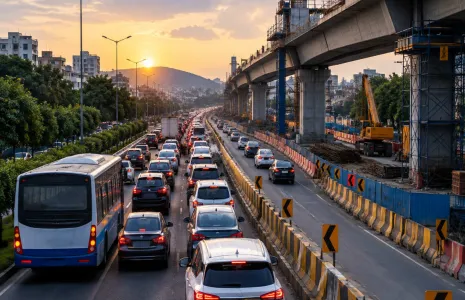
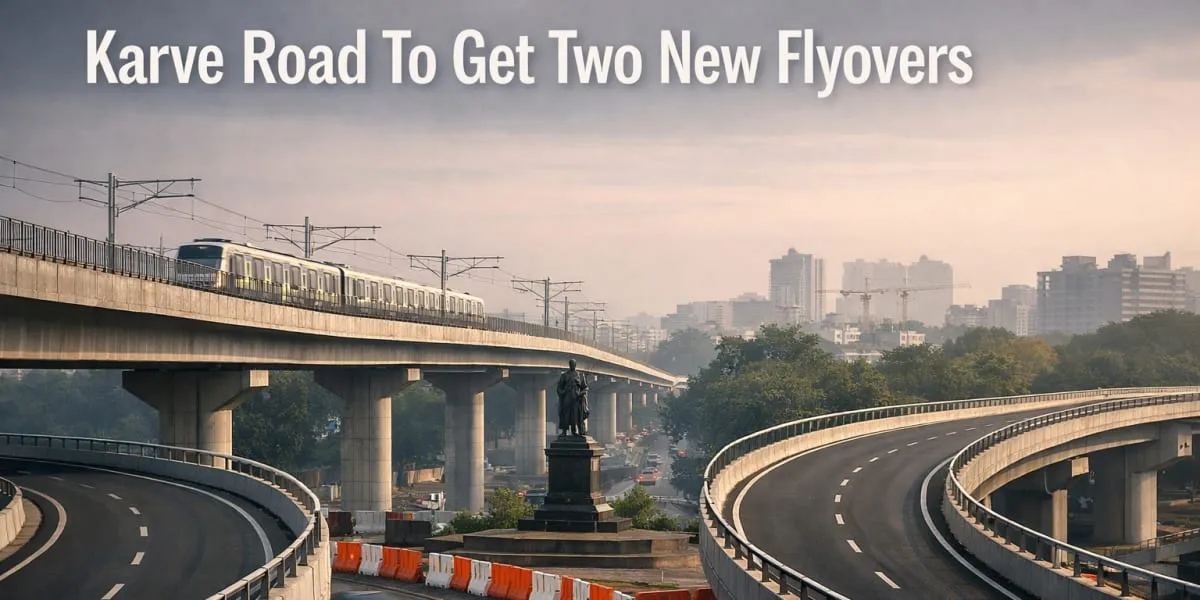
The Pune Municipal Corporation (PMC) has proposed two new flyovers on Karve Road to ease congestion along the corridor that links Karvenagar to the Mumbai–Bengaluru bypass. The civic body has identified Karve Statue Chowk and Ambedkar Chowk as the locations and said the planning will be coordinated with the Pune Metro because the spur line from SNDT to Manikbaug via Warje will run through the stretch. Officials indicated that this intervention will result in three flyovers along Karve Road from Paud Phata to Warje once the existing Karvenagar flyover is integrated with the elevated Metro route.\n\nA detailed study will be undertaken to design the flyovers, the civic Traffic Planning Department head stated, with traffic surveys using automatic cameras to collect data over seven days, covering five working days and two holidays. Additional assessments will include origin and destination studies, traffic movement counts, speed and delay measurements, simulation modelling, traffic impact assessment and signal timing analyses in surrounding areas. The planning will also address land acquisition requirements with a register of landowners, tenants and occupants and data on built-up areas and existing construction.\n\nAccident records for the last five years will be analysed to identify accident-prone zones and frequency patterns to inform geometric and safety improvements. The Environmental Impact Assessment will examine effects on water resources, vegetation, wildlife, noise and air pollution and will evaluate resettlement needs for affected communities. Financial feasibility studies will estimate costs for land acquisition, construction, utility relocation and ongoing maintenance and will be integral to decision making.\n\nA socio-economic impact analysis will quantify time savings, reduced travel distance, fuel and cost savings, pollution reduction and productivity benefits stemming from shorter travel times, alongside potential gains in mental health and social well-being from lower congestion stress. Officials said the timing of the Metro project makes early planning essential, as scope for future road infrastructure interventions along the corridor will narrow once the elevated route is operational. The civic body will use the study findings to finalise design options and implementation sequencing to minimise disruption during construction.

The Pune Municipal Corporation (PMC) has proposed two new flyovers on Karve Road to ease congestion along the corridor that links Karvenagar to the Mumbai–Bengaluru bypass. The civic body has identified Karve Statue Chowk and Ambedkar Chowk as the locations and said the planning will be coordinated with the Pune Metro because the spur line from SNDT to Manikbaug via Warje will run through the stretch. Officials indicated that this intervention will result in three flyovers along Karve Road from Paud Phata to Warje once the existing Karvenagar flyover is integrated with the elevated Metro route.\n\nA detailed study will be undertaken to design the flyovers, the civic Traffic Planning Department head stated, with traffic surveys using automatic cameras to collect data over seven days, covering five working days and two holidays. Additional assessments will include origin and destination studies, traffic movement counts, speed and delay measurements, simulation modelling, traffic impact assessment and signal timing analyses in surrounding areas. The planning will also address land acquisition requirements with a register of landowners, tenants and occupants and data on built-up areas and existing construction.\n\nAccident records for the last five years will be analysed to identify accident-prone zones and frequency patterns to inform geometric and safety improvements. The Environmental Impact Assessment will examine effects on water resources, vegetation, wildlife, noise and air pollution and will evaluate resettlement needs for affected communities. Financial feasibility studies will estimate costs for land acquisition, construction, utility relocation and ongoing maintenance and will be integral to decision making.\n\nA socio-economic impact analysis will quantify time savings, reduced travel distance, fuel and cost savings, pollution reduction and productivity benefits stemming from shorter travel times, alongside potential gains in mental health and social well-being from lower congestion stress. Officials said the timing of the Metro project makes early planning essential, as scope for future road infrastructure interventions along the corridor will narrow once the elevated route is operational. The civic body will use the study findings to finalise design options and implementation sequencing to minimise disruption during construction.

Next Story
Infrastructure Transport

AFCONS & Navayuga set world records with Missing Link Expressway

Maharashtra’s most ambitious greenfield bypass — a 13.3-km alignment carrying twin record-setting tunnels and India’s tallest cable-stayed road bridge — was thrown open to traffic on Maharashtra Day, finally completing the Mumbai–Pune Expressway after a 23-year wait. CW reports…The 650-m cable-stayed bridge over Tiger Valley at sunset — the package executed by Afcons Infrastructure Ltd carries 182-m pylons, the tallest on any Indian road bridge.On 1 May 2026, Chief Minister Devendra Fadnavis, flanked by Deputy Chief Ministers Eknath Shinde and Sunetra Pawar (representing the late..

Next Story
Infrastructure Transport

Mumbai–Pune Missing Link boosts realty prospects

The recently opened ‘missing link’ on the Mumbai–Pune Expressway is set to significantly transform connectivity between the two cities by reducing travel time and bypassing the challenging ghat section. The new alignment, featuring tunnels and viaducts, is designed to improve safety, ease congestion and ensure a smoother, faster commute for both passenger and commercial traffic.With improved travel efficiency, the corridor is expected to strengthen intercity movement, encouraging more frequent travel for work, leisure and logistics. This enhanced accessibility is likely to benefit real e..

Next Story
Infrastructure Urban

How Hormuz is Hijacking Indian Highways

At the recently held RAHSTA Round Table on 29th April in Pune, and earlier during our webinars for Cement Expo by Indian Cement Review and by FIRST Construction Council on manufacturing construction equipment for the world, one thread lay common: the industry is being subjected to a cost-push chain reaction moving from crude oil → freight/insurance → steel, cement fuel, bitumen, polymers, packaging, logistics and finally project margins. Indeed, the West Asia crisis caused by the war and the Hormuz Strait blockade, which does not directly concern us, has turned around and hit us. If the wa..

Advertisement

Subscribe to Our Newsletter

Get daily newsletters around different themes from Construction world.

STAY CONNECTED

Advertisement

Advertisement

Advertisement