Mumbai Plans Study on Underground Suburban Rail Links
RAILWAYS & METRO RAIL

Mumbai Plans Study on Underground Suburban Rail Links

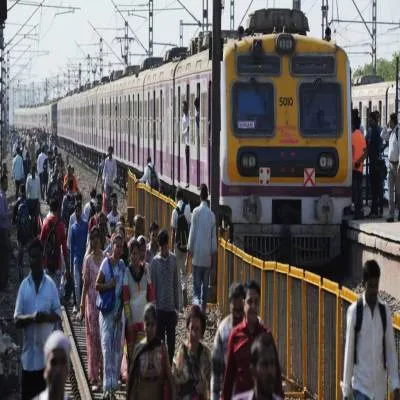
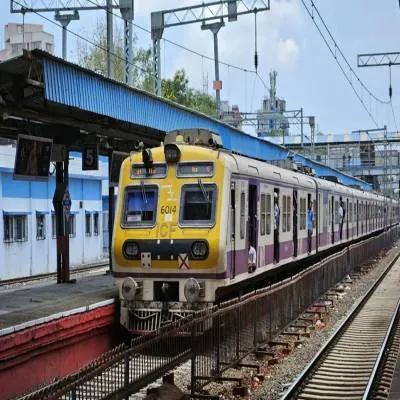
The Mumbai Railway Vikas Corporation Ltd (MRVC) has commissioned a feasibility study to explore transforming parts of South Mumbai’s busiest suburban rail stretches into underground alignments. The initiative aims to tackle chronic congestion in India’s financial capital while unlocking valuable railway land for better use.
Conducted with Central and Western Railways, the study will examine whether sections such as the Churchgate–Mumbai Central corridor — a 5 km link — can be moved underground before reconnecting at Mumbai Central. Another study will assess the construction of two new suburban lines between Chhatrapati Shivaji Maharaj Terminus (CSMT) and Parel, spanning about 8 km.
Plans also include developing an interchange hub at Byculla. Importantly, the project may not require private land acquisition, as the proposed alignments are expected to be developed on railway-owned land. The study will focus on easing congestion, freeing up prime parcels in South Mumbai, and improving integration with other transport modes.
International best practices from cities such as New York, London and Tokyo will guide the planning, with emphasis on blending underground and surface corridors. The study will also compare tunnel system designs, including twin-bore and multiple single-bore options, while assessing safe and practical construction methods.
A detailed cost–benefit and financial feasibility analysis will evaluate project costs against long-term economic advantages, shaping the way forward for Mumbai’s suburban rail modernisation.

The Mumbai Railway Vikas Corporation Ltd (MRVC) has commissioned a feasibility study to explore transforming parts of South Mumbai’s busiest suburban rail stretches into underground alignments. The initiative aims to tackle chronic congestion in India’s financial capital while unlocking valuable railway land for better use.Conducted with Central and Western Railways, the study will examine whether sections such as the Churchgate–Mumbai Central corridor — a 5 km link — can be moved underground before reconnecting at Mumbai Central. Another study will assess the construction of two new suburban lines between Chhatrapati Shivaji Maharaj Terminus (CSMT) and Parel, spanning about 8 km.Plans also include developing an interchange hub at Byculla. Importantly, the project may not require private land acquisition, as the proposed alignments are expected to be developed on railway-owned land. The study will focus on easing congestion, freeing up prime parcels in South Mumbai, and improving integration with other transport modes.International best practices from cities such as New York, London and Tokyo will guide the planning, with emphasis on blending underground and surface corridors. The study will also compare tunnel system designs, including twin-bore and multiple single-bore options, while assessing safe and practical construction methods.A detailed cost–benefit and financial feasibility analysis will evaluate project costs against long-term economic advantages, shaping the way forward for Mumbai’s suburban rail modernisation.

Next Story
Infrastructure Transport

Shivraj Chouhan Launches PMGSY IV and Announces Package for Madhya Pradesh

Union Minister Shivraj Singh Chouhan launched the Pradhan Mantri Gram Sadak Yojana (PMGSY) IV at Bhairunda in Sehore district during the 25 year celebrations and announced a development package for Madhya Pradesh. The programme was organised by the Union Ministry of Rural Development and attended by Chief Minister Dr Mohan Yadav, ministers of state, state ministers, legislators and senior officials from the centre and the state. The minister said the central government under the Prime Minister is committed to strengthening rural livelihoods through improved connectivity, housing and women's in..

Next Story
Infrastructure Urban

DMR Engineering Reports FY 25-26 Financial Results

DMR Engineering reported its half year results for the financial year ended 31 March 2026 and published full year figures on a standalone basis. Standalone revenue from operations decreased by 2.01 per cent year-over-year to Rs 102.58 million (mn), while profit after tax declined by 43.94 per cent to nine point five six mn, leaving a profit after tax margin of nine point zero five per cent. Earnings per share stood at Rs zero point nine two, a fall of 44.71 per cent year-over-year. The company attributed part of the decline to one-off provisioning for bad debts and additional financing charges..

Next Story
Infrastructure Urban

Atlanta Electricals Posts Strong FY26 Growth And Debt Free Finish

Atlanta Electricals reported audited consolidated results for the quarter and year ended 31 March 2026. The company recorded significant year-on-year revenue growth driven by capacity ramp-up at new facilities and higher utilisation at legacy plants. The announcement summarised operating improvements and strategic milestones achieved during the year. For Q4 the company reported revenue of Rs 7.48 bn and for FY26 revenue of Rs 18.52 bn, representing robust growth versus the prior year. EBITDA in Q4 was Rs. 1.49 bn and Rs. 3.44 bn for the full year, with margins expanding to 20 per cent in the q..

Advertisement

Subscribe to Our Newsletter

Get daily newsletters around different themes from Construction world.

STAY CONNECTED

Advertisement

Advertisement

Advertisement