+
Prime Minister to Inaugurate Multiple Delhi Projects Worth Rs 335 bn
RAILWAYS & METRO RAIL

Prime Minister to Inaugurate Multiple Delhi Projects Worth Rs 335 bn

The Prime Minister is scheduled to inaugurate and lay the foundation stone of multiple development projects worth around Rs 335 bn on eight March in Delhi and will address the gathering during the event. Prior to the programme the Prime Minister is to visit General Pool Residential Accommodation (GPRA) Type-five quarters in Sarojini Nagar and hand over keys to female allottees.

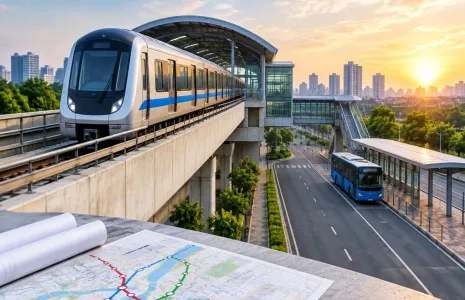
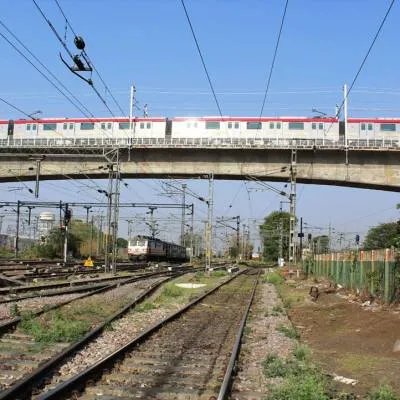
The Prime Minister will inaugurate Delhi Metro projects valued at about Rs 183 bn, including two new corridors: the Majlis Park-Maujpur Babarpur Pink Line corridor of around 12.3 km and the Deepali Chowk-Majlis Park Magenta Line corridor of around nine point nine km. The new connectivity is expected to benefit areas such as Burari, Jagatpur-Wazirabad, Khajuri Khas, Bhajanpura, Yamuna Vihar, Madhuban Chowk and Haiderpur Badli Mor and to improve commuter access across northern and central districts. These additions form part of a broader strategy to expand rapid transit capacity and reduce congestion in the capital.

The Prime Minister will also lay the foundation stone for three new corridors under Phase V-A of the Delhi Metro covering a route length of around 16.1 km. The corridors will link R.K. Ashram Marg to Indraprastha, Aerocity to Indira Gandhi Airport Terminal-one and Tughlakabad to Kalindi Kunj, providing direct connectivity to key locations across the national capital. The additions are expected to improve travel times for residents commuting between Noida, South Delhi and the airport.

The projects under the General Pool Residential Accommodation Redevelopment Plan are valued at about Rs 152 bn and are spread across Sarojini Nagar, Netaji Nagar, Kasturba Nagar and Sriniwaspuri to modernise GPRA colonies and accommodate administrative offices. The redevelopment has been implemented through an innovative self-sustaining financial model that monetises a limited portion of the project area for commercial and residential space to finance the entire scheme without burdening the public exchequer. The plan will provide more than 9,350 modern flats for government employees and create approximately 4.8 mn square feet of office space, which is intended to enhance administrative efficiency while generating monetisation potential.

The Prime Minister is scheduled to inaugurate and lay the foundation stone of multiple development projects worth around Rs 335 bn on eight March in Delhi and will address the gathering during the event. Prior to the programme the Prime Minister is to visit General Pool Residential Accommodation (GPRA) Type-five quarters in Sarojini Nagar and hand over keys to female allottees. The Prime Minister will inaugurate Delhi Metro projects valued at about Rs 183 bn, including two new corridors: the Majlis Park-Maujpur Babarpur Pink Line corridor of around 12.3 km and the Deepali Chowk-Majlis Park Magenta Line corridor of around nine point nine km. The new connectivity is expected to benefit areas such as Burari, Jagatpur-Wazirabad, Khajuri Khas, Bhajanpura, Yamuna Vihar, Madhuban Chowk and Haiderpur Badli Mor and to improve commuter access across northern and central districts. These additions form part of a broader strategy to expand rapid transit capacity and reduce congestion in the capital. The Prime Minister will also lay the foundation stone for three new corridors under Phase V-A of the Delhi Metro covering a route length of around 16.1 km. The corridors will link R.K. Ashram Marg to Indraprastha, Aerocity to Indira Gandhi Airport Terminal-one and Tughlakabad to Kalindi Kunj, providing direct connectivity to key locations across the national capital. The additions are expected to improve travel times for residents commuting between Noida, South Delhi and the airport. The projects under the General Pool Residential Accommodation Redevelopment Plan are valued at about Rs 152 bn and are spread across Sarojini Nagar, Netaji Nagar, Kasturba Nagar and Sriniwaspuri to modernise GPRA colonies and accommodate administrative offices. The redevelopment has been implemented through an innovative self-sustaining financial model that monetises a limited portion of the project area for commercial and residential space to finance the entire scheme without burdening the public exchequer. The plan will provide more than 9,350 modern flats for government employees and create approximately 4.8 mn square feet of office space, which is intended to enhance administrative efficiency while generating monetisation potential.

Next Story
Infrastructure Urban

Implementation Status of Jal Jeevan Mission

Since August 2019 the Government has implemented Jal Jeevan Mission to provide assured potable water through household tap connections in rural India. At the start of the mission only 32.3 million (mn) rural households, representing 16.7 per cent, were reported to have tap water connections. States and union territories have reported that 125.8 mn additional rural households have since been provided with tap connections. As a result, of about 193.6 mn rural households roughly 158.2 mn, or 81.71 per cent, are reported to have tap water supply at home.\n\nThe State, district and village level st..

Next Story
Infrastructure Urban

Jal Jeevan Mission Reaches Eighty One Per Cent Rural Coverage

The Government reported substantial progress under the Jal Jeevan Mission, launched in August 2019 to provide tap water to every rural household. At launch only 32.3 million (mn) rural households had tap connections and states and Union territories reported provision of 125.8 mn additional households by March 2026. Consequently, out of about 193.6 mn rural households around 158.2 mn, or 81.71 per cent, are reported to have tap water at home. The Finance Minister announced extension of the mission until 2028 in the 2025-26 budget speech. The Swachh Bharat Mission Grameen, launched in October 20..

Next Story
Infrastructure Urban

Empowering Local Governance for Sustainable Rural Water Supply

The Ministry of Jal Shakti has aligned the Jal Jeevan Mission (JJM) with the 73rd Amendment to strengthen village level planning and community ownership of water supply. Gram Panchayats, village water and sanitation committees and Pani Samitis are to plan, implement, manage and maintain piped water systems, with gram sabha processes formalising handover and oversight. Implementation support agencies including non government organisations, community based organisations and self help groups have been empanelled to train local committees and promote women participation. Under JJM, the department ..

Advertisement

Subscribe to Our Newsletter

Get daily newsletters around different themes from Construction world.

STAY CONNECTED

Advertisement

Advertisement

Advertisement