+
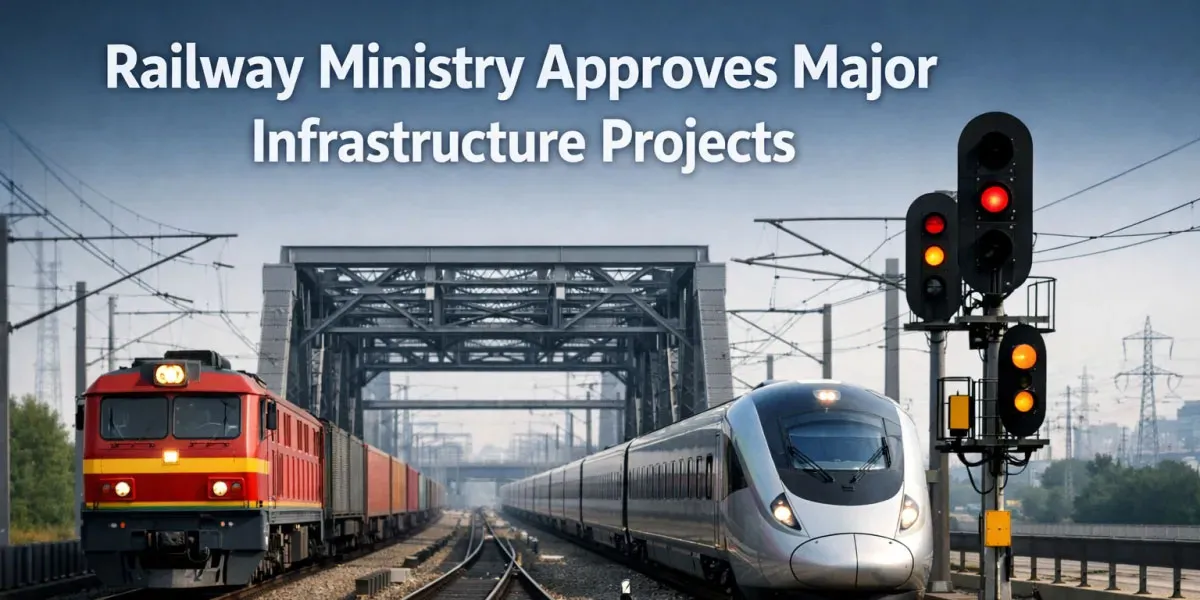
Railway Ministry Approves Major Infrastructure Projects
RAILWAYS & METRO RAIL

Railway Ministry Approves Major Infrastructure Projects

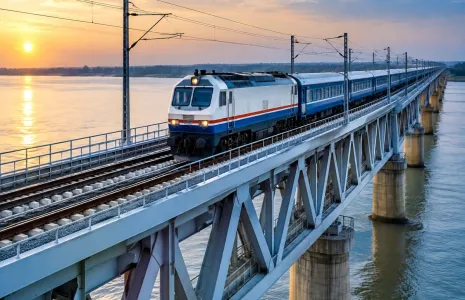
The Ministry of Railways (the ministry) has approved a package of major rail infrastructure projects aimed at increasing capacity and enhancing safety across the national network. The approvals form part of a sustained effort to modernise key corridors, reduce congestion and improve reliability for both passenger and freight services. Officials indicated that priority will be given to interventions that address critical bottlenecks and deliver measurable safety benefits.

The project set includes track doubling and selective quadrupling where required, expanded electrification and the upgrade of signalling and telecommunications systems to modern standards. Plans also cover elimination of unmanned level crossings, strengthening of bridges and slope protection works on vulnerable sections. Station modernisation and improvements in maintenance facilities are included to support higher traffic volumes and faster turnaround of rolling stock.

The measures are expected to increase line capacity, shorten transit times and reduce delays, thereby improving the punctuality of services. Enhanced signalling and automated safety systems are intended to reduce the risk of accidents and enable closer train spacing without compromising safety. Freight operations are likely to benefit from smoother flows and reduced congestion at chokepoints, supporting more efficient logistics.

Implementation will be phased with project management teams overseeing procurement, quality control and schedule adherence, while periodic reviews will monitor outcomes against performance indicators. The ministry will coordinate with state authorities and other stakeholders to secure land, clearances and necessary local works. Over the longer term, the upgrades are expected to support economic activity, improve passenger experience and contribute to a more resilient railway network.

Funding will be drawn from existing railway budgets and ongoing central schemes, with allocations phased across fiscal cycles to match project timelines. The upgrades are expected to generate local employment in construction and maintenance while also promoting more energy efficient operations through wider electrification. Regular reporting and transparent procurement are planned to ensure timely delivery and accountability.

The Ministry of Railways (the ministry) has approved a package of major rail infrastructure projects aimed at increasing capacity and enhancing safety across the national network. The approvals form part of a sustained effort to modernise key corridors, reduce congestion and improve reliability for both passenger and freight services. Officials indicated that priority will be given to interventions that address critical bottlenecks and deliver measurable safety benefits. The project set includes track doubling and selective quadrupling where required, expanded electrification and the upgrade of signalling and telecommunications systems to modern standards. Plans also cover elimination of unmanned level crossings, strengthening of bridges and slope protection works on vulnerable sections. Station modernisation and improvements in maintenance facilities are included to support higher traffic volumes and faster turnaround of rolling stock. The measures are expected to increase line capacity, shorten transit times and reduce delays, thereby improving the punctuality of services. Enhanced signalling and automated safety systems are intended to reduce the risk of accidents and enable closer train spacing without compromising safety. Freight operations are likely to benefit from smoother flows and reduced congestion at chokepoints, supporting more efficient logistics. Implementation will be phased with project management teams overseeing procurement, quality control and schedule adherence, while periodic reviews will monitor outcomes against performance indicators. The ministry will coordinate with state authorities and other stakeholders to secure land, clearances and necessary local works. Over the longer term, the upgrades are expected to support economic activity, improve passenger experience and contribute to a more resilient railway network. Funding will be drawn from existing railway budgets and ongoing central schemes, with allocations phased across fiscal cycles to match project timelines. The upgrades are expected to generate local employment in construction and maintenance while also promoting more energy efficient operations through wider electrification. Regular reporting and transparent procurement are planned to ensure timely delivery and accountability.

Next Story
Infrastructure Energy

Jyoti Structures expands manufacturing capacity in Nashik

The announcement Jyoti Structures (JSL) reported steady operational performance in 2025, supported by stable project execution across its power transmission portfolio. The company commissioned galvanisation operations at its second Nashik manufacturing unit, adding 33,000 MT of annual capacity. This increased aggregate tower manufacturing capability at Nashik to approximately 69,000 MT per annum, aimed at improving fabrication accuracy, scheduling control and delivery predictability. JSL also expanded its workforce to over 750 employees, onboarding more than 70 engineers during the year. C..

Next Story
Infrastructure Energy

TSPL Mega Health Camp Reaches 338 Residents in Mansa

Talwandi Sabo Power (TSPL), Punjab’s largest and North India’s largest private thermal power plant, organised a Mega Health Camp at Village Raipur, Mansa, under its flagship healthcare initiative Project SEHAT. The camp benefitted 338 community members through free consultations and diagnostic services.A team comprising a General Physician, Gynaecologist, Dermatologist and Dentist provided medical advice and treatment. Beneficiaries received free diagnostic tests including BP, HB, blood sugar, malaria, dengue and blood group tests, along with free medicines.The camp was inaugurated by Vill..

Next Story
Infrastructure Transport

Mumbai Coastal Road Musical Path Plays Jai Ho

Mumbai inaugurated India’s first musical path on the Coastal Road that plays the song Jai Ho for motorists. The civic administration said the installation used Hungarian technology and that the intention was to implement the concept of Sangeet Marg in future projects. A senior official suggested implementing a pilot on the Samruddhi Expressway, which connects Mumbai and Nagpur. City officials described the inauguration as a symbolic demonstration of collaboration between municipal authorities and foreign partners. The inauguration was attended by the Consul General of Hungary Ferenc Jari, f..

Advertisement

Subscribe to Our Newsletter

Get daily newsletters around different themes from Construction world.

STAY CONNECTED

Advertisement

Advertisement

Advertisement

Open In App