Railways To Add 2,000 Trains, End Waiting Lists
RAILWAYS & METRO RAIL

Railways To Add 2,000 Trains, End Waiting Lists

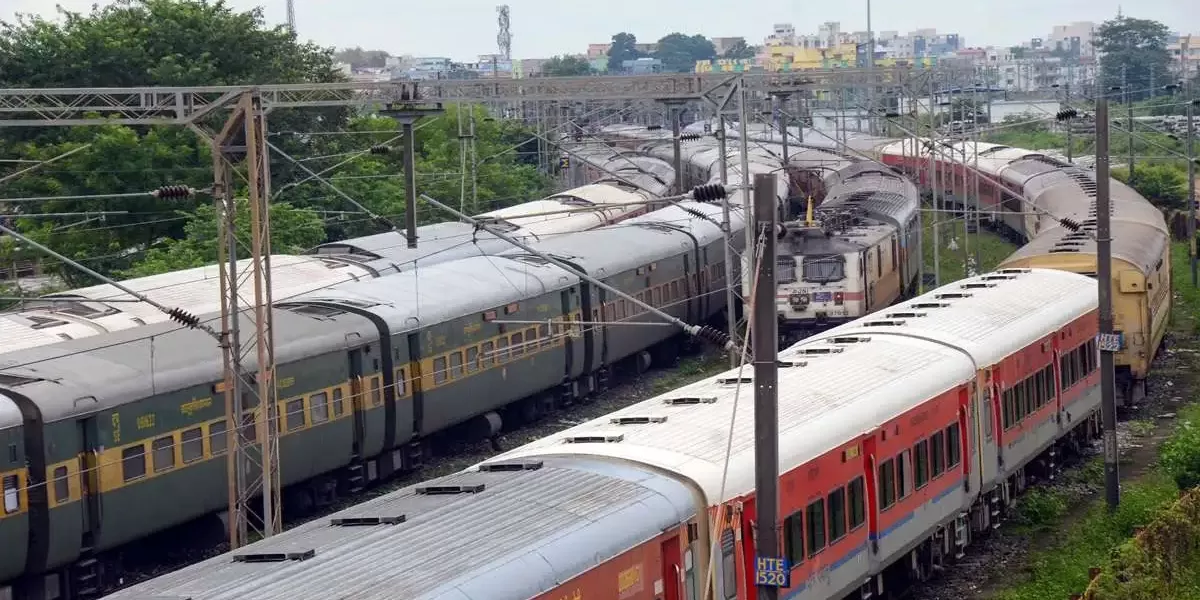
Indian Railways will introduce about 2,000 extra trains a day over the next four years, lifting the daily total to nearly 13,000 services and aiming to provide every traveller with a confirmed berth. According to a senior Railway Ministry official, the enlarged timetable should raise annual passenger capacity from roughly 8 billion to 10 billion and wipe out the 50 million-strong waiting-list that recurs each year.
The plan calls for 450 Vande Bharat sets, 200 push-pull formations and a mix of new Mail and Express services. Capacity freed by the Dedicated Freight Corridor, plus continuous track-doubling and electrification, will allow the extra trains to run without clogging the network. Work is also under way on 1,000 rail overbridges and underpasses this financial year to cut level-crossing delays.
To reinforce booking transparency, Railways has capped wait-listed tickets at 25 per cent of a coach’s confirmed seats across all classes—Sleeper, AC First, AC Second, AC Third, Chair Car and Executive Chair Car. In past peak seasons a Sleeper coach could carry more than 300 hopefuls and AC carriages up to 150; the new ceiling keeps the list manageable and gives passengers a clearer idea of their odds of travel.
Rail-administrators say the twin approach of expanding rolling stock and tightening booking rules will remove uncertainty for passengers while boosting revenue and operational reliability. With construction works and tendering already in hand, the first tranche of new trains is expected to enter service early in the current plan period, marking a pivotal step towards a wait-list-free railway.

Indian Railways will introduce about 2,000 extra trains a day over the next four years, lifting the daily total to nearly 13,000 services and aiming to provide every traveller with a confirmed berth. According to a senior Railway Ministry official, the enlarged timetable should raise annual passenger capacity from roughly 8 billion to 10 billion and wipe out the 50 million-strong waiting-list that recurs each year.The plan calls for 450 Vande Bharat sets, 200 push-pull formations and a mix of new Mail and Express services. Capacity freed by the Dedicated Freight Corridor, plus continuous track-doubling and electrification, will allow the extra trains to run without clogging the network. Work is also under way on 1,000 rail overbridges and underpasses this financial year to cut level-crossing delays.To reinforce booking transparency, Railways has capped wait-listed tickets at 25 per cent of a coach’s confirmed seats across all classes—Sleeper, AC First, AC Second, AC Third, Chair Car and Executive Chair Car. In past peak seasons a Sleeper coach could carry more than 300 hopefuls and AC carriages up to 150; the new ceiling keeps the list manageable and gives passengers a clearer idea of their odds of travel.Rail-administrators say the twin approach of expanding rolling stock and tightening booking rules will remove uncertainty for passengers while boosting revenue and operational reliability. With construction works and tendering already in hand, the first tranche of new trains is expected to enter service early in the current plan period, marking a pivotal step towards a wait-list-free railway.

Next Story
Infrastructure Urban

Jal Jeevan Mission Reports Tap Water For 158.2 mn Rural Households

Since August 2019 the Government of India, in partnership with states, has been implementing the Jal Jeevan Mission (JJM) to enable every rural household to have assured potable water through tap connections. The mission is overseen by the Ministry of Jal Shakti and seeks regular long term supply of prescribed quality water. At the launch only 3.23 Crore, equivalent to 32.3 million (mn), or 16.7 per cent, of rural households had tap connections. As reported by states and union territories on three March 2026 an additional 12.58 Crore, or 125.8 mn households, have been provided connections brin..

Next Story
Infrastructure Urban

MSME Ministry Holds Awareness Camp And Vendor Programme In Dimapur

The Ministry of Micro, Small and Medium Enterprises (MSME Ministry) organised an Entrepreneur Awareness Camp and a Special Vendor Development Programme in Seden Riju, Purana Bazar, Dimapur, Nagaland on 30 March 2026. The programme aimed to create awareness of central initiatives including the National SC-ST Hub (NSSH) scheme and to bridge the gap between demand from central public sector enterprises (CPSEs) and the supply capabilities of SC/ST enterprises. It focused on quality standards, supply chain integration and offered Udyam registration to participants. The programme sought to improve m..

Next Story
Infrastructure Urban

ESDP Aids Over One Point Eight Million Participants In Five Years

The Entrepreneurship and Skill Development Programme reached 39,280 programmes and benefited 1,825,181 participants across India during the period from FY 2021-22 to 2025-26, as on 23 March 2026. The scheme aims to motivate young people from different sections of society, including Scheduled Castes, Scheduled Tribes and women, to consider self employment or entrepreneurship as a career option. Activities under the programme focus on basic enterprise skills, handholding for start ups and capacity building of existing micro, small and medium enterprises. Financial allocations and expenditures ar..

Advertisement

Subscribe to Our Newsletter

Get daily newsletters around different themes from Construction world.

STAY CONNECTED

Advertisement

Advertisement

Advertisement