+
Railways To Construct New Underground Rail Line In North East
RAILWAYS & METRO RAIL

Railways To Construct New Underground Rail Line In North East

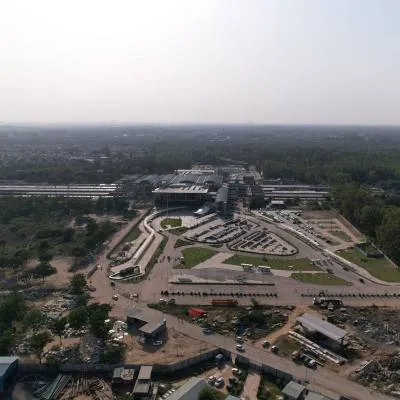
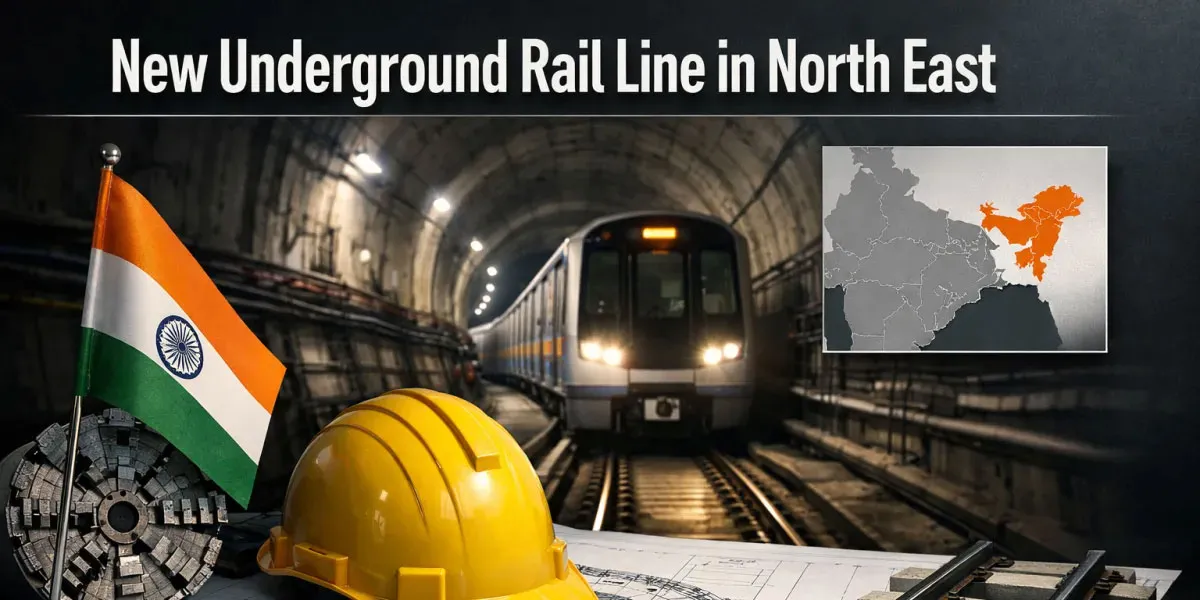
India's Ministry of Railways has announced plans to construct a new underground rail line in the North East region aimed at enhancing connectivity and easing urban congestion. The project will seek to link key urban centres and transport nodes to provide a faster and more reliable option for commuters and travellers. It is intended to complement existing surface networks and to integrate with local public transport systems. The announcement emphasised a focus on improving accessibility and supporting regional mobility.

The design will incorporate modern signalling and safety systems to enhance operational reliability and passenger comfort. Stations are planned as integrated hubs that will enable seamless interchange with suburban rail, bus services and other modes, improving last mile connectivity. The alignment has been proposed to serve growing commercial and residential corridors while minimising disruption to existing infrastructure. Emphasis will be placed on delivering efficient passenger flows and accessible facilities for all users comfortably.

Construction will proceed in phases to manage technical complexity and local impacts, with scheduling intended to limit disruption to day to day urban life. Advanced tunnelling methods are expected to be used to navigate challenging terrain and dense built environments. Environmental assessments and heritage impact studies will inform route finalisation and mitigation measures. The project will involve consultations with state authorities and community stakeholders and will aim to generate local employment and skill development.

The Ministry of Railways will oversee project implementation in coordination with state governments and local bodies, and financing arrangements will be developed through public investment and multilateral support. Attention will be given to cost efficiency and timely delivery to maximise economic returns. The development is expected to catalyse commercial activity, support urban regeneration and improve access to employment and services across the region. Further technical studies will guide future expansion and operational planning efficiently.

India's Ministry of Railways has announced plans to construct a new underground rail line in the North East region aimed at enhancing connectivity and easing urban congestion. The project will seek to link key urban centres and transport nodes to provide a faster and more reliable option for commuters and travellers. It is intended to complement existing surface networks and to integrate with local public transport systems. The announcement emphasised a focus on improving accessibility and supporting regional mobility. The design will incorporate modern signalling and safety systems to enhance operational reliability and passenger comfort. Stations are planned as integrated hubs that will enable seamless interchange with suburban rail, bus services and other modes, improving last mile connectivity. The alignment has been proposed to serve growing commercial and residential corridors while minimising disruption to existing infrastructure. Emphasis will be placed on delivering efficient passenger flows and accessible facilities for all users comfortably. Construction will proceed in phases to manage technical complexity and local impacts, with scheduling intended to limit disruption to day to day urban life. Advanced tunnelling methods are expected to be used to navigate challenging terrain and dense built environments. Environmental assessments and heritage impact studies will inform route finalisation and mitigation measures. The project will involve consultations with state authorities and community stakeholders and will aim to generate local employment and skill development. The Ministry of Railways will oversee project implementation in coordination with state governments and local bodies, and financing arrangements will be developed through public investment and multilateral support. Attention will be given to cost efficiency and timely delivery to maximise economic returns. The development is expected to catalyse commercial activity, support urban regeneration and improve access to employment and services across the region. Further technical studies will guide future expansion and operational planning efficiently.

Next Story
Infrastructure Urban

Implementation Status of Jal Jeevan Mission

Since August 2019 the Government has implemented Jal Jeevan Mission to provide assured potable water through household tap connections in rural India. At the start of the mission only 32.3 million (mn) rural households, representing 16.7 per cent, were reported to have tap water connections. States and union territories have reported that 125.8 mn additional rural households have since been provided with tap connections. As a result, of about 193.6 mn rural households roughly 158.2 mn, or 81.71 per cent, are reported to have tap water supply at home.\n\nThe State, district and village level st..

Next Story
Infrastructure Urban

Jal Jeevan Mission Reaches Eighty One Per Cent Rural Coverage

The Government reported substantial progress under the Jal Jeevan Mission, launched in August 2019 to provide tap water to every rural household. At launch only 32.3 million (mn) rural households had tap connections and states and Union territories reported provision of 125.8 mn additional households by March 2026. Consequently, out of about 193.6 mn rural households around 158.2 mn, or 81.71 per cent, are reported to have tap water at home. The Finance Minister announced extension of the mission until 2028 in the 2025-26 budget speech. The Swachh Bharat Mission Grameen, launched in October 20..

Next Story
Infrastructure Urban

Empowering Local Governance for Sustainable Rural Water Supply

The Ministry of Jal Shakti has aligned the Jal Jeevan Mission (JJM) with the 73rd Amendment to strengthen village level planning and community ownership of water supply. Gram Panchayats, village water and sanitation committees and Pani Samitis are to plan, implement, manage and maintain piped water systems, with gram sabha processes formalising handover and oversight. Implementation support agencies including non government organisations, community based organisations and self help groups have been empanelled to train local committees and promote women participation. Under JJM, the department ..

Advertisement

Subscribe to Our Newsletter

Get daily newsletters around different themes from Construction world.

STAY CONNECTED

Advertisement

Advertisement

Advertisement