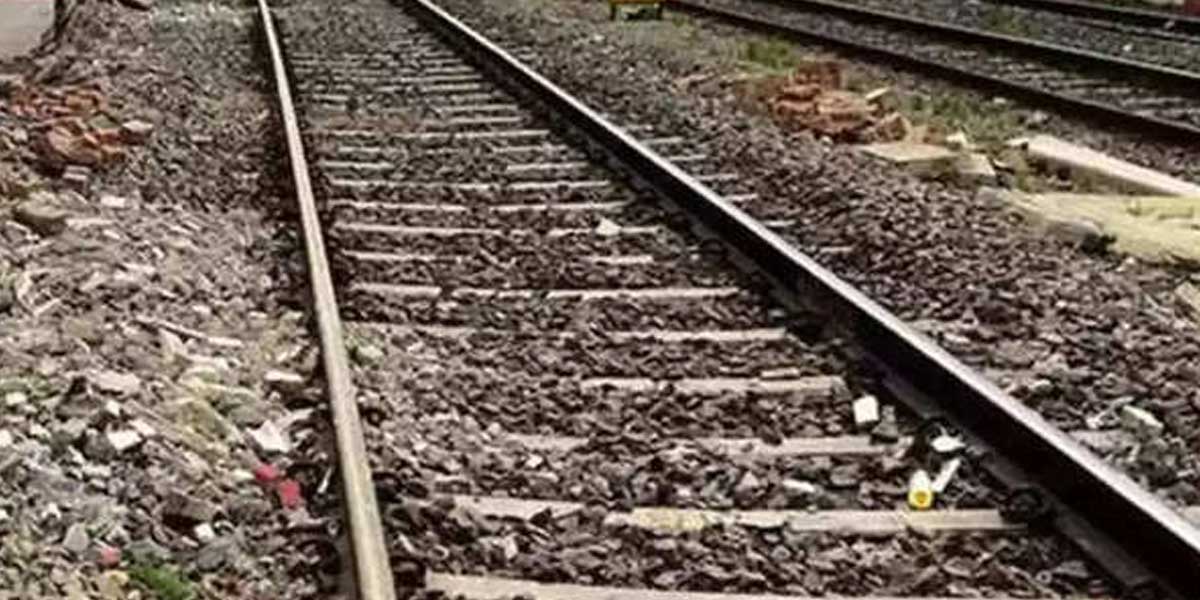
Railways to Seek Cabinet Nod for INR 5.25 Lakh Crore Linkage Plan
RAILWAYS & METRO RAIL

Railways to Seek Cabinet Nod for INR 5.25 Lakh Crore Linkage Plan

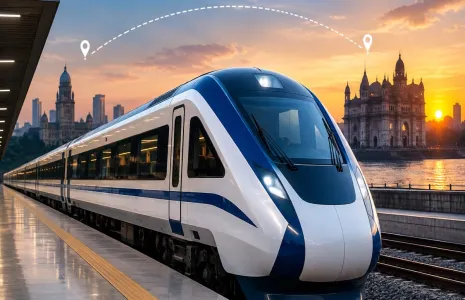
In a bid to revolutionize the transportation sector and boost economic growth, the Indian Railways is preparing to present a groundbreaking INR 5.25 lakh crore linkage plan to the Union Cabinet. The plan, which is poised to be a transformative milestone for the country's railway infrastructure, is expected to receive a positive reception from the government.

The primary focus of this ambitious proposal is to establish and improve connectivity between various regions across the nation, strengthening transportation networks and facilitating the efficient movement of goods and passengers. By investing in strategic railway projects, the government aims to unlock the true potential of India's vast landscape and pave the way for increased economic activity.

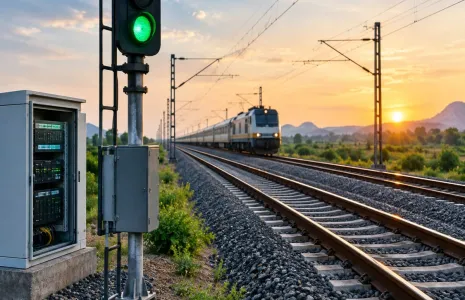
The proposed linkage plan encompasses a broad spectrum of initiatives, ranging from the construction of new railway lines to the electrification of existing routes and the enhancement of passenger amenities. It also includes modernizing railway stations, upgrading signaling systems, and adopting advanced technologies to enhance safety and efficiency.

By implementing the INR 5.25 lakh crore linkage plan, the Indian Railways anticipates a significant surge in job creation, as a multitude of labor-intensive projects will be undertaken. The plan aligns with the government's vision of fostering infrastructure development as a key driver of economic growth and will generate numerous employment opportunities, especially in rural areas.

Furthermore, the improved railway connectivity is expected to spur investment in industries and businesses located in remote areas, as access to markets and raw materials will become more convenient and cost-effective. This will not only boost industrial growth but also help bridge the economic disparity between different regions of the country.

The Indian Railways, being one of the largest railway networks in the world, plays a pivotal role in the socio-economic development of India. The proposed linkage plan seeks to modernize this vital infrastructure, making it more reliable, efficient, and environmentally sustainable.

Once the Union Cabinet grants approval for the INR 5.25 lakh crore linkage plan, the Indian Railways will embark on a transformative journey, one that promises to shape the nation's future and take its railway system to new heights. The plan is anticipated to receive widespread support from various stakeholders and is expected to mark a significant milestone in India's progress as a rapidly developing nation.

See also:
Railway Ministry to redevelop Faridabad & Gorakhpur Railway Station
Jharkhand receives Rs 52.71 bn from the budget to improve rail infra


In a bid to revolutionize the transportation sector and boost economic growth, the Indian Railways is preparing to present a groundbreaking INR 5.25 lakh crore linkage plan to the Union Cabinet. The plan, which is poised to be a transformative milestone for the country's railway infrastructure, is expected to receive a positive reception from the government. The primary focus of this ambitious proposal is to establish and improve connectivity between various regions across the nation, strengthening transportation networks and facilitating the efficient movement of goods and passengers. By investing in strategic railway projects, the government aims to unlock the true potential of India's vast landscape and pave the way for increased economic activity. The proposed linkage plan encompasses a broad spectrum of initiatives, ranging from the construction of new railway lines to the electrification of existing routes and the enhancement of passenger amenities. It also includes modernizing railway stations, upgrading signaling systems, and adopting advanced technologies to enhance safety and efficiency. By implementing the INR 5.25 lakh crore linkage plan, the Indian Railways anticipates a significant surge in job creation, as a multitude of labor-intensive projects will be undertaken. The plan aligns with the government's vision of fostering infrastructure development as a key driver of economic growth and will generate numerous employment opportunities, especially in rural areas. Furthermore, the improved railway connectivity is expected to spur investment in industries and businesses located in remote areas, as access to markets and raw materials will become more convenient and cost-effective. This will not only boost industrial growth but also help bridge the economic disparity between different regions of the country. The Indian Railways, being one of the largest railway networks in the world, plays a pivotal role in the socio-economic development of India. The proposed linkage plan seeks to modernize this vital infrastructure, making it more reliable, efficient, and environmentally sustainable. Once the Union Cabinet grants approval for the INR 5.25 lakh crore linkage plan, the Indian Railways will embark on a transformative journey, one that promises to shape the nation's future and take its railway system to new heights. The plan is anticipated to receive widespread support from various stakeholders and is expected to mark a significant milestone in India's progress as a rapidly developing nation. See also: Railway Ministry to redevelop Faridabad & Gorakhpur Railway Station Jharkhand receives Rs 52.71 bn from the budget to improve rail infra

Next Story
Infrastructure Urban

Implementation Status of Jal Jeevan Mission

Since August 2019 the Government has implemented Jal Jeevan Mission to provide assured potable water through household tap connections in rural India. At the start of the mission only 32.3 million (mn) rural households, representing 16.7 per cent, were reported to have tap water connections. States and union territories have reported that 125.8 mn additional rural households have since been provided with tap connections. As a result, of about 193.6 mn rural households roughly 158.2 mn, or 81.71 per cent, are reported to have tap water supply at home.\n\nThe State, district and village level st..

Next Story
Infrastructure Urban

Jal Jeevan Mission Reaches Eighty One Per Cent Rural Coverage

The Government reported substantial progress under the Jal Jeevan Mission, launched in August 2019 to provide tap water to every rural household. At launch only 32.3 million (mn) rural households had tap connections and states and Union territories reported provision of 125.8 mn additional households by March 2026. Consequently, out of about 193.6 mn rural households around 158.2 mn, or 81.71 per cent, are reported to have tap water at home. The Finance Minister announced extension of the mission until 2028 in the 2025-26 budget speech. The Swachh Bharat Mission Grameen, launched in October 20..

Next Story
Infrastructure Urban

Empowering Local Governance for Sustainable Rural Water Supply

The Ministry of Jal Shakti has aligned the Jal Jeevan Mission (JJM) with the 73rd Amendment to strengthen village level planning and community ownership of water supply. Gram Panchayats, village water and sanitation committees and Pani Samitis are to plan, implement, manage and maintain piped water systems, with gram sabha processes formalising handover and oversight. Implementation support agencies including non government organisations, community based organisations and self help groups have been empanelled to train local committees and promote women participation. Under JJM, the department ..

Advertisement

Subscribe to Our Newsletter

Get daily newsletters around different themes from Construction world.

STAY CONNECTED

Advertisement

Advertisement

Advertisement