Telangana government seeks Hyderabad metro expansion plan
RAILWAYS & METRO RAIL

Telangana government seeks Hyderabad metro expansion plan

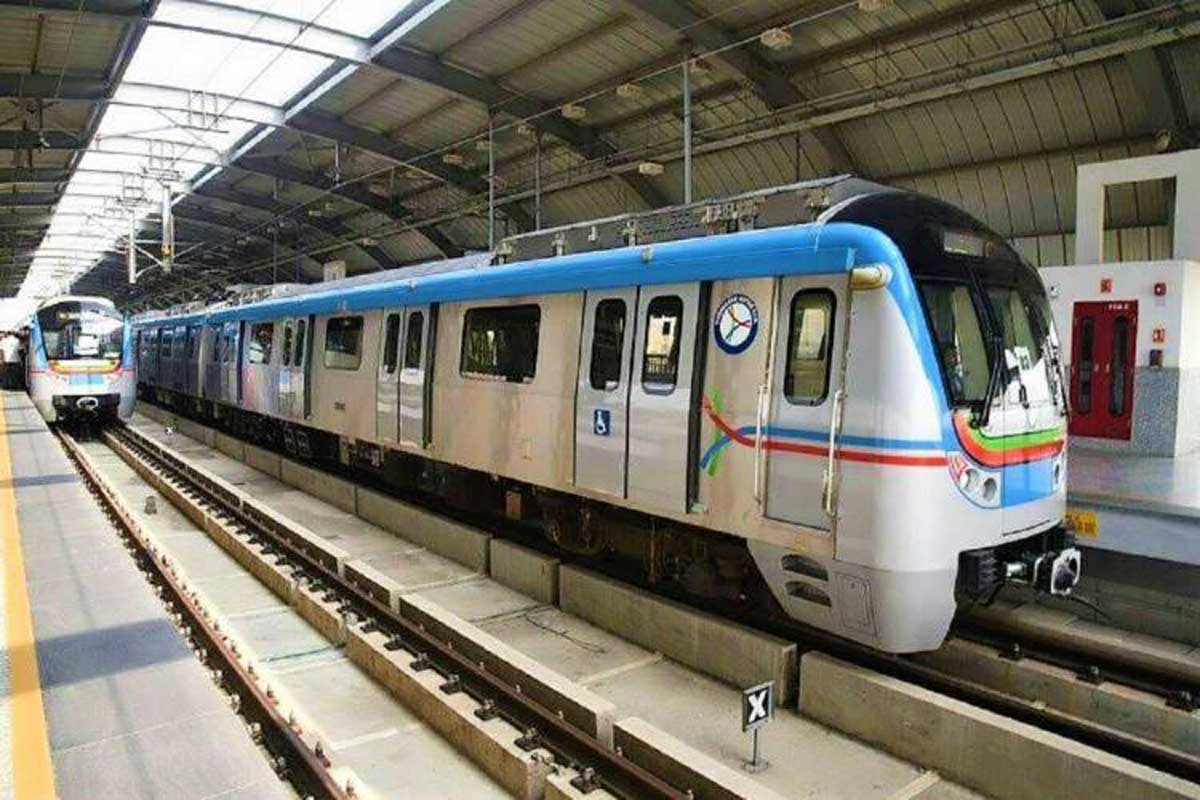
The Telangana government decided to spend approximately Rs 62.50 billion to extend the Hyderabad Metro to the Rajiv Gandhi International Airport (RGIA) in Shamshabad. On December 9, Chief Minister K Chandrashekar Rao will lay the cornerstone for the 31-kilometer Airport Metro corridor.

The Hyderabad Metro Rail Ltd (HMRL) and the L&T Metro Rail Hyderabad Ltd (LTMRHL) currently run three corridors totaling 69 km, making it the largest public-private partnership in metro rail in the world.

While the government is working on phase 2 of the project, which will connect LB Nagar Metro Station with Nagole Metro Station over a distance of 26 km from BHEL to Lakdikapul, HMRL managing director N V S Reddy made it clear that the Hyderabad Airport Metro Ltd will be wholly owned by the state.

“Hyderabad is Forging Ahead Happy to announce that Hon’ble CM KCR Garu will be laying the foundation for Airport Express Metro on 9th December This project starting at Mindspace junction to Shamshabad Airport will be 31 km long & will be costing approximately Rs 6,250 Cr,” state Minister for Municipal Administration and Urban Development K T Rama Rao shared on Twitter.

The project will be finished in three years, the minister added. Regarding HMRL Phase 2, he added: “We have submitted DPR & are in discussions with Govt of India for additional 31 km city Metro expansion; BHEL to Lakdikapul -26 km & Nagole to LB Nagar – 5 km.”

The Airport Metro will connect Raidurg Metro station to RGIA via Biodiversity Junction, Kajaguda Road, and Nanakramguda Junction to enter Outer Ring Road, according to a statement from the Chief Minister's office.“There is a dedicated Metro Rail Right of Way (RoW) on the ORR and the Airport Express Metro Corridor will be taken to Shamshabad International Airport through this dedicated RoW of ORR,” it said.

The corridor is expected to be elevated like the rest of the city, with the exception of a 2.5 km section close to the airport. According to the government's map, before passing through Shamshabad, the airport corridor would pass through Narsingi, the TS Police Academy, and Rajendranagar.

“Several big global and national companies have either set up or are setting up huge campuses along this stretch. A large number of commercial and residential high-rise buildings with world-class facilities are coming up within the vicinity of this corridor,” the statement said, the state government also hopes that the Airport Metro will significantly contribute to Hyderabad's emergence as a desirable international investment location.

The Miyapur and BHEL to Lakdikapul corridor, which will be a jointly owned project of the Government of India (GoI) and Government of Telangana State (GoTS) and will cost Rs 8,453 crore, has already been urged to receive in-principle approval as part of phase 2 of the Hyderabad Metro by the government.

Rao recently asked for the said proposal to be included in the upcoming Union Budget for 2023–2024 in a letter to Union Minister of Housing and Urban Affairs Hardeep Singh Puri. The second phase of the project is expected to include the airport corridor.

Asaduddin Owaisi, the leader of the AIMIM party and a member of parliament from Hyderabad, urged minister Rao to "also start the work of MGBS, Imlibun to Falaknuma of Corridor II of 5.5 km," for which Rs 500 crore had been set aside.

AIMIM leader Akbaruddin Owaisi recently visited N V S Reddy and requested that the work be sped up on the Metro connection to the old city of Hyderabad.

Despite being a part of phase 1, the 5.5 km stretch of the Green Line from MGBS-Imlibun to Falaknuma that was originally intended to run from Jubilee Bus Station in Secunderabad to Falaknuma has not yet begun. There are a number of explanations for this. Major obstacles include the acquisition of property on the crowded streets of the old city and suggestions for alternative routes. Another frequently cited justification is the location of historic and religious buildings along this stretch.

See also:
GMR plans Rs.5 bn investment for metro rail-link to Hyderabad Airport
Telangana requests Centre to give Hyderabad Metro Phase II approval



The Telangana government decided to spend approximately Rs 62.50 billion to extend the Hyderabad Metro to the Rajiv Gandhi International Airport (RGIA) in Shamshabad. On December 9, Chief Minister K Chandrashekar Rao will lay the cornerstone for the 31-kilometer Airport Metro corridor. The Hyderabad Metro Rail Ltd (HMRL) and the L&T Metro Rail Hyderabad Ltd (LTMRHL) currently run three corridors totaling 69 km, making it the largest public-private partnership in metro rail in the world. While the government is working on phase 2 of the project, which will connect LB Nagar Metro Station with Nagole Metro Station over a distance of 26 km from BHEL to Lakdikapul, HMRL managing director N V S Reddy made it clear that the Hyderabad Airport Metro Ltd will be wholly owned by the state. “Hyderabad is Forging Ahead Happy to announce that Hon’ble CM KCR Garu will be laying the foundation for Airport Express Metro on 9th December This project starting at Mindspace junction to Shamshabad Airport will be 31 km long & will be costing approximately Rs 6,250 Cr,” state Minister for Municipal Administration and Urban Development K T Rama Rao shared on Twitter. The project will be finished in three years, the minister added. Regarding HMRL Phase 2, he added: “We have submitted DPR & are in discussions with Govt of India for additional 31 km city Metro expansion; BHEL to Lakdikapul -26 km & Nagole to LB Nagar – 5 km.” The Airport Metro will connect Raidurg Metro station to RGIA via Biodiversity Junction, Kajaguda Road, and Nanakramguda Junction to enter Outer Ring Road, according to a statement from the Chief Minister's office.“There is a dedicated Metro Rail Right of Way (RoW) on the ORR and the Airport Express Metro Corridor will be taken to Shamshabad International Airport through this dedicated RoW of ORR,” it said. The corridor is expected to be elevated like the rest of the city, with the exception of a 2.5 km section close to the airport. According to the government's map, before passing through Shamshabad, the airport corridor would pass through Narsingi, the TS Police Academy, and Rajendranagar. “Several big global and national companies have either set up or are setting up huge campuses along this stretch. A large number of commercial and residential high-rise buildings with world-class facilities are coming up within the vicinity of this corridor,” the statement said, the state government also hopes that the Airport Metro will significantly contribute to Hyderabad's emergence as a desirable international investment location. The Miyapur and BHEL to Lakdikapul corridor, which will be a jointly owned project of the Government of India (GoI) and Government of Telangana State (GoTS) and will cost Rs 8,453 crore, has already been urged to receive in-principle approval as part of phase 2 of the Hyderabad Metro by the government. Rao recently asked for the said proposal to be included in the upcoming Union Budget for 2023–2024 in a letter to Union Minister of Housing and Urban Affairs Hardeep Singh Puri. The second phase of the project is expected to include the airport corridor. Asaduddin Owaisi, the leader of the AIMIM party and a member of parliament from Hyderabad, urged minister Rao to also start the work of MGBS, Imlibun to Falaknuma of Corridor II of 5.5 km, for which Rs 500 crore had been set aside. AIMIM leader Akbaruddin Owaisi recently visited N V S Reddy and requested that the work be sped up on the Metro connection to the old city of Hyderabad. Despite being a part of phase 1, the 5.5 km stretch of the Green Line from MGBS-Imlibun to Falaknuma that was originally intended to run from Jubilee Bus Station in Secunderabad to Falaknuma has not yet begun. There are a number of explanations for this. Major obstacles include the acquisition of property on the crowded streets of the old city and suggestions for alternative routes. Another frequently cited justification is the location of historic and religious buildings along this stretch. See also: GMR plans Rs.5 bn investment for metro rail-link to Hyderabad Airport Telangana requests Centre to give Hyderabad Metro Phase II approval

Next Story
Infrastructure Urban

VECV Sales Rise 7.8 Per Cent In May 2026

VE Commercial Vehicles recorded sales of 7,978 units in May 2026, compared to 7,401 units in May 2025, registering growth of 7.8 per cent. This included 7,789 units from the Eicher brand and 189 units from the Volvo brand.Eicher branded trucks and buses reported sales of 7,789 units during the month, up 7.3 per cent from 7,258 units a year earlier. In the domestic commercial vehicle market, Eicher sales rose 9.1 per cent to 7,375 units from 6,758 units in May 2025.Exports declined 17.2 per cent to 414 units from 500 units in the corresponding month last year. Volvo Trucks and Volvo Buses recor..

Next Story
Infrastructure Urban

Table Space Strengthens DESYN Leadership Team

Table Space has announced strategic leadership appointments within DESYN, its integrated Design and Build business, as it looks to strengthen operations across key enterprise and GCC markets in India. DESYN was launched as a strategic extension of Table Space’s workspace solutions portfolio to meet rising demand for agile, high-quality and rapidly deployable enterprise workspaces.Shruti Ookabhoy has joined DESYN as Executive Director and will lead the Design vertical, focusing on design capability, operational excellence and team development across markets. She brings over 22 years of experi..

Next Story
Infrastructure Transport

Concord Associate Bags Rs 2.79 Bn Kavach Order

Concord Control Systems said its associate company, Progota India, has received a Rs 2.79 bn domestic order from Indian Railways for the supply, installation, testing and commissioning of on-board Kavach 4.0 loco equipment.The order is scheduled for execution within 12 months and strengthens Concord’s role in India’s railway safety and signalling ecosystem. Kavach is India’s indigenous automatic train protection system, designed to improve operational safety by helping prevent signal passing at danger and reducing collision risks.Gaurav Lath, Joint Managing Director, Concord Control Syst..

Advertisement

Subscribe to Our Newsletter

Get daily newsletters around different themes from Construction world.

STAY CONNECTED

Advertisement

Advertisement

Advertisement