Titagarh And BHEL To Form JV For 35-Year Vande Bharat Maintenance
RAILWAYS & METRO RAIL

Titagarh And BHEL To Form JV For 35-Year Vande Bharat Maintenance

Titagarh Rail Systems Limited (TRSL) and Bharat Heavy Electricals Limited (BHEL) have approved the formation of a special purpose vehicle (SPV) to manage long-term maintenance of the Vande Bharat Sleeper trainsets that their consortium will supply. TRSL informed in a regulatory filing dated 19 March that its board approved the SPV to meet maintenance obligations under the Vande Bharat Sleeper project. The arrangement is intended to centralise service responsibilities for the trains across the lifecycle.

The JV will provide comprehensive servicing as part of the long-term contract awarded under the Government of India’s Make-in-India and Atma Nirbhar Bharat programmes. BHEL disclosed that the proposed joint venture will proceed after obtaining approval from the Department of Investment and Public Asset Management and that the JV agreement will be finalised with modifications, if any. The companies also indicated that regulatory disclosures under SEBI rules will follow once the agreement is signed.

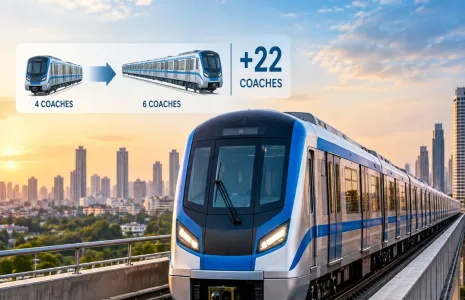
The TRSL-BHEL consortium has secured a contract valued at nearly Rs 240 bn to manufacture and maintain 80 Vande Bharat Sleeper trainsets for Indian Railways. Each trainset will consist of 16 coaches and the agreement includes maintenance responsibilities for a period of 35 years. The long maintenance term forms part of the consortium's commitments under the maintenance cum manufacture agreement.

TRSL has set a 31 March target to complete the car bodies for the first rake of the sleeper version and the consortium aims to roll out the first train by the third quarter of the financial year 2027. The SPV structure is being established to ensure continuity of maintenance services over the contract term and to meet obligations under central procurement norms. Further operational timelines and formal approvals will be disclosed as the JV agreement is finalised and necessary clearances are obtained.

Titagarh Rail Systems Limited (TRSL) and Bharat Heavy Electricals Limited (BHEL) have approved the formation of a special purpose vehicle (SPV) to manage long-term maintenance of the Vande Bharat Sleeper trainsets that their consortium will supply. TRSL informed in a regulatory filing dated 19 March that its board approved the SPV to meet maintenance obligations under the Vande Bharat Sleeper project. The arrangement is intended to centralise service responsibilities for the trains across the lifecycle. The JV will provide comprehensive servicing as part of the long-term contract awarded under the Government of India’s Make-in-India and Atma Nirbhar Bharat programmes. BHEL disclosed that the proposed joint venture will proceed after obtaining approval from the Department of Investment and Public Asset Management and that the JV agreement will be finalised with modifications, if any. The companies also indicated that regulatory disclosures under SEBI rules will follow once the agreement is signed. The TRSL-BHEL consortium has secured a contract valued at nearly Rs 240 bn to manufacture and maintain 80 Vande Bharat Sleeper trainsets for Indian Railways. Each trainset will consist of 16 coaches and the agreement includes maintenance responsibilities for a period of 35 years. The long maintenance term forms part of the consortium's commitments under the maintenance cum manufacture agreement. TRSL has set a 31 March target to complete the car bodies for the first rake of the sleeper version and the consortium aims to roll out the first train by the third quarter of the financial year 2027. The SPV structure is being established to ensure continuity of maintenance services over the contract term and to meet obligations under central procurement norms. Further operational timelines and formal approvals will be disclosed as the JV agreement is finalised and necessary clearances are obtained.

Next Story
Infrastructure Transport

The Critical Path

In Ircon International Ltd v. Afcons Infrastructure Ltd, OMP (Comm) 279/2019, the Delhi High Court examined how delay and extension of time (‘EOT’) are to be assessed in construction contracts, particularly in the context of the ‘critical path’ while dealing with challenge to an arbitral award under Section 34 of the Arbitration and Conciliation Act 1996 (‘the Act’). The High Court’s observations regarding the critical path are of significant import for construction and infrastructure projects and related arbitration. The parties entered into a contract for construction of T..

Next Story
Infrastructure Urban

Urgently Wanted: 2 Million Workers!

Construction, India’s second largest employer by industry, employs about 50 million workers but could additionally absorb another 40 million workers, according to estimates shared by the Construction Skill Development Council of India (CSDCI) in 2023. Within this, citing trade estimates, Rahul Bahl, Managing Director, Krishna Buildestates, says the shortage of trained, skilled workers is currently about 2 million, and is expected to rise to 5 million by 2030.Not only is the construction industry struggling to find workers but construction labour productivity in India significantly trails g..

Next Story
Real Estate

144 Years in the Making!

1. A century-spanning construction storyConstruction began in 1882, making the Sagrada Família one of the longest-running architectural projects in modern history. Today, the project is overseen by the Fundació Junta Constructora del Temple Expiatori de la Sagrada Família, with Chief Architect Jordi Faulí leading its final construction phases.2. The world’s tallest church towerhe Sagrada Família in Barcelona reached its final height of 172.5 m (566 ft) on February 20, 2026, with the installation of the cross atop the Tower of Jesus Christ, making it the tallest church in the world...To ..

Advertisement

Subscribe to Our Newsletter

Get daily newsletters around different themes from Construction world.

STAY CONNECTED

Advertisement

Advertisement

Advertisement