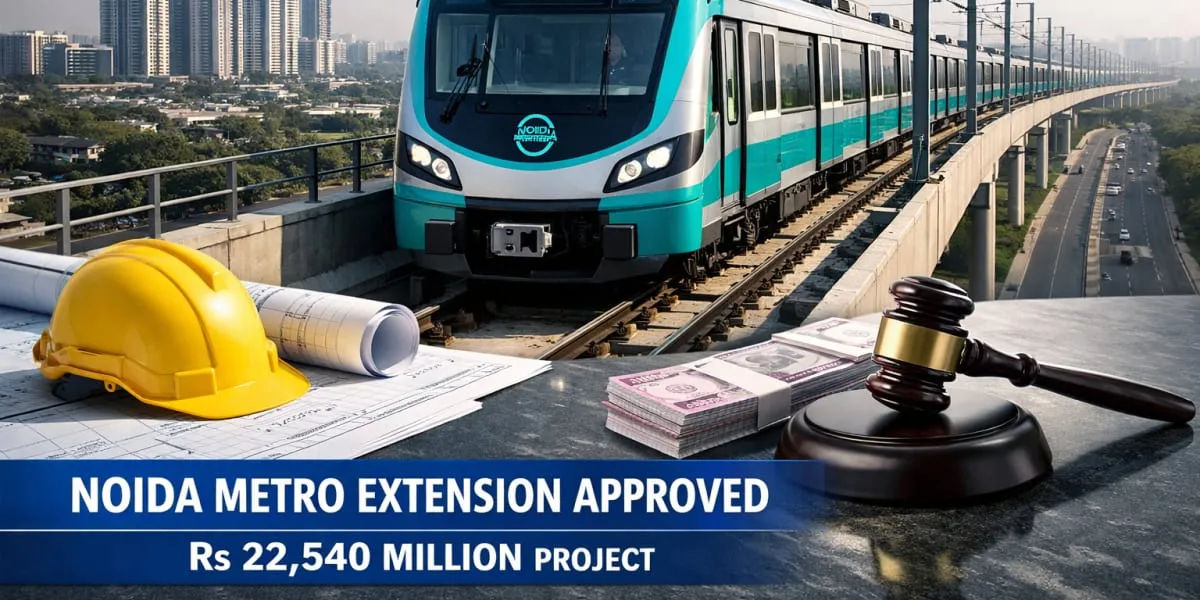
Union Cabinet Approves Rs 22,540 Million Noida Metro Extension
RAILWAYS & METRO RAIL

Union Cabinet Approves Rs 22,540 Million Noida Metro Extension

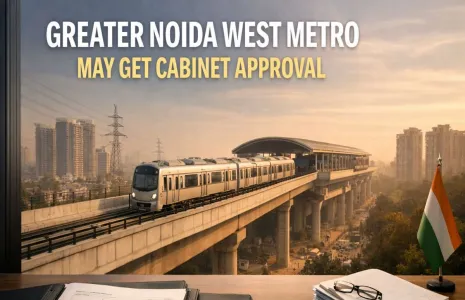
The Union Cabinet has approved an extension of the Noida Metro Aqua Line with central funding amounting to Rs 22,540 million (mn), equivalent to Rs 22.54 billion (bn). The approval covers capital expenditure for the proposed extension and associated civil works. The decision is intended to accelerate project clearances and enable prompt tendering and award of contracts.

The extension is expected to strengthen urban transit links in the National Capital Region by enhancing last mile connectivity and easing pressure on road networks. Officials said the project will support planned urban expansion and provide a reliable alternative to road transport for commuters. The scheme is also intended to integrate with existing metro corridors and surface transport services.

The funding approval is likely to unlock other project approvals and facilitate disbursement from central coffers to implementing agencies. Local authorities and the metro corporation will be required to finalise detailed project reports and procurement schedules in line with regulatory norms. Construction stages will be subject to statutory clearances and environmental safeguards.

The extension is anticipated to generate employment during the construction phase and to improve accessibility for residents and businesses along the corridor. Stakeholders are expected to monitor implementation closely to ensure adherence to timelines and cost estimates. The approval signals a continuing focus on investment in urban mass transit to address congestion and pollution challenges.

Officials indicated that detailed cost estimates will be reviewed and updated as project designs are finalised and that provisions for land acquisition and compensation will be addressed in accordance with applicable law. The project is expected to prioritise procurement transparency, adherence to safety and quality standards and competitive bidding to ensure value for money. Stakeholders are likely to coordinate with state authorities to align integration with urban development plans. Sustained oversight and clear reporting are expected to be necessary to translate the approval into timely delivery for commuters.

The Union Cabinet has approved an extension of the Noida Metro Aqua Line with central funding amounting to Rs 22,540 million (mn), equivalent to Rs 22.54 billion (bn). The approval covers capital expenditure for the proposed extension and associated civil works. The decision is intended to accelerate project clearances and enable prompt tendering and award of contracts. The extension is expected to strengthen urban transit links in the National Capital Region by enhancing last mile connectivity and easing pressure on road networks. Officials said the project will support planned urban expansion and provide a reliable alternative to road transport for commuters. The scheme is also intended to integrate with existing metro corridors and surface transport services. The funding approval is likely to unlock other project approvals and facilitate disbursement from central coffers to implementing agencies. Local authorities and the metro corporation will be required to finalise detailed project reports and procurement schedules in line with regulatory norms. Construction stages will be subject to statutory clearances and environmental safeguards. The extension is anticipated to generate employment during the construction phase and to improve accessibility for residents and businesses along the corridor. Stakeholders are expected to monitor implementation closely to ensure adherence to timelines and cost estimates. The approval signals a continuing focus on investment in urban mass transit to address congestion and pollution challenges. Officials indicated that detailed cost estimates will be reviewed and updated as project designs are finalised and that provisions for land acquisition and compensation will be addressed in accordance with applicable law. The project is expected to prioritise procurement transparency, adherence to safety and quality standards and competitive bidding to ensure value for money. Stakeholders are likely to coordinate with state authorities to align integration with urban development plans. Sustained oversight and clear reporting are expected to be necessary to translate the approval into timely delivery for commuters.

Next Story
Infrastructure Transport

Tunnelling Begins for Thane, Borivali twin tunnel project

Tunnelling work has commenced for the 11.84-km Thane–Borivali Twin Tunnel, set to be India’s longest urban road tunnel, marking a key milestone in Mumbai’s infrastructure development.As per a post shared by Mumbai Metropolitan Region Development Authority on social media platform X, the tunnel boring machine (TBM) ‘Nayak’—the country’s largest single-shield hard rock TBM for an urban tunnel—was launched by Devendra Fadnavis on Tuesday. The event was attended by Eknath Shinde and Sunetra Pawar, among other dignitaries. A second TBM, ‘Arjuna’, is expected to be launched so..

Next Story
Infrastructure Transport

Large Format Store Planned At M G Road Metro Station

M G Road station in Bengaluru is set to host the city’s first large-format commercial and experience space, with planning led by Bangalore Metro Rail Corporation Limited. BMRCL has invited proposals to develop and operate a central business district destination at the Purple?Pink Line interchange. The plan positions the station as a commercial hub designed to serve a broad commuter base across the city. The proposal is part of a broader effort to activate transit nodes commercially. Tender documents set a minimum monthly rental of Rs 0.944 million (mn), inclusive of GST, for the large-format..

Next Story
Infrastructure Energy

Government Cancels Auction Of Eleven Critical Mineral Blocks

The government has cancelled the auction of 11 critical and strategic mineral blocks after receiving a poor investor response and failing to attract a sufficient number of qualified bidders. The decision represents a setback to plans to ramp up domestic exploration and production of critical minerals amid global supply chain disruptions and rising demand for materials used in clean energy and advanced technologies. The mines ministry issued an annulment notice setting out the reasons for the cancellations. The annulment notice indicated that the auction process for five mineral blocks was canc..

Advertisement

Subscribe to Our Newsletter

Get daily newsletters around different themes from Construction world.

STAY CONNECTED

Advertisement

Advertisement

Advertisement